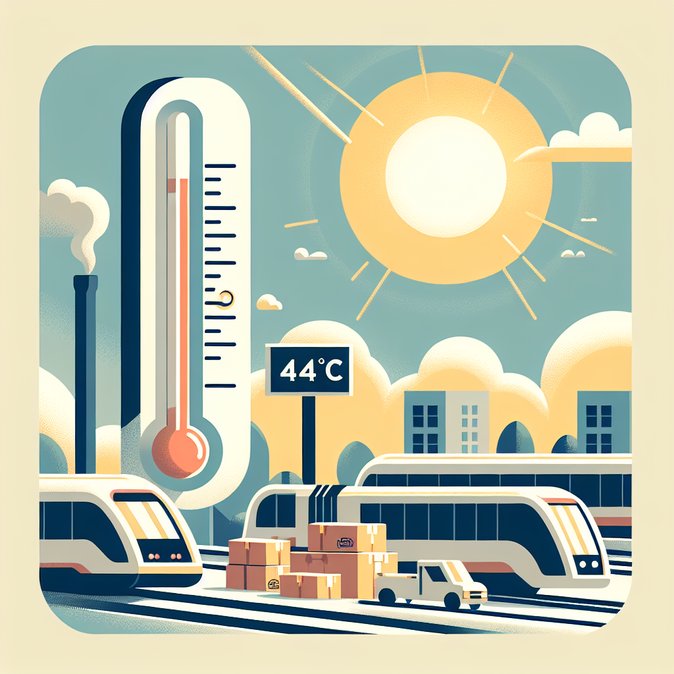
Australia is sweltering through its most intense heatwave in six years, with Melbourne surpassing 41 °C and Adelaide 43 °C on 7 January. The Bureau of Meteorology has issued extreme fire-danger ratings across South Australia, Victoria, New South Wales and Tasmania, warning that any ignitions would be ‘fast-moving and uncontrollable’.
Transport impacts are mounting. Metro Trains Melbourne imposed speed restrictions on suburban lines, Yarra Trams activated an ‘extreme weather alert’ to prepare for potential service cuts, and several regional airports limited ground-handling shifts to 20-minute blocks to protect staff from heat stroke. Airlines have advised passengers to monitor departure boards closely for knock-on delays.
Health authorities in Victoria and South Australia opened additional cooling centres and deployed outreach teams to relocate rough sleepers. Power distributors enacted staggered load-shedding plans to protect vulnerable feeders, raising the risk of rolling blackouts that could strand travellers in lifts or disrupt airport baggage systems.
![Nationwide heatwave triggers travel advisories and business-continuity plans]()
For travellers who may need to reschedule flights or extend their stays because of heat-related disruptions, VisaHQ offers a fast, fully digital pathway to Australian visa extensions and other travel documents. Its portal (https://www.visahq.com/australia/) allows corporate travel departments and individual passengers to submit paperwork, track status in real time and receive expert guidance without queueing at consulates—a useful safeguard when soaring temperatures are straining transport and government offices alike.
Corporate travel managers are activating heat-stress protocols: providing bottled water allowances, authorising ride-share expenses to minimise outdoor exposure, and rescheduling site visits to early mornings. Event organisers are shifting outdoor functions indoors or shortening programmes to comply with occupational-safety limits.
Climate analysts at IQAir note that the synoptic pattern driving the heat – a blocking high over the Tasman Sea and a subsiding upper-level ridge – will persist until at least Friday. Mobility stakeholders should therefore expect continued modal disruptions and be ready to invoke remote-work or virtual-meeting contingencies.
Transport impacts are mounting. Metro Trains Melbourne imposed speed restrictions on suburban lines, Yarra Trams activated an ‘extreme weather alert’ to prepare for potential service cuts, and several regional airports limited ground-handling shifts to 20-minute blocks to protect staff from heat stroke. Airlines have advised passengers to monitor departure boards closely for knock-on delays.
Health authorities in Victoria and South Australia opened additional cooling centres and deployed outreach teams to relocate rough sleepers. Power distributors enacted staggered load-shedding plans to protect vulnerable feeders, raising the risk of rolling blackouts that could strand travellers in lifts or disrupt airport baggage systems.
For travellers who may need to reschedule flights or extend their stays because of heat-related disruptions, VisaHQ offers a fast, fully digital pathway to Australian visa extensions and other travel documents. Its portal (https://www.visahq.com/australia/) allows corporate travel departments and individual passengers to submit paperwork, track status in real time and receive expert guidance without queueing at consulates—a useful safeguard when soaring temperatures are straining transport and government offices alike.
Corporate travel managers are activating heat-stress protocols: providing bottled water allowances, authorising ride-share expenses to minimise outdoor exposure, and rescheduling site visits to early mornings. Event organisers are shifting outdoor functions indoors or shortening programmes to comply with occupational-safety limits.
Climate analysts at IQAir note that the synoptic pattern driving the heat – a blocking high over the Tasman Sea and a subsiding upper-level ridge – will persist until at least Friday. Mobility stakeholders should therefore expect continued modal disruptions and be ready to invoke remote-work or virtual-meeting contingencies.