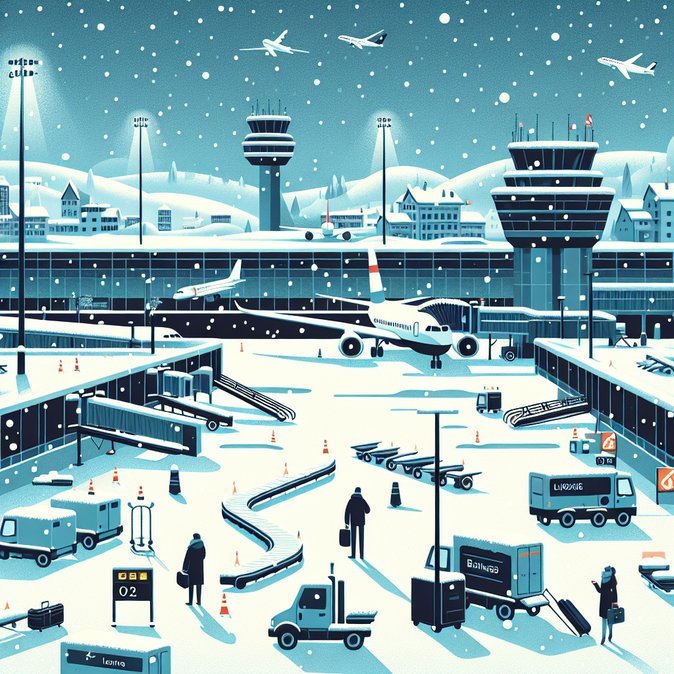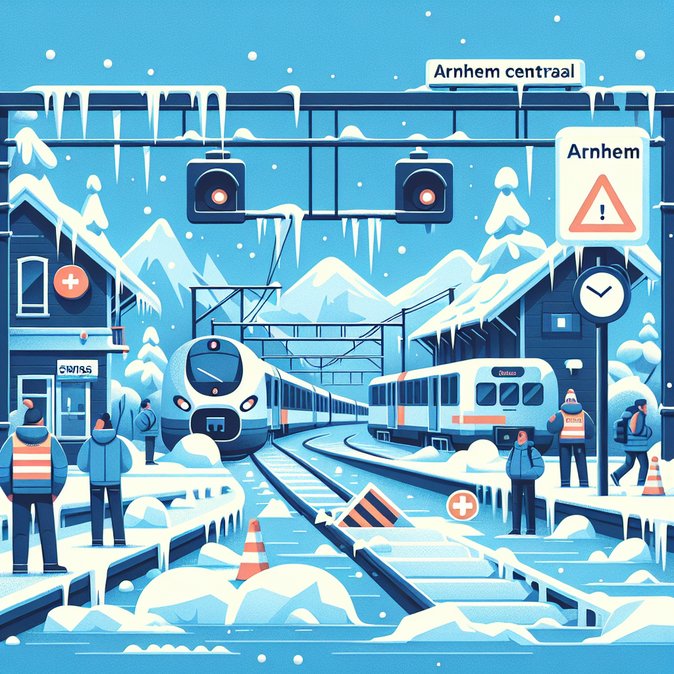
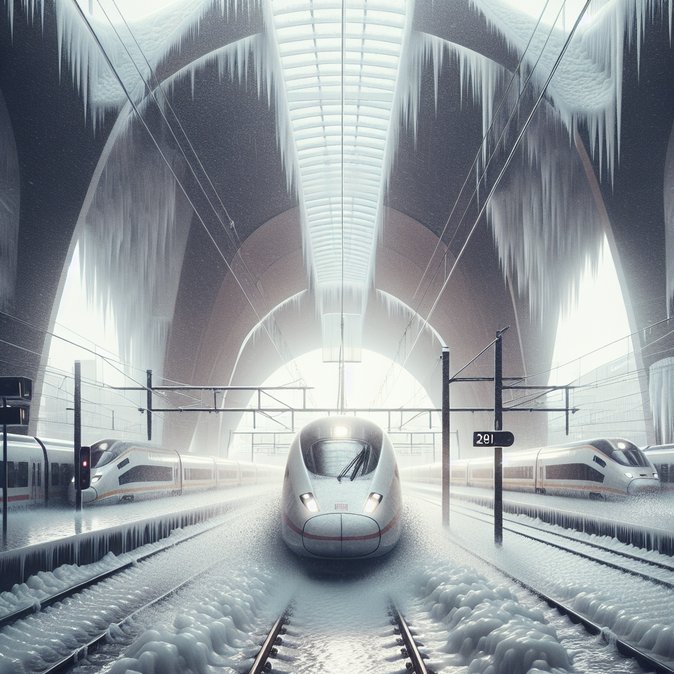
A winter squall paralysed the Dutch rail node of Arnhem Centraal in the early hours of 6 January, suspending services on multiple international corridors that link directly to Switzerland. The Dutch infrastructure manager ProRail issued a "no-train" order at 05:09 CET after ice and wind brought down overhead-line equipment. Operators NS International, Deutsche Bahn and ÖBB Nightjet stopped traffic until 10:55, when partial service was restored.
Among the affected routes were Nightjet 403 (Amsterdam–Zurich), the daily Amsterdam–Basel ICE and several freight paths feeding Swiss automotive supply chains. Passengers heading to Zurich for Wednesday’s financial-sector conferences were advised to detour via Brussels or Paris, adding up to four hours of travel time. Freight forwarders rerouted time-critical consignments through the Rhine valley road corridor, triggering capacity squeezes at German trans-shipment terminals.
![Weather Halts Arnhem Hub, Snarling Nightjet and Basel–Zurich International Services]()
Travellers suddenly rerouting through Brussels, Paris, or opting for emergency flights may confront differing transit-visa or entry rules; VisaHQ’s online platform (https://www.visahq.com/switzerland/) can rapidly clarify requirements and even arrange express processing, helping stranded passengers and mobility managers avoid additional headaches during weather-related disruptions.
Swiss logistics groups highlighted the vulnerability of long-distance rail to single-point weather failures abroad. While passenger rights are governed by EU Regulation 1371/2007, provisioning of hotel rooms in the Netherlands for Swiss-bound travellers was complicated by limited late-night accommodation near Arnhem. SBB and ÖBB have since confirmed that Nightjet sleepers will carry spare staff to permit on-board service even if line diversions occur.
The incident serves as a reminder for mobility managers to keep contingency tickets on alternative modes during winter. Companies with employees regularly using Nightjet should add push-alert subscriptions to NS International warnings and ensure HR teams have authority to book last-minute air replacements if critical meetings are at stake.
Among the affected routes were Nightjet 403 (Amsterdam–Zurich), the daily Amsterdam–Basel ICE and several freight paths feeding Swiss automotive supply chains. Passengers heading to Zurich for Wednesday’s financial-sector conferences were advised to detour via Brussels or Paris, adding up to four hours of travel time. Freight forwarders rerouted time-critical consignments through the Rhine valley road corridor, triggering capacity squeezes at German trans-shipment terminals.
Travellers suddenly rerouting through Brussels, Paris, or opting for emergency flights may confront differing transit-visa or entry rules; VisaHQ’s online platform (https://www.visahq.com/switzerland/) can rapidly clarify requirements and even arrange express processing, helping stranded passengers and mobility managers avoid additional headaches during weather-related disruptions.
Swiss logistics groups highlighted the vulnerability of long-distance rail to single-point weather failures abroad. While passenger rights are governed by EU Regulation 1371/2007, provisioning of hotel rooms in the Netherlands for Swiss-bound travellers was complicated by limited late-night accommodation near Arnhem. SBB and ÖBB have since confirmed that Nightjet sleepers will carry spare staff to permit on-board service even if line diversions occur.
The incident serves as a reminder for mobility managers to keep contingency tickets on alternative modes during winter. Companies with employees regularly using Nightjet should add push-alert subscriptions to NS International warnings and ensure HR teams have authority to book last-minute air replacements if critical meetings are at stake.