Brazil’s Ministry of Justice and Public Security has unveiled an inter-ministerial ordinance that rewrites the country’s humanitarian immigration rules for the first time since 2017. Effective 1 January 2026, the measure revokes the ad-hoc programmes that previously existed for Afghans, Haitians and a handful of other nationalities and replaces them with a single, overarching framework.
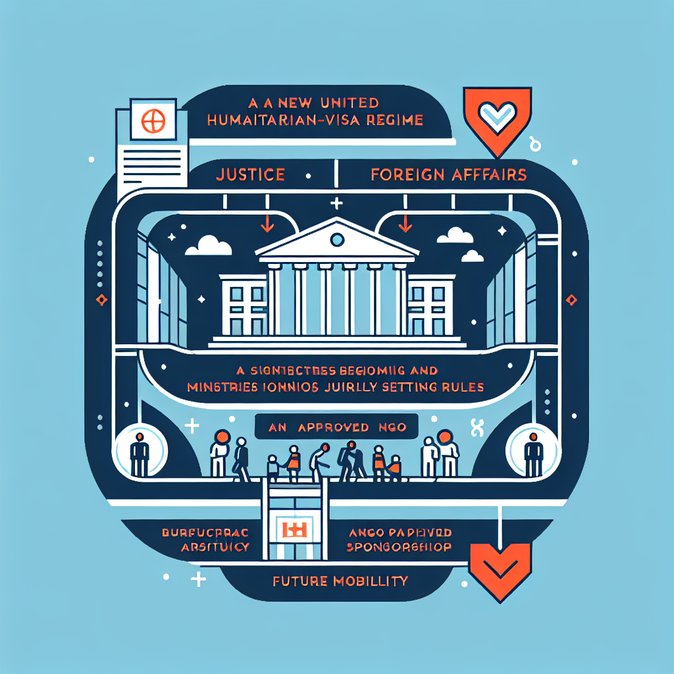
Under the new rules, future eligibility will no longer be tied to a traveller’s passport alone. Instead, the Ministry of Justice, working jointly with the Ministry of Foreign Affairs, will publish periodic joint acts that list the nationalities—and specific crisis conditions—that qualify for humanitarian protection. Until those acts are issued, consulates have been instructed not to presume eligibility for any group, creating a temporary pause on new humanitarian-visa filings.
Another innovation is the requirement that visa applicants obtain a “hosting commitment” from a non-governmental organisation (NGO) that has a formal cooperation agreement with the federal government. The NGO must demonstrate capacity to provide accommodation and integration support—an effort, officials say, to avoid the ad-hoc shelter crises that followed earlier Afghan and Venezuelan arrivals. Fees for principal applicants and dependants remain waived.
![Brazil Introduces Unified Humanitarian Visa Framework, Replacing Country-Specific Schemes]()
At this juncture, leveraging a seasoned visa partner can be invaluable. VisaHQ, through its dedicated Brazil portal (https://www.visahq.com/brazil/), tracks every consular update in real time and assists travellers with document preparation, appointment scheduling and even sourcing qualifying NGOs for the new hosting commitment—helping both corporates and individuals navigate the rule change with confidence.
Once in Brazil, beneficiaries must register with the Federal Police within 90 days and may then apply for a two-year temporary residence permit that allows both work and study. Indefinite residence is possible later, provided the holder maintains a clean criminal record and meets absence limits. A grandfather clause protects Afghans, Haitians and others already in Brazil on or before 31 December 2025, allowing them to apply for residence regardless of status.
For corporate mobility managers, the biggest takeaway is uncertainty: companies can no longer assume that employees or contractors from crisis-hit countries will automatically qualify for Brazil’s humanitarian channel. HR teams are advised to build extra lead time into assignment planning, monitor forthcoming joint acts closely, and consider alternative visa categories—such as the recently expanded Visitor Visa for short-term technical work—when humanitarian status is not yet confirmed.
Under the new rules, future eligibility will no longer be tied to a traveller’s passport alone. Instead, the Ministry of Justice, working jointly with the Ministry of Foreign Affairs, will publish periodic joint acts that list the nationalities—and specific crisis conditions—that qualify for humanitarian protection. Until those acts are issued, consulates have been instructed not to presume eligibility for any group, creating a temporary pause on new humanitarian-visa filings.
Another innovation is the requirement that visa applicants obtain a “hosting commitment” from a non-governmental organisation (NGO) that has a formal cooperation agreement with the federal government. The NGO must demonstrate capacity to provide accommodation and integration support—an effort, officials say, to avoid the ad-hoc shelter crises that followed earlier Afghan and Venezuelan arrivals. Fees for principal applicants and dependants remain waived.

At this juncture, leveraging a seasoned visa partner can be invaluable. VisaHQ, through its dedicated Brazil portal (https://www.visahq.com/brazil/), tracks every consular update in real time and assists travellers with document preparation, appointment scheduling and even sourcing qualifying NGOs for the new hosting commitment—helping both corporates and individuals navigate the rule change with confidence.
Once in Brazil, beneficiaries must register with the Federal Police within 90 days and may then apply for a two-year temporary residence permit that allows both work and study. Indefinite residence is possible later, provided the holder maintains a clean criminal record and meets absence limits. A grandfather clause protects Afghans, Haitians and others already in Brazil on or before 31 December 2025, allowing them to apply for residence regardless of status.
For corporate mobility managers, the biggest takeaway is uncertainty: companies can no longer assume that employees or contractors from crisis-hit countries will automatically qualify for Brazil’s humanitarian channel. HR teams are advised to build extra lead time into assignment planning, monitor forthcoming joint acts closely, and consider alternative visa categories—such as the recently expanded Visitor Visa for short-term technical work—when humanitarian status is not yet confirmed.