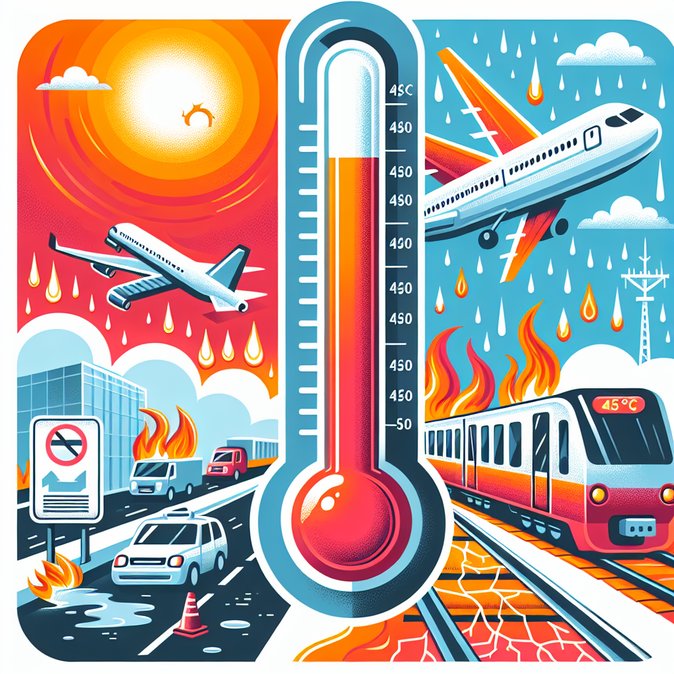
The Bureau of Meteorology has warned that a severe heatwave sweeping from South Australia through Victoria, New South Wales and the ACT will push temperatures above 45 °C in many inland areas between 7 and 10 January. Sydney could reach 40 °C on Saturday, while Melbourne may see its hottest January day in eight years at 42 °C.
Airlines operating out of Adelaide, Melbourne and Canberra have begun contingency planning for potential weight-restricted take-offs and schedule tweaks, as hot-air density reduces aircraft performance on shorter runways. Qantas and Virgin Australia told corporate clients they will waive change fees if the Bureau escalates to a ‘catastrophic’ warning.
If the extreme conditions force last-minute changes to international itineraries, VisaHQ’s Australia page (https://www.visahq.com/australia/) can expedite new visa applications or amendments, providing real-time tracking and expert support so travel managers can concentrate on safety logistics instead of paperwork.
![Extreme heatwave threatens travel disruption across Australia]()
Rail operators are also bracing for speed restrictions on steel tracks that buckle in prolonged heat, which could stretch travel times on the busy Sydney–Melbourne XPT route and regional commuter services. For road travellers, state authorities have flagged the possibility of total fire-ban road closures in bushfire-prone corridors such as the Hume and Princes highways.
Business-continuity teams should advise travellers to carry extra water, allow additional transfer time and monitor carrier alerts. Employers with fly-in-fly-out (FIFO) operations in mining regions face heightened duty-of-care obligations; several sites in the Pilbara and Cooper Basin have activated emergency response plans that include shaded muster points and altered shift patterns.
The heatwave underscores the growing climate-related volatility facing mobility managers. Integrating meteorological feeds into travel-risk platforms and pre-trip approvals is becoming as critical as monitoring geopolitical events to ensure traveller safety and compliance.
Airlines operating out of Adelaide, Melbourne and Canberra have begun contingency planning for potential weight-restricted take-offs and schedule tweaks, as hot-air density reduces aircraft performance on shorter runways. Qantas and Virgin Australia told corporate clients they will waive change fees if the Bureau escalates to a ‘catastrophic’ warning.
If the extreme conditions force last-minute changes to international itineraries, VisaHQ’s Australia page (https://www.visahq.com/australia/) can expedite new visa applications or amendments, providing real-time tracking and expert support so travel managers can concentrate on safety logistics instead of paperwork.

Rail operators are also bracing for speed restrictions on steel tracks that buckle in prolonged heat, which could stretch travel times on the busy Sydney–Melbourne XPT route and regional commuter services. For road travellers, state authorities have flagged the possibility of total fire-ban road closures in bushfire-prone corridors such as the Hume and Princes highways.
Business-continuity teams should advise travellers to carry extra water, allow additional transfer time and monitor carrier alerts. Employers with fly-in-fly-out (FIFO) operations in mining regions face heightened duty-of-care obligations; several sites in the Pilbara and Cooper Basin have activated emergency response plans that include shaded muster points and altered shift patterns.
The heatwave underscores the growing climate-related volatility facing mobility managers. Integrating meteorological feeds into travel-risk platforms and pre-trip approvals is becoming as critical as monitoring geopolitical events to ensure traveller safety and compliance.