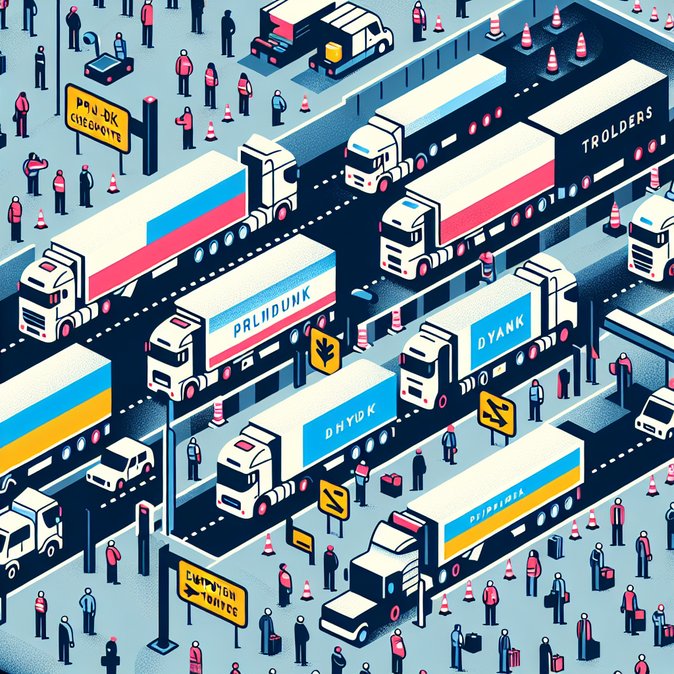
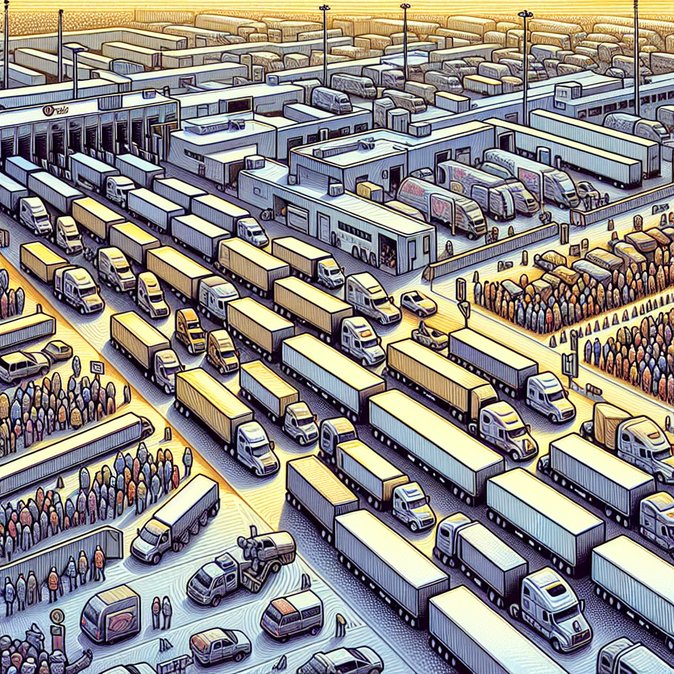
Freight traffic between Poland and Ukraine has reached breaking point after more than two months of protests by Polish carriers. At the Dorohusk–Yahodyn checkpoint, the wait to exit Poland now exceeds 30 days, with some 1,500 trucks parked along National Road 12, according to the Lublin Customs Administration. Protest organisers are allowing just one truck to cross every three hours.
Simultaneous blockades at Rava-Ruska, Krakivets and Shehyni leave a further 2,600 lorries stranded, bringing total queues on 4 January 2026 to well over 4,000 vehicles. Polish drivers are demanding the re-introduction of permit quotas for Ukrainian hauliers, abolition of EU cabotage liberalisation and compensation for rising fuel prices.
The stand-off is now disrupting regional supply chains. Automotive plants near Katowice and Wrocław have warned of production stoppages due to missing Ukrainian components, while grain exporters in western Ukraine report demurrage costs of €1 million per week as loaded trucks sit idle. International express carriers have begun rerouting high-value cargo through Slovakia or Romania, adding 500 km and two days to delivery times.
![Truck Queues Top 30 Days as Polish Carrier Blockade Escalates at Ukrainian Border]()
Amid these disruptions, business travelers and logistics personnel still need to cross the border for urgent meetings and inspections. VisaHQ can streamline the visa and travel-document process for Poland and neighboring countries, offering real-time updates on requirements and expediting applications through its online platform (https://www.visahq.com/poland/). This service helps companies avoid additional delays and ensures essential staff reach their destinations even when freight traffic stalls.
Diplomatic efforts have so far failed. Warsaw argues that Brussels—not Warsaw—must change permit rules, while Kyiv insists existing EU “solidarity lanes” remain vital for wartime exports. The European Commission has dispatched mediators but has limited leverage over a protest that is technically a domestic Polish demonstration.
For mobility managers, the practical advice is clear: move time-sensitive goods by rail through the Medyka–Mostyska intermodal corridor or by sea via Gdańsk. Staff rotations for projects inside Ukraine should budget extra transit days, and employers must monitor driver hours to avoid violations caused by prolonged idling in sub-zero temperatures.
Simultaneous blockades at Rava-Ruska, Krakivets and Shehyni leave a further 2,600 lorries stranded, bringing total queues on 4 January 2026 to well over 4,000 vehicles. Polish drivers are demanding the re-introduction of permit quotas for Ukrainian hauliers, abolition of EU cabotage liberalisation and compensation for rising fuel prices.
The stand-off is now disrupting regional supply chains. Automotive plants near Katowice and Wrocław have warned of production stoppages due to missing Ukrainian components, while grain exporters in western Ukraine report demurrage costs of €1 million per week as loaded trucks sit idle. International express carriers have begun rerouting high-value cargo through Slovakia or Romania, adding 500 km and two days to delivery times.
Amid these disruptions, business travelers and logistics personnel still need to cross the border for urgent meetings and inspections. VisaHQ can streamline the visa and travel-document process for Poland and neighboring countries, offering real-time updates on requirements and expediting applications through its online platform (https://www.visahq.com/poland/). This service helps companies avoid additional delays and ensures essential staff reach their destinations even when freight traffic stalls.
Diplomatic efforts have so far failed. Warsaw argues that Brussels—not Warsaw—must change permit rules, while Kyiv insists existing EU “solidarity lanes” remain vital for wartime exports. The European Commission has dispatched mediators but has limited leverage over a protest that is technically a domestic Polish demonstration.
For mobility managers, the practical advice is clear: move time-sensitive goods by rail through the Medyka–Mostyska intermodal corridor or by sea via Gdańsk. Staff rotations for projects inside Ukraine should budget extra transit days, and employers must monitor driver hours to avoid violations caused by prolonged idling in sub-zero temperatures.