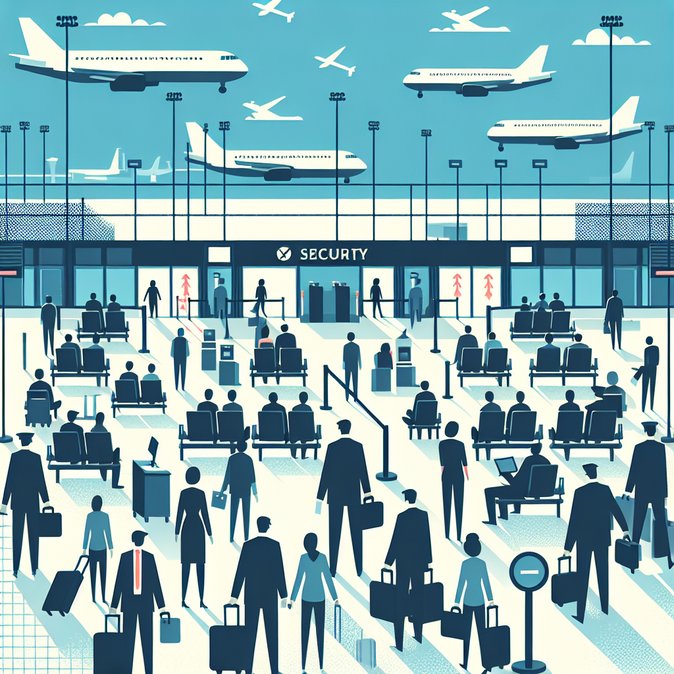
After a bruising pandemic slump, Zurich Airport’s traffic resurgence is almost complete. Figures released on 5 January 2026 show that 266 202 aircraft movements were recorded in 2025—just one percent shy of the 2019 all-time high. The data, compiled by news agency AWP and published by business portal Moneycab, confirm that Switzerland’s primary hub has regained its status as a premier European connection point.
Growth was broad-based: scheduled passenger services, cargo rotations and private-jet movements all posted year-on-year gains. Peak months were July and August, each exceeding 24 900 take-offs and landings, while October delivered the fastest annual growth (+6.6 %). Even traditionally quiet December saw a 6.1 % jump, helped by a record 753 movements on the Friday before Christmas.
Before you jet off through this revitalised hub, remember that entry rules for Switzerland and the wider Schengen area have also evolved. VisaHQ’s dedicated Switzerland page (https://www.visahq.com/switzerland/) lets travellers—from first-time tourists to corporate road-warriors—verify visa requirements, submit applications online and receive real-time status updates, cutting through red tape so you can focus on securing those hard-to-get Zurich slots.
![Zurich Airport Flight Movements Climb Back to 99 % of Pre-Covid Record]()
Passenger numbers for the full year will not be published until 14 January, but the airport had already handled 30 million travellers in the first eleven months—making a new record above the 31.5 million set in 2019 “a formality,” according to airport management. Long-haul capacity has been rebuilt faster than expected, with Swiss International Air Lines reinstating daily frequencies to key North American and Asian cities and low-cost carriers adding leisure routes.
For global mobility managers the rebound carries two implications. First, securing corporate block space on popular European shuttles will again require early booking, especially on Mondays and Thursdays. Second, Zurich’s slot scarcity is returning; operators of private and charter flights should file requests well in advance or consider Basel and Geneva as alternatives.
Infrastructure upgrades continue in parallel. New CT security scanners—rolling out floor by floor—should allow travellers to keep liquids and laptops inside bags by summer 2026, partially offsetting congestion at peak times. The airport has also fast-tracked e-gates compatible with the forthcoming EU Entry/Exit System, aiming to keep border-control queuing within a 10-minute target.
Growth was broad-based: scheduled passenger services, cargo rotations and private-jet movements all posted year-on-year gains. Peak months were July and August, each exceeding 24 900 take-offs and landings, while October delivered the fastest annual growth (+6.6 %). Even traditionally quiet December saw a 6.1 % jump, helped by a record 753 movements on the Friday before Christmas.
Before you jet off through this revitalised hub, remember that entry rules for Switzerland and the wider Schengen area have also evolved. VisaHQ’s dedicated Switzerland page (https://www.visahq.com/switzerland/) lets travellers—from first-time tourists to corporate road-warriors—verify visa requirements, submit applications online and receive real-time status updates, cutting through red tape so you can focus on securing those hard-to-get Zurich slots.
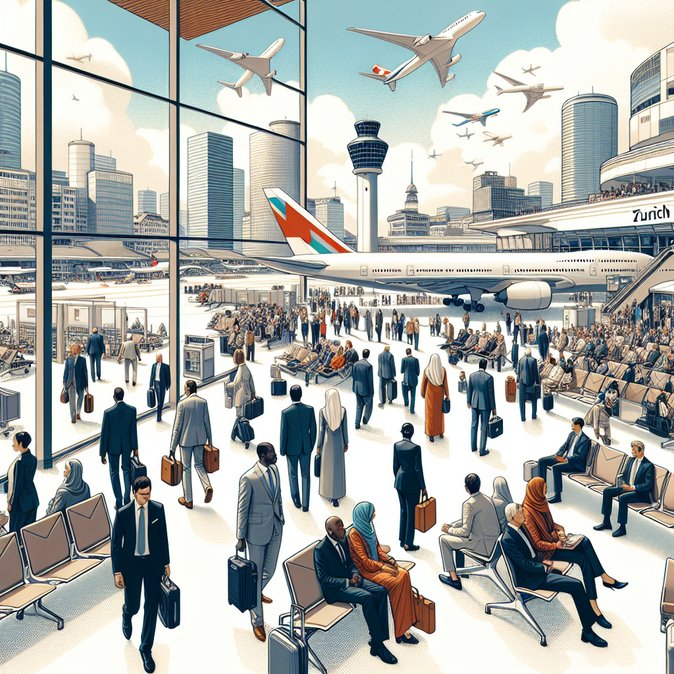
Passenger numbers for the full year will not be published until 14 January, but the airport had already handled 30 million travellers in the first eleven months—making a new record above the 31.5 million set in 2019 “a formality,” according to airport management. Long-haul capacity has been rebuilt faster than expected, with Swiss International Air Lines reinstating daily frequencies to key North American and Asian cities and low-cost carriers adding leisure routes.
For global mobility managers the rebound carries two implications. First, securing corporate block space on popular European shuttles will again require early booking, especially on Mondays and Thursdays. Second, Zurich’s slot scarcity is returning; operators of private and charter flights should file requests well in advance or consider Basel and Geneva as alternatives.
Infrastructure upgrades continue in parallel. New CT security scanners—rolling out floor by floor—should allow travellers to keep liquids and laptops inside bags by summer 2026, partially offsetting congestion at peak times. The airport has also fast-tracked e-gates compatible with the forthcoming EU Entry/Exit System, aiming to keep border-control queuing within a 10-minute target.