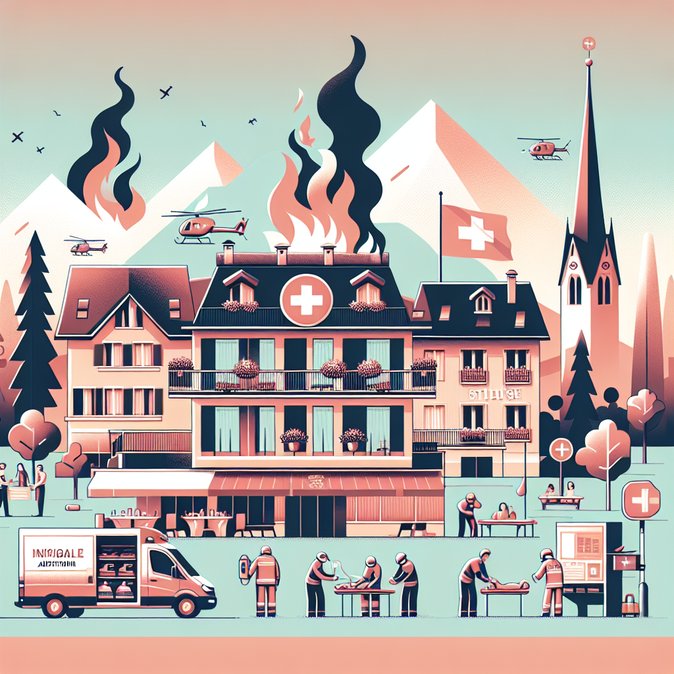
Swiss authorities announced on 5 January that every one of the 116 people injured in the New-Year’s-Day blaze at Le Constellation bar in Crans-Montana has now been formally identified, allowing foreign embassies and insurers to accelerate medical-evacuation and family-reunification procedures. The update, reported by the Associated Press, corrects earlier estimates of 119 injured and confirms the multinational nature of the casualty list: 48 foreign nationals from 13 countries are among the wounded.
For the global mobility community the incident has become an unexpected stress-test of consular crisis response. Italy airlifted five coffins on an Air Force C-130, France deployed a medical liaison unit to Lausanne University Hospital, and Australia, Serbia and Portugal have dispatched consular staff to Valais. Several multinational firms with assignees in the ski resort region activated emergency-assistance contracts to arrange psychological counselling and, in some cases, medical repatriation.
In this context, businesses scrambling to verify the visa status of employees or to extend permits for relatives rushing to Switzerland can streamline the paperwork through VisaHQ, an online concierge that coordinates Swiss entry visas and other travel documents worldwide (https://www.visahq.com/switzerland/). The platform’s expertise in expediting consular submissions can shave crucial days off emergency deployments while also supporting routine corporate travel planning.
![Swiss Police Identify All 116 Injured in Crans-Montana Bar Fire, Foreign Consulates Mobilise Support]()
Investigators believe sparkler candles on champagne bottles ignited acoustic panels on the ceiling moments after midnight, turning the packed venue into an inferno. Bar managers are now under investigation for involuntary homicide and bodily harm. Local tourism authorities fear cancellations during what is normally the high season for incentive-travel groups and corporate ski weekends.
Practical considerations: companies with events booked in Valais should re-audit venue fire-safety certificates and ensure attendee lists are up to date for rapid accounting in an emergency. HR and security managers are also reminded that Switzerland’s standard health-insurance minimum does not cover specialist burn evacuation; top-up cover may be prudent for high-risk mountain activities.
The tragedy has reignited debate about Swiss cantonal oversight of nightlife venues, with some lawmakers calling for a nationwide licensing registry. Any resulting regulatory changes could introduce new due-diligence obligations for destination-management companies operating corporate events in Switzerland.
For the global mobility community the incident has become an unexpected stress-test of consular crisis response. Italy airlifted five coffins on an Air Force C-130, France deployed a medical liaison unit to Lausanne University Hospital, and Australia, Serbia and Portugal have dispatched consular staff to Valais. Several multinational firms with assignees in the ski resort region activated emergency-assistance contracts to arrange psychological counselling and, in some cases, medical repatriation.
In this context, businesses scrambling to verify the visa status of employees or to extend permits for relatives rushing to Switzerland can streamline the paperwork through VisaHQ, an online concierge that coordinates Swiss entry visas and other travel documents worldwide (https://www.visahq.com/switzerland/). The platform’s expertise in expediting consular submissions can shave crucial days off emergency deployments while also supporting routine corporate travel planning.
Investigators believe sparkler candles on champagne bottles ignited acoustic panels on the ceiling moments after midnight, turning the packed venue into an inferno. Bar managers are now under investigation for involuntary homicide and bodily harm. Local tourism authorities fear cancellations during what is normally the high season for incentive-travel groups and corporate ski weekends.
Practical considerations: companies with events booked in Valais should re-audit venue fire-safety certificates and ensure attendee lists are up to date for rapid accounting in an emergency. HR and security managers are also reminded that Switzerland’s standard health-insurance minimum does not cover specialist burn evacuation; top-up cover may be prudent for high-risk mountain activities.
The tragedy has reignited debate about Swiss cantonal oversight of nightlife venues, with some lawmakers calling for a nationwide licensing registry. Any resulting regulatory changes could introduce new due-diligence obligations for destination-management companies operating corporate events in Switzerland.