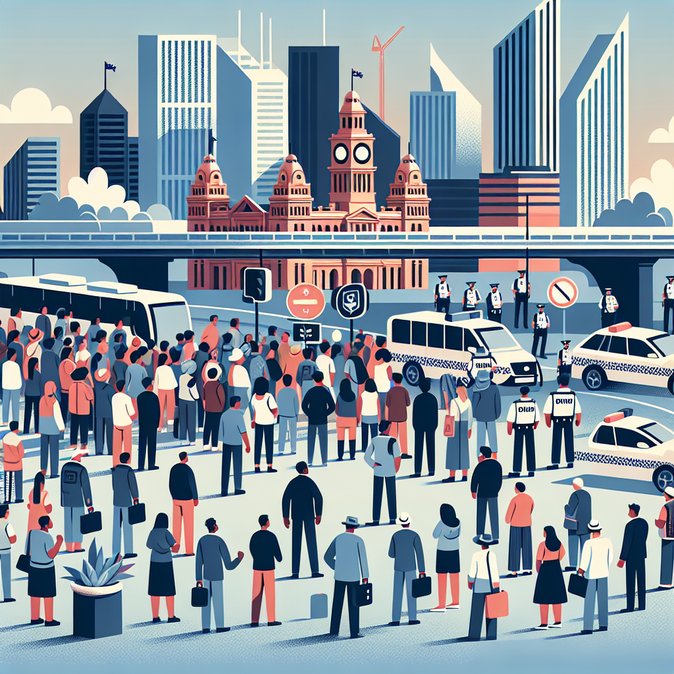
Roughly 250 demonstrators defied a police ban in Sydney’s CBD on 4 January to protest the recent United States military strike in Caracas and the capture of Venezuelan President Nicolás Maduro. NSW Police declared the gathering unauthorised under terrorism-related public-order powers enacted after October’s Bondi Beach attack. Three arrests were made for failing to submit the required ‘Form 1’ notice.
Similar rallies in Brisbane and Melbourne proceeded with heavy police monitoring but no serious incidents. Protesters called on Prime Minister Anthony Albanese to condemn U.S. actions and carried placards accusing Washington of imperialism. Counter-demonstrators also attended, creating brief confrontations.
![New Anti-Terror Powers Tested as Sydney Police Declare Pro-Venezuela Rally ‘Unauthorised’]()
For global mobility and travel managers the episode is noteworthy because the same post-Bondi legislation gives police wide discretion to restrict large public gatherings deemed security risks. Corporate travellers planning meetings or events in Australia’s east-coast capitals should monitor assembly notifications and build flexibility into itineraries, as sudden protest bans can affect CBD transport and hotel access.
Travel planners concerned about evolving security settings should also ensure travel documentation is in perfect order; VisaHQ (https://www.visahq.com/australia/) offers a streamlined online service for securing Australian visas, real-time status tracking, and proactive alerts on policy changes, helping corporate teams adapt quickly when demonstrations or emergency measures disrupt schedules.
The incident also offers a real-world test of how state authorities will balance civil liberties with security in the lead-up to large international events such as the 2027 Rugby World Cup.
Similar rallies in Brisbane and Melbourne proceeded with heavy police monitoring but no serious incidents. Protesters called on Prime Minister Anthony Albanese to condemn U.S. actions and carried placards accusing Washington of imperialism. Counter-demonstrators also attended, creating brief confrontations.

For global mobility and travel managers the episode is noteworthy because the same post-Bondi legislation gives police wide discretion to restrict large public gatherings deemed security risks. Corporate travellers planning meetings or events in Australia’s east-coast capitals should monitor assembly notifications and build flexibility into itineraries, as sudden protest bans can affect CBD transport and hotel access.
Travel planners concerned about evolving security settings should also ensure travel documentation is in perfect order; VisaHQ (https://www.visahq.com/australia/) offers a streamlined online service for securing Australian visas, real-time status tracking, and proactive alerts on policy changes, helping corporate teams adapt quickly when demonstrations or emergency measures disrupt schedules.
The incident also offers a real-world test of how state authorities will balance civil liberties with security in the lead-up to large international events such as the 2027 Rugby World Cup.