The U.S. State Department has confirmed that, starting later this year, nearly all non-immigrant visa applicants must file in their country of citizenship or long-term residence. Nicknamed the “Home Country Rule,” the measure is part of the sweeping One Big Beautiful Act and ends the longstanding practice of Brazilians travelling to third-country consulates—chiefly Buenos Aires, Montevideo and Santiago—to secure faster B-1/B-2 appointments.
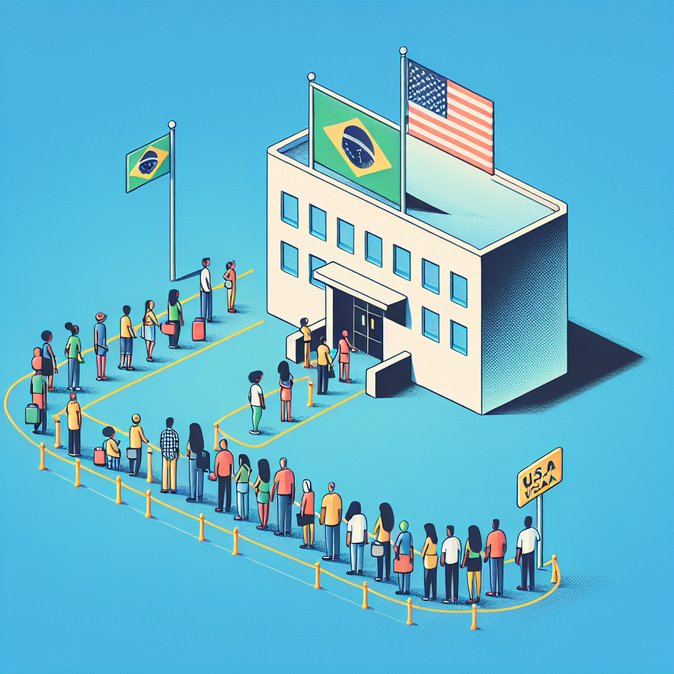
Consular-shopping has been a vital pressure valve for Brazil’s overloaded posts. According to VisaHQ, average interview wait times in São Paulo and Rio de Janeiro hover around 250 days, while applicants in Buenos Aires often secure a slot in six weeks. U.S. officials estimate that rerouting these applicants back to Brazil will add 20–30 percent to local demand in the first year, potentially pushing the queue beyond 300 days if staffing levels remain unchanged.
Fortunately, Brazilian citizens don't have to navigate these shifting requirements alone. VisaHQ’s dedicated Brazil portal (https://www.visahq.com/brazil/) aggregates up-to-the-minute consular announcements, curates appointment alerts, and supplies bilingual customer support that can help applicants assemble complete, error-free packets on the first try—savings that become critical when every resubmission can push a departure date months down the road.
![New U.S. “Home Country Rule” Poised to Lengthen Visa Queues for Brazilians]()
Business-travel stakeholders are already sounding the alarm. The Brazilian Association of Travel Agencies (ABAV) predicts lost revenue of up to R$750 million in cancelled trade-show trips if delays worsen. Multinationals with regional headquarters in São Paulo told Global Mobility News they are preparing to shift meetings to Mexico City or Bogotá, where entry requirements for Brazilians are lighter and U.S. executives face shorter consular timelines.
HR and mobility managers should advise travellers to initiate visa renewals at least 12 months ahead of need and to maintain digital records of previous visas to facilitate interview-waiver eligibility. Companies that rely on frequent U.S. travel may also wish to expand use of their “B-1 in lieu of H-1B” or ESTA-eligible passport holders where possible.
The Home Country Rule underscores the importance of diversified talent-deployment strategies. As U.S. consular capacity tightens, alternative hubs—such as Panama or the Dominican Republic—could become staging points for Latin American project teams.
Consular-shopping has been a vital pressure valve for Brazil’s overloaded posts. According to VisaHQ, average interview wait times in São Paulo and Rio de Janeiro hover around 250 days, while applicants in Buenos Aires often secure a slot in six weeks. U.S. officials estimate that rerouting these applicants back to Brazil will add 20–30 percent to local demand in the first year, potentially pushing the queue beyond 300 days if staffing levels remain unchanged.
Fortunately, Brazilian citizens don't have to navigate these shifting requirements alone. VisaHQ’s dedicated Brazil portal (https://www.visahq.com/brazil/) aggregates up-to-the-minute consular announcements, curates appointment alerts, and supplies bilingual customer support that can help applicants assemble complete, error-free packets on the first try—savings that become critical when every resubmission can push a departure date months down the road.

Business-travel stakeholders are already sounding the alarm. The Brazilian Association of Travel Agencies (ABAV) predicts lost revenue of up to R$750 million in cancelled trade-show trips if delays worsen. Multinationals with regional headquarters in São Paulo told Global Mobility News they are preparing to shift meetings to Mexico City or Bogotá, where entry requirements for Brazilians are lighter and U.S. executives face shorter consular timelines.
HR and mobility managers should advise travellers to initiate visa renewals at least 12 months ahead of need and to maintain digital records of previous visas to facilitate interview-waiver eligibility. Companies that rely on frequent U.S. travel may also wish to expand use of their “B-1 in lieu of H-1B” or ESTA-eligible passport holders where possible.
The Home Country Rule underscores the importance of diversified talent-deployment strategies. As U.S. consular capacity tightens, alternative hubs—such as Panama or the Dominican Republic—could become staging points for Latin American project teams.