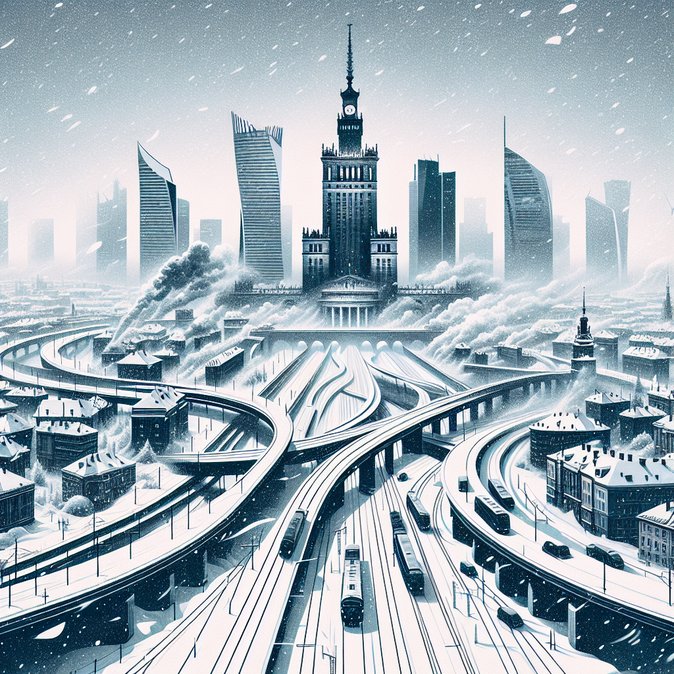
A fierce winter front that swept across central and northern Poland on the night of 30–31 December dumped more than 30 cm of snow on key stretches of the S-7 expressway linking Warsaw with Gdańsk. Long, shallow gradients near Ostróda became impassable for articulated lorries, creating stationary queues that stretched 20 km in both directions and left thousands of motorists stranded overnight.
Emergency services set up ad-hoc warming stations, distributing hot drinks and blankets while snow-ploughs battled high winds that repeatedly drifted snow back onto cleared lanes. Logistics operators told Reuters that dozens of just-in-time shipments—including automotive components bound for Tri-City ports—missed delivery windows, forcing factories to rejig shift patterns.
The chaos rippled through Poland’s multi-modal network. Regional rail services were cancelled when frozen points disabled track switches, and Warsaw Chopin and Gdańsk Lech Wałęsa airports imposed flow-control restrictions that delayed early-morning departures by up to 90 minutes. Although operations normalised by dawn on New Year’s Day, airline planners warned of knock-on rotations throughout the holiday weekend.
![Blizzard paralyses Poland’s S-7 corridor, disrupting road, rail and air travel]()
Travellers caught in these disruptions—and anyone planning journeys through Poland in the coming weeks—may also need to check that their travel documents and visas are in order. VisaHQ’s dedicated Poland portal (https://www.visahq.com/poland/) offers real-time guidance, application checklists, and courier services that can expedite visa processing even when consular offices are operating on shortened holiday schedules.
The General Directorate for National Roads and Motorways (GDDKiA) says it will accelerate installation of additional weather sensors and variable-message signs along the S-7. Regional authorities are considering a dedicated snow-clearing convoy for heavy-haul trucks, while corporates with road-based supply chains are reviewing whether to position safety stocks north of Warsaw.
For mobility managers the storm is a reminder that extreme weather can compound administrative challenges such as the new MOS e-filing requirement. Travel departments are advising assignees to build buffer time into transfers to Gdańsk and to keep winter tyres or rail alternatives in contingency plans.
Emergency services set up ad-hoc warming stations, distributing hot drinks and blankets while snow-ploughs battled high winds that repeatedly drifted snow back onto cleared lanes. Logistics operators told Reuters that dozens of just-in-time shipments—including automotive components bound for Tri-City ports—missed delivery windows, forcing factories to rejig shift patterns.
The chaos rippled through Poland’s multi-modal network. Regional rail services were cancelled when frozen points disabled track switches, and Warsaw Chopin and Gdańsk Lech Wałęsa airports imposed flow-control restrictions that delayed early-morning departures by up to 90 minutes. Although operations normalised by dawn on New Year’s Day, airline planners warned of knock-on rotations throughout the holiday weekend.
Travellers caught in these disruptions—and anyone planning journeys through Poland in the coming weeks—may also need to check that their travel documents and visas are in order. VisaHQ’s dedicated Poland portal (https://www.visahq.com/poland/) offers real-time guidance, application checklists, and courier services that can expedite visa processing even when consular offices are operating on shortened holiday schedules.
The General Directorate for National Roads and Motorways (GDDKiA) says it will accelerate installation of additional weather sensors and variable-message signs along the S-7. Regional authorities are considering a dedicated snow-clearing convoy for heavy-haul trucks, while corporates with road-based supply chains are reviewing whether to position safety stocks north of Warsaw.
For mobility managers the storm is a reminder that extreme weather can compound administrative challenges such as the new MOS e-filing requirement. Travel departments are advising assignees to build buffer time into transfers to Gdańsk and to keep winter tyres or rail alternatives in contingency plans.