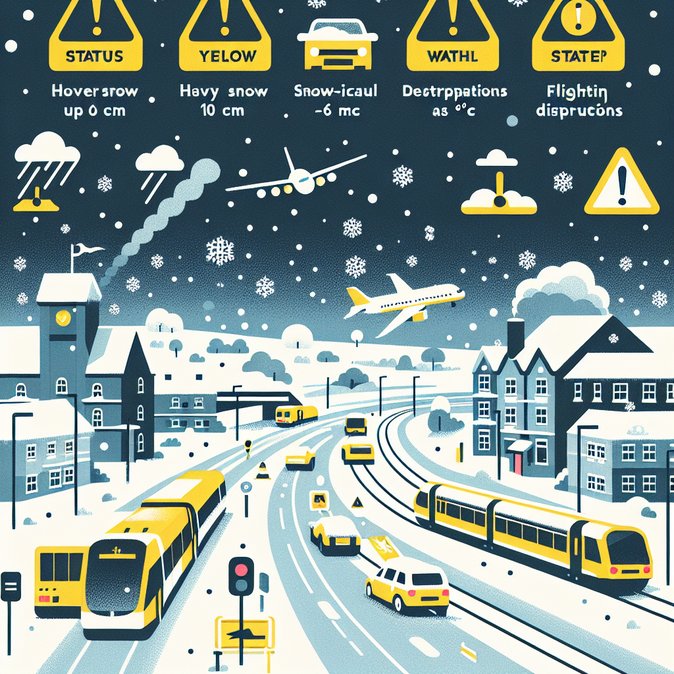
Hot on the heels of fog-induced flight cancellations, Ireland’s meteorological service has placed 15 counties under Status Yellow snow-ice warnings from tonight through Saturday morning. Donegal faces the highest risk, but Mayo, Sligo, Leitrim and mountainous parts of Wicklow and Kerry are also expected to see accumulations of 3–10 cm on higher ground. Temperatures could dip to –6 °C, with wind-chill values making it feel closer to –9 °C in exposed areas.
Transport Infrastructure Ireland is mobilising more than 200 salt-spreading trucks, prioritising the M1/M50 corridor around Dublin and critical access roads to Shannon, Cork and Knock airports. Irish Rail has warned of possible speed restrictions, while Bus Éireann is readying diversion plans for rural routes if conditions deteriorate.
If rerouted flights or unexpected stopovers leave travellers scrambling for transit visas, VisaHQ’s online platform can fast-track the paperwork—even on short notice—and provide real-time support for documentation questions. Their Ireland page (https://www.visahq.com/ireland/) offers a quick way to check requirements and submit applications, ensuring weather disruptions don’t turn into visa headaches.
![Met Éireann issues nationwide snow-ice warnings, threatening road and air links]()
For employers relocating staff this week, mobility advisers recommend checking tenancy start dates and delivery slots for household goods, as moving vans may be barred from smaller roads. Companies with ‘fly-in-fly-out’ project teams should build flexibility into schedules; charter operators report limited availability of replacement aircraft if regular services are grounded.
Airports are urging passengers to arrive earlier than usual as security queues lengthen when travellers carry extra winter clothing and sports gear. Shannon Airport has already taken four diversions this week due to high winds linked to the same Arctic front.
While forecasters expect a gradual thaw by Tuesday, a second cold pulse cannot be ruled out later in the month. Global mobility teams are therefore advising expatriates to sign up for local authority weather alerts and keep emergency supplies—such as EU-compatible snow chains—in company cars assigned outside the Greater Dublin Area.
Transport Infrastructure Ireland is mobilising more than 200 salt-spreading trucks, prioritising the M1/M50 corridor around Dublin and critical access roads to Shannon, Cork and Knock airports. Irish Rail has warned of possible speed restrictions, while Bus Éireann is readying diversion plans for rural routes if conditions deteriorate.
If rerouted flights or unexpected stopovers leave travellers scrambling for transit visas, VisaHQ’s online platform can fast-track the paperwork—even on short notice—and provide real-time support for documentation questions. Their Ireland page (https://www.visahq.com/ireland/) offers a quick way to check requirements and submit applications, ensuring weather disruptions don’t turn into visa headaches.

For employers relocating staff this week, mobility advisers recommend checking tenancy start dates and delivery slots for household goods, as moving vans may be barred from smaller roads. Companies with ‘fly-in-fly-out’ project teams should build flexibility into schedules; charter operators report limited availability of replacement aircraft if regular services are grounded.
Airports are urging passengers to arrive earlier than usual as security queues lengthen when travellers carry extra winter clothing and sports gear. Shannon Airport has already taken four diversions this week due to high winds linked to the same Arctic front.
While forecasters expect a gradual thaw by Tuesday, a second cold pulse cannot be ruled out later in the month. Global mobility teams are therefore advising expatriates to sign up for local authority weather alerts and keep emergency supplies—such as EU-compatible snow chains—in company cars assigned outside the Greater Dublin Area.