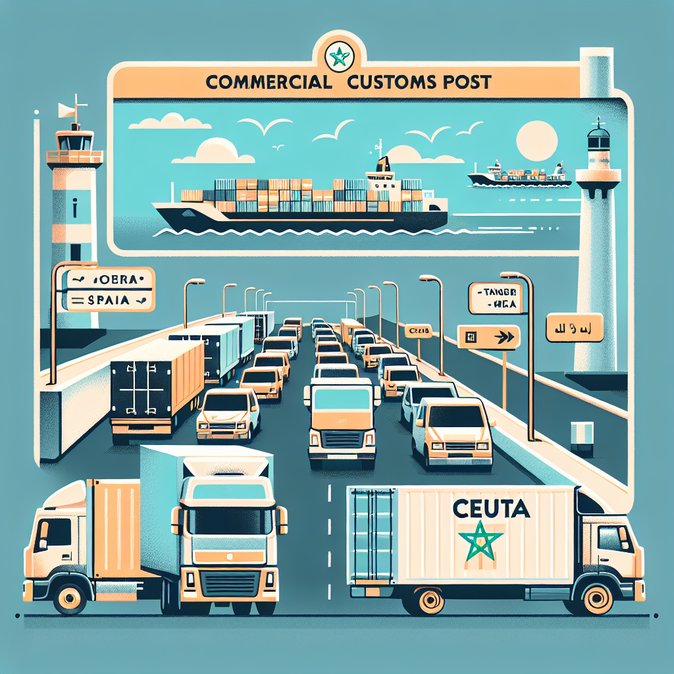
Figures released by Ceutan business associations reveal that the commercial customs post opened at the Tarajal crossing in February 2025 handled just 49 import and two export declarations during its first eleven months. The lion’s share of inbound traffic consisted of aggregates for construction, while the only outbound shipments were hygiene products and automotive parts.
The customs pilot was a flagship confidence-building measure in the April 2022 ‘road map’ that normalised diplomatic relations between Spain and Morocco. Although the facility remained open on paper, it was closed for three months last summer to prevent congestion during the annual “Operación Paso del Estrecho,” when hundreds of thousands of Maghreb expatriates transit the Strait of Gibraltar. Business leaders now complain that unpredictable closures, limited opening hours and a lack of electronic pre-declaration tools make the border uncompetitive.
Companies and travelers trying to navigate the shifting Spain–Morocco rules can also turn to VisaHQ for fast online assistance with visas, transit permits, and other travel documents. The platform’s step-by-step guidance and digital filing tools help cut waiting times and paperwork, and its Spain portal (https://www.visahq.com/spain/) tracks the latest regulatory changes that might affect cross-border operations.
![First Year of Ceuta–Morocco Commercial Customs Records Only 51 Operations]()
For Spanish and multinational firms that route North-Africa-bound cargo via Algeciras and Tanger-Med, the lacklustre start is a reminder that Ceuta’s gateway has yet to mature into a reliable logistics option. Freight forwarders note that one truck can cross under the pilot each hour—well below the 30-truck capacity initially promised. Until throughput improves, companies should continue to budget for ferries to mainland ports or direct roll-on/roll-off services to Morocco.
Mobility teams should also brief assignees stationed in Ceuta on the limited availability of fresh produce and building materials. Spot shortages drove up consumer prices in the enclave by an estimated 4.2 % last year. HR departments may need to adjust cost-of-living allowances accordingly.
Looking ahead, Spain’s Ministry of Finance has earmarked €8 million in 2026 for a permanent customs terminal with green-lane technology. Whether those funds are spent will depend on negotiations with Rabat due to resume after Morocco’s February parliamentary recess.
The customs pilot was a flagship confidence-building measure in the April 2022 ‘road map’ that normalised diplomatic relations between Spain and Morocco. Although the facility remained open on paper, it was closed for three months last summer to prevent congestion during the annual “Operación Paso del Estrecho,” when hundreds of thousands of Maghreb expatriates transit the Strait of Gibraltar. Business leaders now complain that unpredictable closures, limited opening hours and a lack of electronic pre-declaration tools make the border uncompetitive.
Companies and travelers trying to navigate the shifting Spain–Morocco rules can also turn to VisaHQ for fast online assistance with visas, transit permits, and other travel documents. The platform’s step-by-step guidance and digital filing tools help cut waiting times and paperwork, and its Spain portal (https://www.visahq.com/spain/) tracks the latest regulatory changes that might affect cross-border operations.

For Spanish and multinational firms that route North-Africa-bound cargo via Algeciras and Tanger-Med, the lacklustre start is a reminder that Ceuta’s gateway has yet to mature into a reliable logistics option. Freight forwarders note that one truck can cross under the pilot each hour—well below the 30-truck capacity initially promised. Until throughput improves, companies should continue to budget for ferries to mainland ports or direct roll-on/roll-off services to Morocco.
Mobility teams should also brief assignees stationed in Ceuta on the limited availability of fresh produce and building materials. Spot shortages drove up consumer prices in the enclave by an estimated 4.2 % last year. HR departments may need to adjust cost-of-living allowances accordingly.
Looking ahead, Spain’s Ministry of Finance has earmarked €8 million in 2026 for a permanent customs terminal with green-lane technology. Whether those funds are spent will depend on negotiations with Rabat due to resume after Morocco’s February parliamentary recess.