Business and leisure travellers returning home after the New Year break faced a bruising start to 2026 as Spain’s newly-installed Entry/Exit System (EES) buckled under peak-season pressure.
According to an alert emailed by Ryanair on 31 December, passport-control queues for flights to the UK and Ireland at Málaga-Costa del Sol and other Spanish gateways are now “significantly longer than normal” and have already caused some passengers to miss their departures. The low-cost carrier urged customers to arrive at the airport three hours before take-off and to head straight to security and border controls once baggage is dropped.
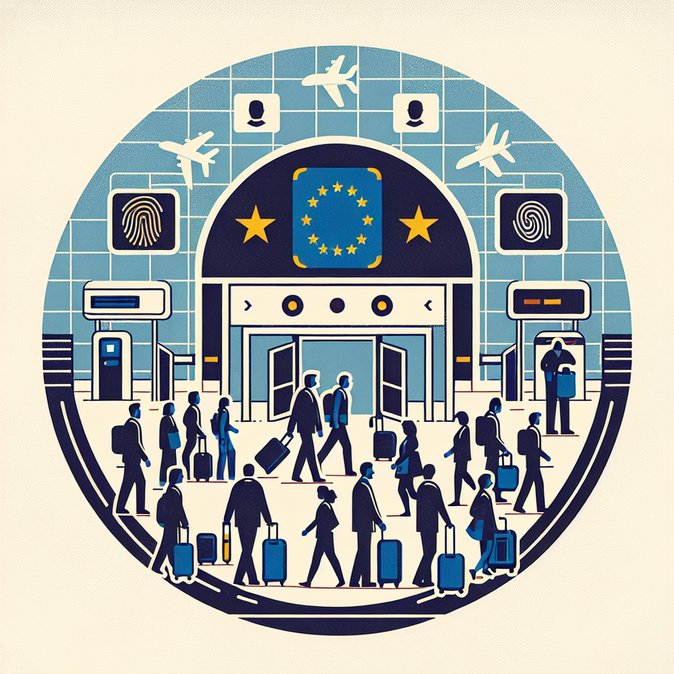
EES, which entered its phased roll-out across the EU on 12 October 2025, replaces manual stamping with biometric enrolment (four fingerprints and a facial image) for every third-country national entering or leaving the Schengen Area. While the first registration should take less than three minutes per traveller, inadequate staffing and repeated software glitches have stretched processing times to ten minutes or more during holiday peaks, airport police unions told local media. The result at Málaga last week was a backlog of up to 1,200 passengers an hour funnelled through kiosks designed for 450.
![Ryanair warns of 90-minute EES queues as Spain’s airports struggle on New Year’s getaway]()
For corporate mobility managers the chaos is more than an inconvenience. Missed onward connections have knock-on effects on hotel, meeting and project schedules, while the uncertain dwell times make it harder to cost and plan assignments that involve frequent cross-border hops. Some firms have already begun routing assignees through Madrid’s and Barcelona’s fast-track lanes or via internal EU hubs to avoid Spain-originating bottlenecks—but those corridors, too, risk saturation if the problems persist.
Spanish airport operator Aena says the congestion is “part of a normal adjustment period” and insists throughput will improve as more kiosks come online and staff complete mandatory training. Yet industry body ACI Europe warns that from 9 January the proportion of passengers who must complete full biometric capture will rise from 10 % to 35 %, potentially extending waits by a further 70 %.
For travellers seeking help navigating these new requirements, VisaHQ’s Spain portal (https://www.visahq.com/spain/) offers real-time updates on EES procedures, guidance on biometric enrolment, and assistance with securing the correct travel documents or fast-track options—helping both individuals and corporate travel teams minimise the risk of costly delays.
Practical advice for travellers is blunt: build generous buffers into itineraries for flights leaving Spain to non-Schengen destinations, pre-enrol in fast-track or trusted-traveller channels where available, and keep boarding passes and proof of onward travel handy to avoid secondary screening. Companies should review duty-of-care policies—especially for tight connections—and consider temporary remote-work arrangements if delays threaten business-critical engagements.
According to an alert emailed by Ryanair on 31 December, passport-control queues for flights to the UK and Ireland at Málaga-Costa del Sol and other Spanish gateways are now “significantly longer than normal” and have already caused some passengers to miss their departures. The low-cost carrier urged customers to arrive at the airport three hours before take-off and to head straight to security and border controls once baggage is dropped.
EES, which entered its phased roll-out across the EU on 12 October 2025, replaces manual stamping with biometric enrolment (four fingerprints and a facial image) for every third-country national entering or leaving the Schengen Area. While the first registration should take less than three minutes per traveller, inadequate staffing and repeated software glitches have stretched processing times to ten minutes or more during holiday peaks, airport police unions told local media. The result at Málaga last week was a backlog of up to 1,200 passengers an hour funnelled through kiosks designed for 450.

For corporate mobility managers the chaos is more than an inconvenience. Missed onward connections have knock-on effects on hotel, meeting and project schedules, while the uncertain dwell times make it harder to cost and plan assignments that involve frequent cross-border hops. Some firms have already begun routing assignees through Madrid’s and Barcelona’s fast-track lanes or via internal EU hubs to avoid Spain-originating bottlenecks—but those corridors, too, risk saturation if the problems persist.
Spanish airport operator Aena says the congestion is “part of a normal adjustment period” and insists throughput will improve as more kiosks come online and staff complete mandatory training. Yet industry body ACI Europe warns that from 9 January the proportion of passengers who must complete full biometric capture will rise from 10 % to 35 %, potentially extending waits by a further 70 %.
For travellers seeking help navigating these new requirements, VisaHQ’s Spain portal (https://www.visahq.com/spain/) offers real-time updates on EES procedures, guidance on biometric enrolment, and assistance with securing the correct travel documents or fast-track options—helping both individuals and corporate travel teams minimise the risk of costly delays.
Practical advice for travellers is blunt: build generous buffers into itineraries for flights leaving Spain to non-Schengen destinations, pre-enrol in fast-track or trusted-traveller channels where available, and keep boarding passes and proof of onward travel handy to avoid secondary screening. Companies should review duty-of-care policies—especially for tight connections—and consider temporary remote-work arrangements if delays threaten business-critical engagements.