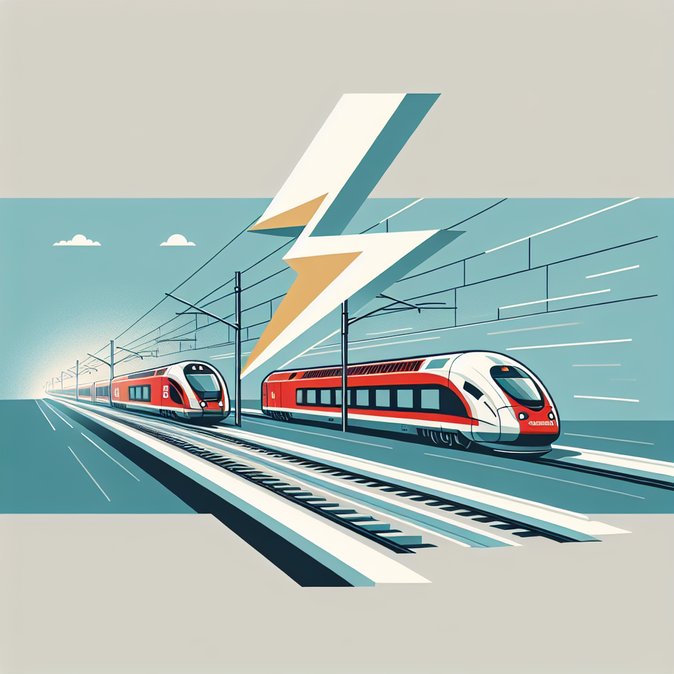
Barely three weeks after a Swiss Giruno high-speed train was christened in Hamburg with alphorn fanfare, the Deutsche Bahn (DB) has quietly pulled the Stadler-built sets from the prestigious Basel–Hamburg corridor because of repeated onboard power-surge faults. From 30 December until at least 1 January, the service is being operated by Siemens ICE rolling stock, a public embarrassment for both Swiss Federal Railways (SBB) and manufacturer Stadler Rail.
SBB says the glitches occur only when two Giruno units operate in “Doppeltraktion” (coupled formation). An over-sensitive stray-current monitoring system cuts power to traction motors, forcing unscheduled stops. Stadler engineers have been installing software updates since 29 December and are “confident” the trains will resume full Hamburg runs from 2 January.
For cross-border commuters and business travellers the swap means a different seat map but similar journey times; DB has promised identical seat capacity. However, the incident highlights the operational risk of deploying new hardware on international routes without extensive winter testing. Corporate travel planners should monitor the roster closely, particularly for wheelchair users who booked specific door heights on Giruno sets.
![Technical Glitches Sideline SBB’s Flagship Giruno Trains on Basel–Hamburg Route]()
Travel disruptions are also a timely reminder to verify travel documents. Should you need to detour through Switzerland or extend a stay because of timetable changes, VisaHQ can quickly clarify Schengen entry rules and even process Swiss visa applications online—check https://www.visahq.com/switzerland/ for streamlined assistance before you board.
The hiccup comes amid a broader spat between Stadler and Siemens over European train-set tenders. Mobility analysts note that SBB’s decision to order additional Giruno units to expand north-south frequency now looks risky. If the fix fails, long-term leasing of extra ICE sets could strain budgets and delay plans to cut Zurich–Hamburg journey times below six hours.
From a compliance angle, the episode underlines the need for accurate passenger manifests. Rail operators in Germany require ID checks on some long-distance services; passengers rebooked onto different trains should carry passports or Swiss residence cards to avoid fines during spot inspections.
SBB says the glitches occur only when two Giruno units operate in “Doppeltraktion” (coupled formation). An over-sensitive stray-current monitoring system cuts power to traction motors, forcing unscheduled stops. Stadler engineers have been installing software updates since 29 December and are “confident” the trains will resume full Hamburg runs from 2 January.
For cross-border commuters and business travellers the swap means a different seat map but similar journey times; DB has promised identical seat capacity. However, the incident highlights the operational risk of deploying new hardware on international routes without extensive winter testing. Corporate travel planners should monitor the roster closely, particularly for wheelchair users who booked specific door heights on Giruno sets.
Travel disruptions are also a timely reminder to verify travel documents. Should you need to detour through Switzerland or extend a stay because of timetable changes, VisaHQ can quickly clarify Schengen entry rules and even process Swiss visa applications online—check https://www.visahq.com/switzerland/ for streamlined assistance before you board.
The hiccup comes amid a broader spat between Stadler and Siemens over European train-set tenders. Mobility analysts note that SBB’s decision to order additional Giruno units to expand north-south frequency now looks risky. If the fix fails, long-term leasing of extra ICE sets could strain budgets and delay plans to cut Zurich–Hamburg journey times below six hours.
From a compliance angle, the episode underlines the need for accurate passenger manifests. Rail operators in Germany require ID checks on some long-distance services; passengers rebooked onto different trains should carry passports or Swiss residence cards to avoid fines during spot inspections.