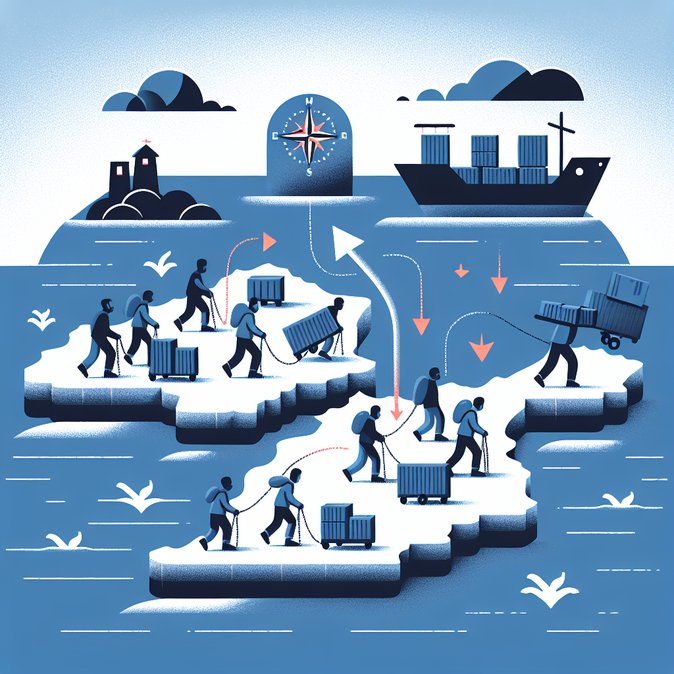
Spain’s Ministry of Territorial Policy has confirmed that 1,000 unaccompanied migrant children have been flown or ferried from the Canary Islands, Ceuta and Melilla to mainland regions since June under the country’s new ‘contingency’ mechanism for minors. The figure, released on 30 December, is the first official tally since Parliament amended Article 35 of the Immigration Law in March to mandate burden-sharing when local reception capacity is exceeded.
The Canary archipelago, gateway to Atlantic migration routes, hosted more than 16,000 minors during the 2023–24 surge, overwhelming social-services budgets and straining relations with Madrid. Under the reformed rules, the central government now coordinates and finances travel, while host regions receive per-capita grants for housing, schooling and social work. Andalusia and Valencia have taken the largest quotas so far.
Although the policy centres on humanitarian protection, it carries practical implications for employers. Relocation eases pressure on Canary Island infrastructure—crucial for tourism, renewable-energy and logistics projects that rely on predictable housing and transport networks. At the same time, the Interior Ministry cautions that mainland shelter capacity is finite, and corporate sponsors of guardianship or trainee programmes should track future allocation rounds.
![Spain transfers 1,000 unaccompanied minors from Canary Islands under Article 35 reform]()
If your organization needs assistance securing visas, transit permissions or supporting documents for staff, volunteers or family members affected by Spain’s evolving migration framework, VisaHQ can help. Our dedicated Spain resource center (https://www.visahq.com/spain/) provides up-to-date requirements, application checklists and concierge services, ensuring compliance whether you’re arranging short-term visits to shelters or long-term placements across autonomous communities.
Politically, the reform remains contentious. Opposition leader Alberto Núñez Feijóo has vowed to repeal Article 35 if elected, arguing it incentivises risky sea crossings. The current coalition counters that the mechanism simply honours Spain’s obligations under EU and UN child-protection instruments.
Global-mobility teams dealing with family-reunification cases should note that documentation standards for minors’ education and health records may change again in 2026, when the ministry plans to publish uniform guidelines.
The Canary archipelago, gateway to Atlantic migration routes, hosted more than 16,000 minors during the 2023–24 surge, overwhelming social-services budgets and straining relations with Madrid. Under the reformed rules, the central government now coordinates and finances travel, while host regions receive per-capita grants for housing, schooling and social work. Andalusia and Valencia have taken the largest quotas so far.
Although the policy centres on humanitarian protection, it carries practical implications for employers. Relocation eases pressure on Canary Island infrastructure—crucial for tourism, renewable-energy and logistics projects that rely on predictable housing and transport networks. At the same time, the Interior Ministry cautions that mainland shelter capacity is finite, and corporate sponsors of guardianship or trainee programmes should track future allocation rounds.

If your organization needs assistance securing visas, transit permissions or supporting documents for staff, volunteers or family members affected by Spain’s evolving migration framework, VisaHQ can help. Our dedicated Spain resource center (https://www.visahq.com/spain/) provides up-to-date requirements, application checklists and concierge services, ensuring compliance whether you’re arranging short-term visits to shelters or long-term placements across autonomous communities.
Politically, the reform remains contentious. Opposition leader Alberto Núñez Feijóo has vowed to repeal Article 35 if elected, arguing it incentivises risky sea crossings. The current coalition counters that the mechanism simply honours Spain’s obligations under EU and UN child-protection instruments.
Global-mobility teams dealing with family-reunification cases should note that documentation standards for minors’ education and health records may change again in 2026, when the ministry plans to publish uniform guidelines.