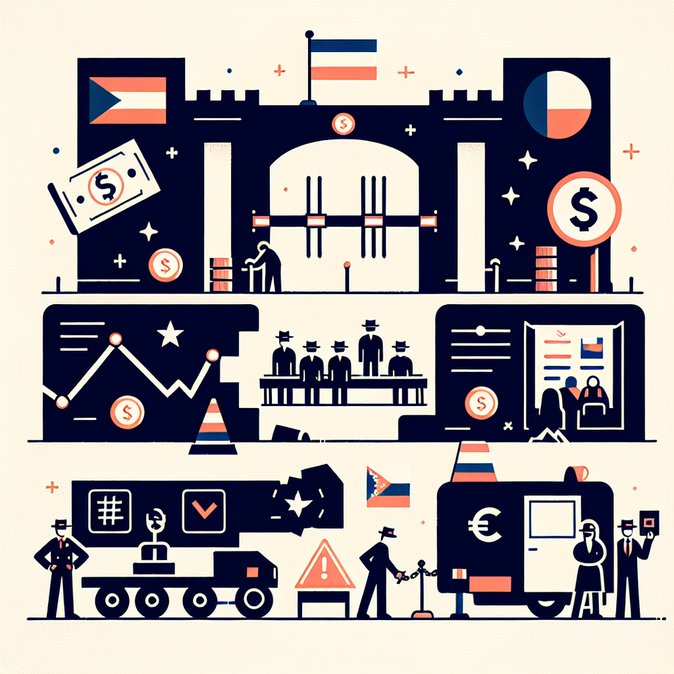
Travelling between Czechia and Austria will remain a stop-and-show-your-passport experience for at least another 18 months. At a press conference in Vienna on 12 December, Interior Minister Gerhard Karner detailed a new “Three-Wall” security concept that turns the current six-month rolling derogation from Schengen free-movement rules into a semi-permanent fixture. Under the plan, ‘Wall One’ reinforces EU external borders in the Western Balkans, ‘Wall Two’ expands joint patrols inside Hungary, and the newly announced ‘Wall Three’ cements mobile police, drone and ANPR units on Austrian soil to monitor every road and rail crossing with Czechia.
For travellers the immediate impact is clear-cut: everyone—including EU citizens—must continue to funnel through designated checkpoints where IDs and sometimes vehicle papers are inspected. Hauliers already report morning queues of 30-45 minutes at Kleinhaugsdorf/Hatě and Mikulov/Drasenhofen, adding €40-€70 to a Prague–Vienna round-trip delivery. Business coaches and rail operator ÖBB say on-board spot checks will also continue.
Czech logistics and automotive suppliers fear the prolonged controls will erode the just-in-time chains that make up a €13 billion bilateral trade corridor. Prague’s Interior Ministry has signalled it will raise the issue at the next EU Justice & Home Affairs Council, arguing that migrant-smuggling incidents on the frontier are now “close to zero” and that staff shortages, not security, are driving most delays.
![Austria Locks In ‘Three-Wall’ Strategy, Keeps Czech Border Checks Until June 2026]()
In this environment, VisaHQ can serve as a one-stop resource: its platform provides live updates on Czech and Austrian entry requirements, helps fast-track passport or second-passport applications, and offers corporate support packages that keep business travel and supply chains running smoothly. Learn more at https://www.visahq.com/czech-republic/
From a corporate-mobility perspective, the extension means travel managers must keep contingency buffers in itineraries and ensure that assignees carry passports or national ID cards even on nominally ‘domestic’ Schengen trips. HR teams relocating staff between Vienna and Brno should also budget for higher relocation-truck costs and potential overtime triggered by border queues. Visa-service providers report a spike in enquiries from cross-border commuters who now want second passports to avoid document-processing delays.
Longer term, diplomats warn that converting what was supposed to be a temporary derogation into a standing policy risks normalising internal Schengen borders across the EU. If other member states follow Austria’s lead, companies could face a patchwork of checks undermining one of Europe’s key competitive advantages—seamless mobility of people and goods.
For travellers the immediate impact is clear-cut: everyone—including EU citizens—must continue to funnel through designated checkpoints where IDs and sometimes vehicle papers are inspected. Hauliers already report morning queues of 30-45 minutes at Kleinhaugsdorf/Hatě and Mikulov/Drasenhofen, adding €40-€70 to a Prague–Vienna round-trip delivery. Business coaches and rail operator ÖBB say on-board spot checks will also continue.
Czech logistics and automotive suppliers fear the prolonged controls will erode the just-in-time chains that make up a €13 billion bilateral trade corridor. Prague’s Interior Ministry has signalled it will raise the issue at the next EU Justice & Home Affairs Council, arguing that migrant-smuggling incidents on the frontier are now “close to zero” and that staff shortages, not security, are driving most delays.

In this environment, VisaHQ can serve as a one-stop resource: its platform provides live updates on Czech and Austrian entry requirements, helps fast-track passport or second-passport applications, and offers corporate support packages that keep business travel and supply chains running smoothly. Learn more at https://www.visahq.com/czech-republic/
From a corporate-mobility perspective, the extension means travel managers must keep contingency buffers in itineraries and ensure that assignees carry passports or national ID cards even on nominally ‘domestic’ Schengen trips. HR teams relocating staff between Vienna and Brno should also budget for higher relocation-truck costs and potential overtime triggered by border queues. Visa-service providers report a spike in enquiries from cross-border commuters who now want second passports to avoid document-processing delays.
Longer term, diplomats warn that converting what was supposed to be a temporary derogation into a standing policy risks normalising internal Schengen borders across the EU. If other member states follow Austria’s lead, companies could face a patchwork of checks undermining one of Europe’s key competitive advantages—seamless mobility of people and goods.