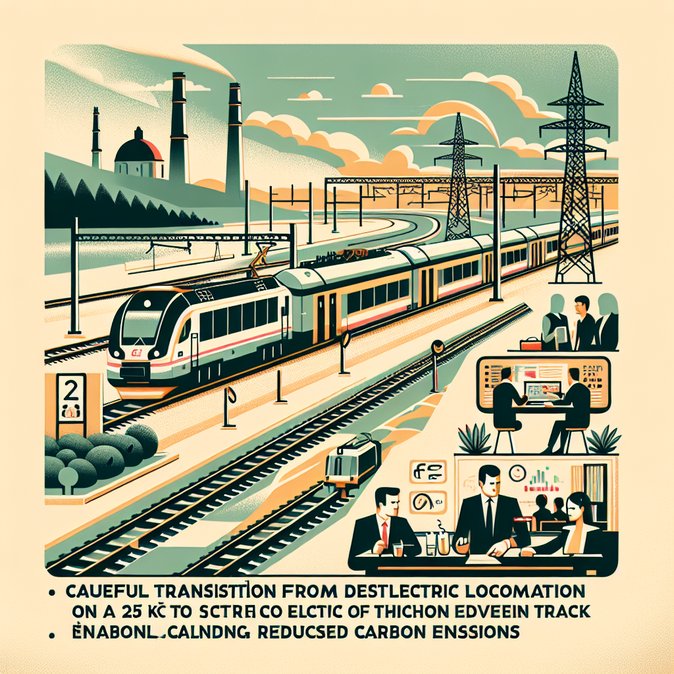
The Czech Ministry of the Environment confirmed on 8 December that it will channel almost 11 billion Kč (€460 million) from the EU Emissions Trading System (ETS) Modernisation Fund into rail electrification projects through 2028. The package covers 205 km of currently diesel-only lines, including portions of the Plzeň–České Budějovice freight axis and the regional hub around Olomouc.
Work will involve catenary installations, sub-station upgrades and track renewals that raise line-speeds to 120–160 km/h. Freight carriers will be eligible for grants to scrap ageing diesel locomotives and acquire multi-system electrics, aligning with the EU’s 30 % modal-shift target for rail by 2030.
For project stakeholders traveling into or out of the Czech Republic to oversee electrification works, VisaHQ can simplify visa procurement, offering a digital portal for Czech business, work, or transit visas along with live guidance on entry rules and processing times. The service—detailed at https://www.visahq.com/czech-republic/—helps ensure that engineers, consultants and logistics planners arrive on site without administrative delays.
![€460 Million EU Modernisation Fund To Electrify Key Czech Rail Corridors]()
For corporate mobility managers, the projects promise faster, greener connections between industrial zones and the country’s western ports, potentially shaving hours off door-to-door transit when combined with newly delivered ComfortJet passenger sets. Multinationals with Czech production sites can expect reduced Scope 3 emissions in their supply chains once the lines go live.
Construction is scheduled to start in Q3 2026 after environmental assessments, with phased commissioning through 2029. The transport ministry has pledged weekend possession windows to minimise disruption to commuter services, but logistics teams should plan for temporary reroutings and longer transit times on selected weekends.
The investment comes as neighbouring Austria and Germany accelerate similar electrification drives, signalling a broader Central-European shift away from diesel traction and creating fresh momentum for cross-border through-services.
Work will involve catenary installations, sub-station upgrades and track renewals that raise line-speeds to 120–160 km/h. Freight carriers will be eligible for grants to scrap ageing diesel locomotives and acquire multi-system electrics, aligning with the EU’s 30 % modal-shift target for rail by 2030.
For project stakeholders traveling into or out of the Czech Republic to oversee electrification works, VisaHQ can simplify visa procurement, offering a digital portal for Czech business, work, or transit visas along with live guidance on entry rules and processing times. The service—detailed at https://www.visahq.com/czech-republic/—helps ensure that engineers, consultants and logistics planners arrive on site without administrative delays.
For corporate mobility managers, the projects promise faster, greener connections between industrial zones and the country’s western ports, potentially shaving hours off door-to-door transit when combined with newly delivered ComfortJet passenger sets. Multinationals with Czech production sites can expect reduced Scope 3 emissions in their supply chains once the lines go live.
Construction is scheduled to start in Q3 2026 after environmental assessments, with phased commissioning through 2029. The transport ministry has pledged weekend possession windows to minimise disruption to commuter services, but logistics teams should plan for temporary reroutings and longer transit times on selected weekends.
The investment comes as neighbouring Austria and Germany accelerate similar electrification drives, signalling a broader Central-European shift away from diesel traction and creating fresh momentum for cross-border through-services.