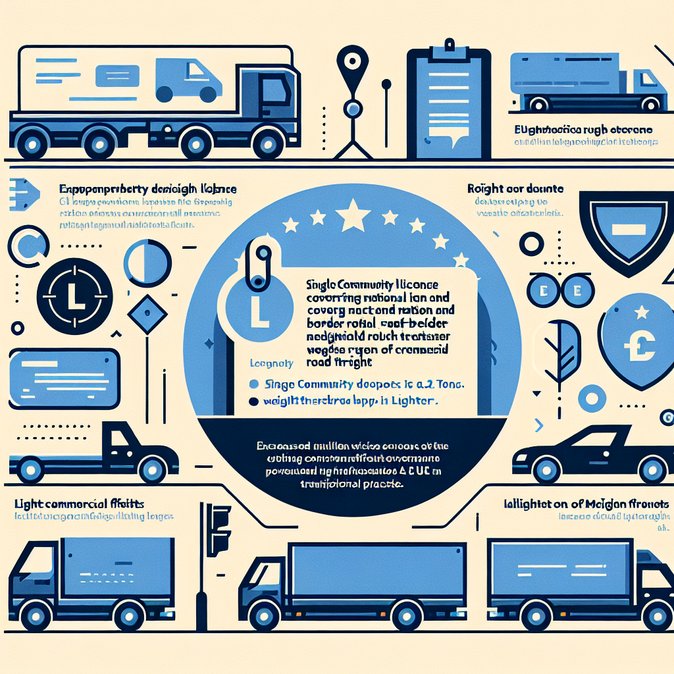
Also on 4 December, lawmakers adopted a government bill amending the Road Haulage Act and Passenger Transport Act to implement the EU’s Mobility Package I. The reform replaces Germany’s national haulage permit with the EU Community Licence for both domestic and international operations and lowers the weight threshold from 3.5 t to 2.5 t.
By expanding the licence requirement to lighter commercial vehicles, Berlin closes a regulatory gap that allowed ‘grey-fleet’ vans to avoid cabotage rules and social compliance checks. The law also creates a centralised risk-rating system for transport companies, paving the way for more targeted roadside inspections and digital presentation of documents.
![Bundestag transposes EU Mobility Package I: Community licence becomes standard for trucks from 2.5 t]()
For logistics providers and corporate fleets, the changes mean that German-based subsidiaries must apply for—or upgrade to—the EU licence and ensure drivers carry compliant digital evidence. Smaller e-commerce operators that rely on sub-3.5-tonne vans will face new administrative steps and potentially higher costs.
Because most other member states have already transposed Mobility Package I, the German move brings the single market closer to uniform enforcement, reducing forum-shopping and helping compliant firms compete on equal terms.
By expanding the licence requirement to lighter commercial vehicles, Berlin closes a regulatory gap that allowed ‘grey-fleet’ vans to avoid cabotage rules and social compliance checks. The law also creates a centralised risk-rating system for transport companies, paving the way for more targeted roadside inspections and digital presentation of documents.

For logistics providers and corporate fleets, the changes mean that German-based subsidiaries must apply for—or upgrade to—the EU licence and ensure drivers carry compliant digital evidence. Smaller e-commerce operators that rely on sub-3.5-tonne vans will face new administrative steps and potentially higher costs.
Because most other member states have already transposed Mobility Package I, the German move brings the single market closer to uniform enforcement, reducing forum-shopping and helping compliant firms compete on equal terms.