Prague’s Václav Havel Airport (PRG) has cleared a critical regulatory hurdle in its decade-long modernisation drive. On 4 December 2025 the Building Authority of the Central Bohemia Region issued a provisional building permit for a 3.5-kilometre parallel runway that will sit north of the existing primary strip. Airport operator Letiště Praha says the decision unlocks detailed engineering and environmental studies that will run through 2027, with ground-breaking targeted for early 2028.
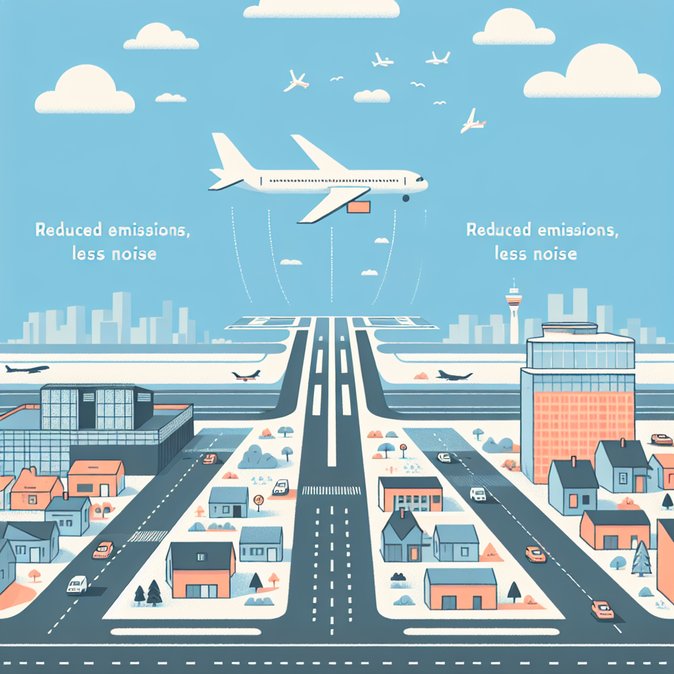
The parallel layout will let PRG dedicate one runway to departures and the other to arrivals, raising declared hourly capacity from today’s 46 movements to about 70. Management argues that higher daytime throughput will, in turn, make it possible to close the entire airfield to take-offs and landings between 00:00 and 05:30—an important concession for residents of densely populated Prague 6 and Kladno who have long complained about night-time noise.
![Prague Airport Secures Building Permit for Long-Awaited Parallel Runway]()
From a mobility perspective, the project should improve schedule reliability for multinational firms that depend on Prague as their Central-European hub. Shorter taxi-times and fewer airborne holding patterns are projected to cut average block time on key business routes (Frankfurt, Paris, London) by 3-5 minutes, saving airlines an estimated €18 million in fuel and CO₂ costs annually once the runway opens in 2032. For travellers, the airport expects average arrival-gate delays to drop by one-third.
The permit comes with 42 conditions covering noise contours, habitat protection and mandatory community consultations. Letiště Praha must also decommission the current secondary runway and fund additional insulation for 3,100 nearby homes. Financing—roughly CZK 18 billion (€730 million)—will be a mix of airport cash flow and EIB loans; officials stress that no state guarantee is required.
What’s next? Detailed design, tendering and land acquisitions will dominate 2026–27. Assuming timelines hold, the runway could be operational by the 2032 summer schedule, just as PRG forecasts annual passenger volumes to exceed 25 million. That makes the permit a pivotal milestone not only for Czech aviation but for the wider corporate-travel ecosystem that relies on the country’s principal gateway.
The parallel layout will let PRG dedicate one runway to departures and the other to arrivals, raising declared hourly capacity from today’s 46 movements to about 70. Management argues that higher daytime throughput will, in turn, make it possible to close the entire airfield to take-offs and landings between 00:00 and 05:30—an important concession for residents of densely populated Prague 6 and Kladno who have long complained about night-time noise.

From a mobility perspective, the project should improve schedule reliability for multinational firms that depend on Prague as their Central-European hub. Shorter taxi-times and fewer airborne holding patterns are projected to cut average block time on key business routes (Frankfurt, Paris, London) by 3-5 minutes, saving airlines an estimated €18 million in fuel and CO₂ costs annually once the runway opens in 2032. For travellers, the airport expects average arrival-gate delays to drop by one-third.
The permit comes with 42 conditions covering noise contours, habitat protection and mandatory community consultations. Letiště Praha must also decommission the current secondary runway and fund additional insulation for 3,100 nearby homes. Financing—roughly CZK 18 billion (€730 million)—will be a mix of airport cash flow and EIB loans; officials stress that no state guarantee is required.
What’s next? Detailed design, tendering and land acquisitions will dominate 2026–27. Assuming timelines hold, the runway could be operational by the 2032 summer schedule, just as PRG forecasts annual passenger volumes to exceed 25 million. That makes the permit a pivotal milestone not only for Czech aviation but for the wider corporate-travel ecosystem that relies on the country’s principal gateway.