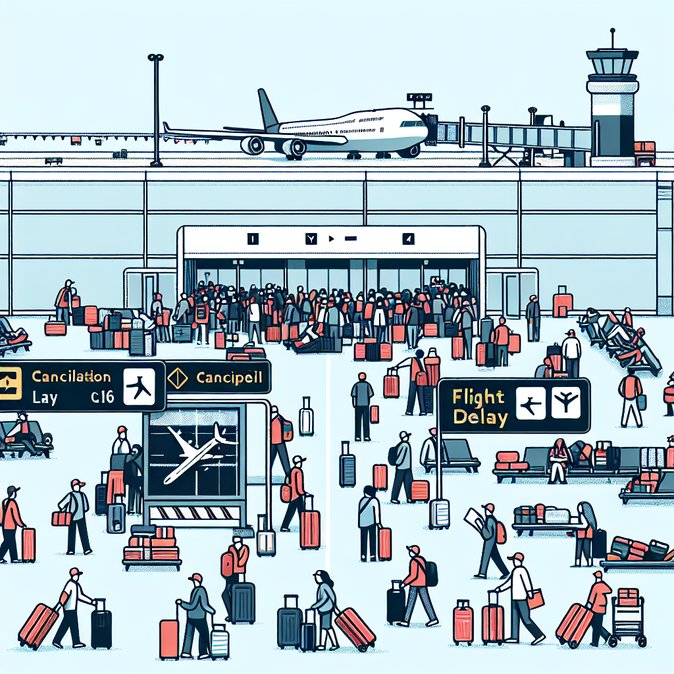
Winter weather sweeping across Germany, Switzerland and Austria led several carriers to pre-emptively cancel services on 5 December, including Lufthansa Group partner Air Dolomiti’s EN 8056 from Munich to Graz and an early-afternoon Lufthansa mainline rotation to Vienna. Munich Airport reported runway contamination and reduced visibility, prompting airlines to trim schedules before passengers arrived at the terminal.
The cancellations strand hundreds of passengers at the start of one of the busiest pre-Christmas travel weekends. Austrian Railways (ÖBB) reported a spike in Munich–Vienna Railjet bookings within hours of the flight cuts, but warned that capacity is limited because sets are already close to full. Travellers headed to Graz faced even fewer alternatives, with only two FlixBus departures before midnight.
![Snowstorm across Central Europe forces airlines to cancel Munich–Vienna and Munich–Graz flights]()
Vienna International Airport was spared the heaviest snowfall but still operated under low-visibility procedures, with the 04:00 TAF forecasting scattered clouds at 300 ft and broken ceiling at 900 ft until late morning. De-icing queues of up to 25 minutes were reported on short-haul Embraer and A320 aircraft, while long-haul flights carried extra fuel for potential holding patterns.
Corporate mobility teams are advising travellers to re-route via Zurich or Prague or to switch to rail where feasible. Airlines have activated EU261 re-booking policies; most affected passengers can shift to flights on 6 or 7 December at no extra cost, but business-class inventory is scarce. Travel insurers remind policy-holders that weather-related cancellations generally trigger compensation only for downstream costs, not statutory payouts.
In the medium term, Vienna Airport reiterated its call for national aviation tax reform, arguing that high fees reduce resilience by discouraging airlines from basing spare aircraft in Austria—an issue laid bare when weather forces rapid re-scheduling.
The cancellations strand hundreds of passengers at the start of one of the busiest pre-Christmas travel weekends. Austrian Railways (ÖBB) reported a spike in Munich–Vienna Railjet bookings within hours of the flight cuts, but warned that capacity is limited because sets are already close to full. Travellers headed to Graz faced even fewer alternatives, with only two FlixBus departures before midnight.

Vienna International Airport was spared the heaviest snowfall but still operated under low-visibility procedures, with the 04:00 TAF forecasting scattered clouds at 300 ft and broken ceiling at 900 ft until late morning. De-icing queues of up to 25 minutes were reported on short-haul Embraer and A320 aircraft, while long-haul flights carried extra fuel for potential holding patterns.
Corporate mobility teams are advising travellers to re-route via Zurich or Prague or to switch to rail where feasible. Airlines have activated EU261 re-booking policies; most affected passengers can shift to flights on 6 or 7 December at no extra cost, but business-class inventory is scarce. Travel insurers remind policy-holders that weather-related cancellations generally trigger compensation only for downstream costs, not statutory payouts.
In the medium term, Vienna Airport reiterated its call for national aviation tax reform, arguing that high fees reduce resilience by discouraging airlines from basing spare aircraft in Austria—an issue laid bare when weather forces rapid re-scheduling.