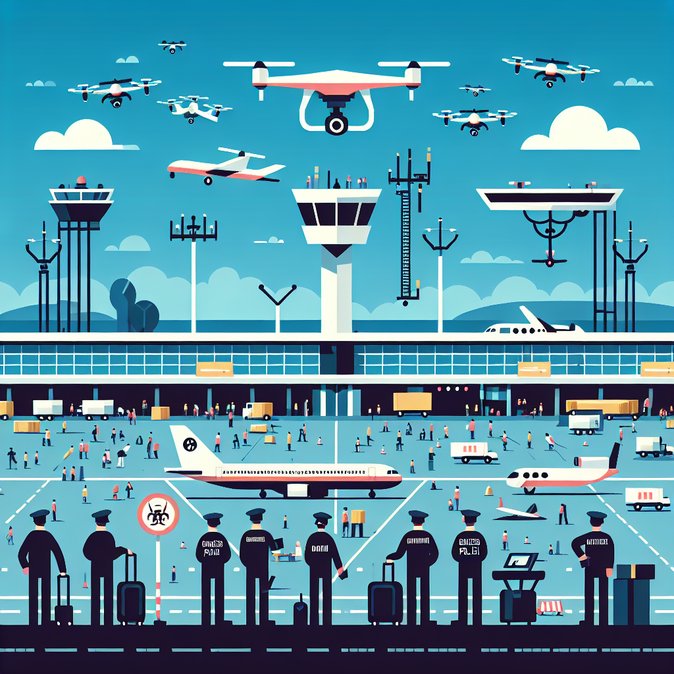
Responding to a spate of rogue-drone incidents, Interior Minister Alexander Dobrindt unveiled a national drone-mitigation strategy on 2 December that will see a 130-strong Bundespolizei unit stationed at Frankfurt, Munich, Berlin-Brandenburg, Cologne/Bonn, Düsseldorf, Hamburg, Leipzig/Halle and Stuttgart airports.
Equipped with AI-powered detection radars, jamming rifles and interceptor drones, the teams will provide 24/7 coverage of each airport’s critical airspace. A central command centre in Berlin will fuse live feeds and coordinate responses with air-traffic control. The move follows an October incident in which a hobbyist drone near Frankfurt’s perimeter fence forced a brief runway closure and threatened to cascade into mass flight cancellations.
![Germany Deploys Drone-Defence Unit at Eight Major Airports]()
Airline association BDL welcomed the plan, noting that state-owned mitigation prevents liability gaps for carriers. From a mobility perspective, reduced disruption risk is priceless: last-minute cancellations strand expatriates, delay project kick-offs and trigger expensive re-routing. Corporate travel managers should nevertheless review any logistics-drone operations they run in airport industrial zones, as new approval protocols will apply.
Longer term, Germany’s strategy could become a template for the EU’s Common Aviation Security Policy, especially once unmanned-air-taxi trials begin ahead of the 2026 FIFA World Cup hosted by Spain and Portugal (with many connecting flights via Germany). Suppliers of counter-UAV technology are already eyeing procurement tenders worth an estimated €80 million.
Equipped with AI-powered detection radars, jamming rifles and interceptor drones, the teams will provide 24/7 coverage of each airport’s critical airspace. A central command centre in Berlin will fuse live feeds and coordinate responses with air-traffic control. The move follows an October incident in which a hobbyist drone near Frankfurt’s perimeter fence forced a brief runway closure and threatened to cascade into mass flight cancellations.

Airline association BDL welcomed the plan, noting that state-owned mitigation prevents liability gaps for carriers. From a mobility perspective, reduced disruption risk is priceless: last-minute cancellations strand expatriates, delay project kick-offs and trigger expensive re-routing. Corporate travel managers should nevertheless review any logistics-drone operations they run in airport industrial zones, as new approval protocols will apply.
Longer term, Germany’s strategy could become a template for the EU’s Common Aviation Security Policy, especially once unmanned-air-taxi trials begin ahead of the 2026 FIFA World Cup hosted by Spain and Portugal (with many connecting flights via Germany). Suppliers of counter-UAV technology are already eyeing procurement tenders worth an estimated €80 million.