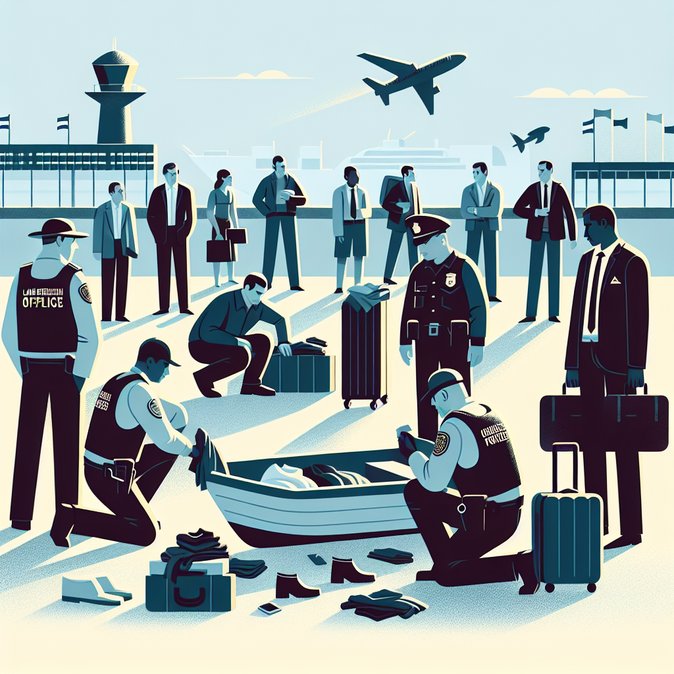
The Home Office has published secondary legislation giving police and immigration officers sweeping new powers to search irregular migrants at ports and in coastal arrival zones. Under the measure, officers can now require anyone suspected of entering the United Kingdom unlawfully to remove outer clothing, gloves and shoes and to open their mouths so that SIM cards or miniature mobile-phone handsets can be seized on the spot. Crucially, the powers apply before arrest, widening the scope of so-called “non-intimate searches.”
Home Secretary Shabana Mahmood told Parliament that criminal gangs organising small-boat Channel crossings rely on encrypted messaging and international SIM cards. By confiscating devices at the earliest opportunity, border agencies hope to map smuggling routes and identify facilitators upstream. Pilot operations in Kent this autumn reportedly yielded location data that linked over 40 crossings to three Albanian-run networks. Officials argue that early phone extraction shortens investigations by months and supports faster removals.
![UK Expands Border Powers: Police Can Search Migrants’ Coats—and Mouths—for Phones]()
Human-rights groups and refugee charities have condemned the rules as “disproportionate and dehumanising,” noting that they apply to children travelling alone. Lawyers point out that the Home Office was found to have acted unlawfully in 2022 when it secretly confiscated migrants’ phones; they warn that the new regime still risks breaching privacy provisions in the Data Protection Act and the European Convention on Human Rights.
For employers and mobility managers, the policy signals an even tougher stance on irregular entry that could feed public pressure for broader immigration curbs. Corporations moving talent into the UK on legitimate visas should expect intensified document checks and longer queues at juxtaposed controls as officers divert resources to the new searches. Global-mobility teams are advised to brief travelling staff on potential delays at Dover, Folkestone and South-coast ports, and to ensure that contractors delivering last-mile logistics understand their enhanced compliance obligations.
In the longer term, the data haul may reinforce future electronic travel-authorisation (ETA) risk-scoring algorithms, meaning that migrants who lose a phone at the border could see future visa or ETA applications flagged for manual review. Sponsors should therefore keep meticulous records of lawful status and travel history for any assignees who have previously claimed asylum or entered irregularly.
Home Secretary Shabana Mahmood told Parliament that criminal gangs organising small-boat Channel crossings rely on encrypted messaging and international SIM cards. By confiscating devices at the earliest opportunity, border agencies hope to map smuggling routes and identify facilitators upstream. Pilot operations in Kent this autumn reportedly yielded location data that linked over 40 crossings to three Albanian-run networks. Officials argue that early phone extraction shortens investigations by months and supports faster removals.

Human-rights groups and refugee charities have condemned the rules as “disproportionate and dehumanising,” noting that they apply to children travelling alone. Lawyers point out that the Home Office was found to have acted unlawfully in 2022 when it secretly confiscated migrants’ phones; they warn that the new regime still risks breaching privacy provisions in the Data Protection Act and the European Convention on Human Rights.
For employers and mobility managers, the policy signals an even tougher stance on irregular entry that could feed public pressure for broader immigration curbs. Corporations moving talent into the UK on legitimate visas should expect intensified document checks and longer queues at juxtaposed controls as officers divert resources to the new searches. Global-mobility teams are advised to brief travelling staff on potential delays at Dover, Folkestone and South-coast ports, and to ensure that contractors delivering last-mile logistics understand their enhanced compliance obligations.
In the longer term, the data haul may reinforce future electronic travel-authorisation (ETA) risk-scoring algorithms, meaning that migrants who lose a phone at the border could see future visa or ETA applications flagged for manual review. Sponsors should therefore keep meticulous records of lawful status and travel history for any assignees who have previously claimed asylum or entered irregularly.