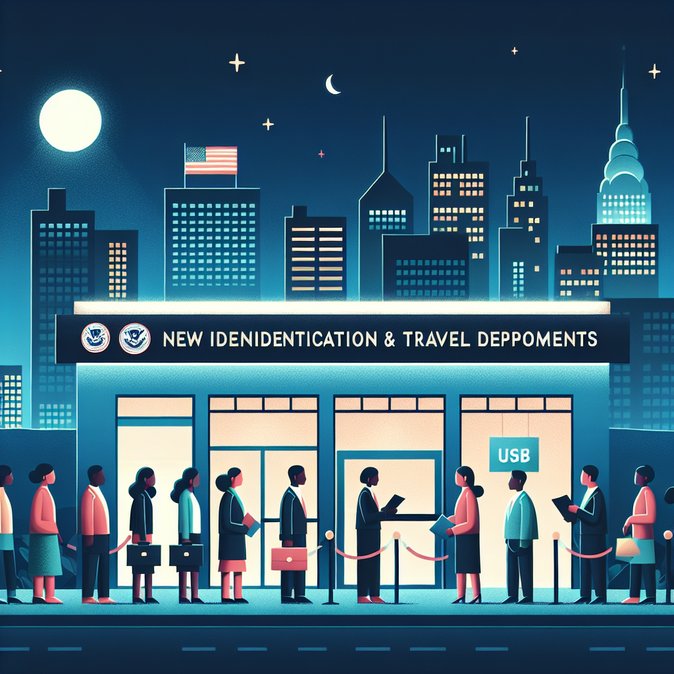
The Immigration Department (ImmD) announced late Sunday (30 November 2025) that it will run special after-hours service sessions from 1–6 December to help residents displaced by last week’s Wang Fuk Court fire replace critical identity and travel documents. Extra counters at ImmD Headquarters in Tseung Kwan O will operate 6 p.m.–10 p.m. on weekdays and 1 p.m.–10 p.m. on Saturday, processing applications for Hong Kong Identity Cards, HKSAR passports, Re-entry Permits, Documents of Identity for Visa Purposes and even certified copies of birth or marriage certificates—free of charge.
More than 1,800 residents were relocated to hotels and community centres after the blaze, and many left behind passports and Home Return Permits needed for cross-border travel or medical evacuation. An ImmD mobile team will staff temporary shelters in Tai Po and run shuttle buses to the headquarters to expedite access for vulnerable groups such as the elderly and foreign domestic helpers.
![Hong Kong Immigration launches after-hours document-replacement clinic for Tai Po fire victims]()
ImmD has pledged a two-day turnaround for most documents, compressing processes that normally take one to two weeks. The China Travel Service Document Services Centre will mirror the extended hours so that residents can simultaneously replace Mainland Travel Permits—crucial for those who commute daily to neighbouring Shenzhen for work or school.
From a global mobility standpoint, fast restoration of legal identity is essential. Employers with expatriate assignees or dependants affected by the fire should alert their relocation providers to the extended service window and collect proof-of-loss statements for insurance claims. Companies planning year-end business trips should verify that staff hold valid passports and visas, as airlines will deny boarding even on domestic segments without proper ID.
The initiative is also a live test of Hong Kong’s emergency-response playbook for maintaining people-flow resilience after major urban disasters. Officials are expected to analyse queuing data and digital-portal uptake during the week-long clinic before deciding whether to embed similar after-hours “mobility recovery pods” in future contingencies.
More than 1,800 residents were relocated to hotels and community centres after the blaze, and many left behind passports and Home Return Permits needed for cross-border travel or medical evacuation. An ImmD mobile team will staff temporary shelters in Tai Po and run shuttle buses to the headquarters to expedite access for vulnerable groups such as the elderly and foreign domestic helpers.

ImmD has pledged a two-day turnaround for most documents, compressing processes that normally take one to two weeks. The China Travel Service Document Services Centre will mirror the extended hours so that residents can simultaneously replace Mainland Travel Permits—crucial for those who commute daily to neighbouring Shenzhen for work or school.
From a global mobility standpoint, fast restoration of legal identity is essential. Employers with expatriate assignees or dependants affected by the fire should alert their relocation providers to the extended service window and collect proof-of-loss statements for insurance claims. Companies planning year-end business trips should verify that staff hold valid passports and visas, as airlines will deny boarding even on domestic segments without proper ID.
The initiative is also a live test of Hong Kong’s emergency-response playbook for maintaining people-flow resilience after major urban disasters. Officials are expected to analyse queuing data and digital-portal uptake during the week-long clinic before deciding whether to embed similar after-hours “mobility recovery pods” in future contingencies.