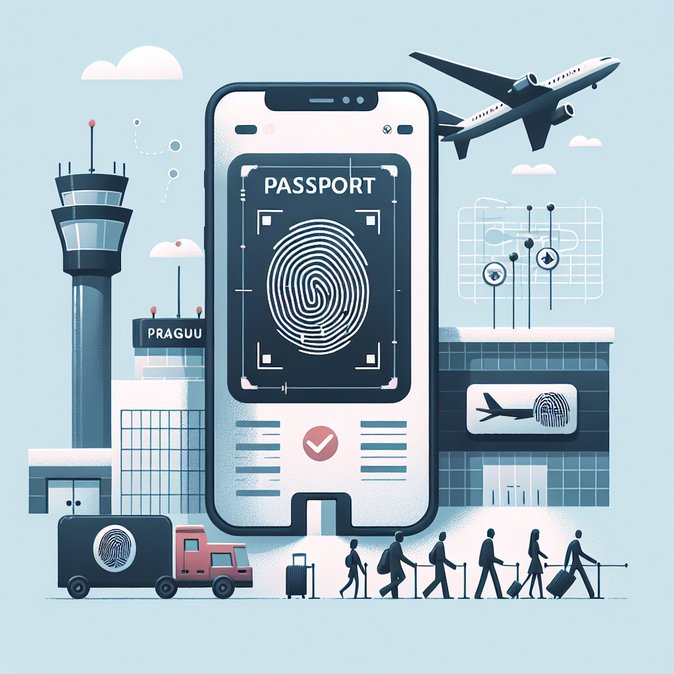
The European Union took another major step toward fully digital borders on 1 December 2025, when the Council of the EU authorised negotiators to draft a regulation creating a voluntary “Digital Travel App.” The smartphone-based tool, to be developed by the EU IT-agency eu-LISA, will let travellers scan the biometric chip in their e-passports at home, answer basic entry questions and upload the data to border authorities before arrival. At the airport, a QR code generated by the app will be scanned at an automated gate, dramatically shortening the time needed for fingerprint and facial-image capture that is now required under the new Entry/Exit System (EES).
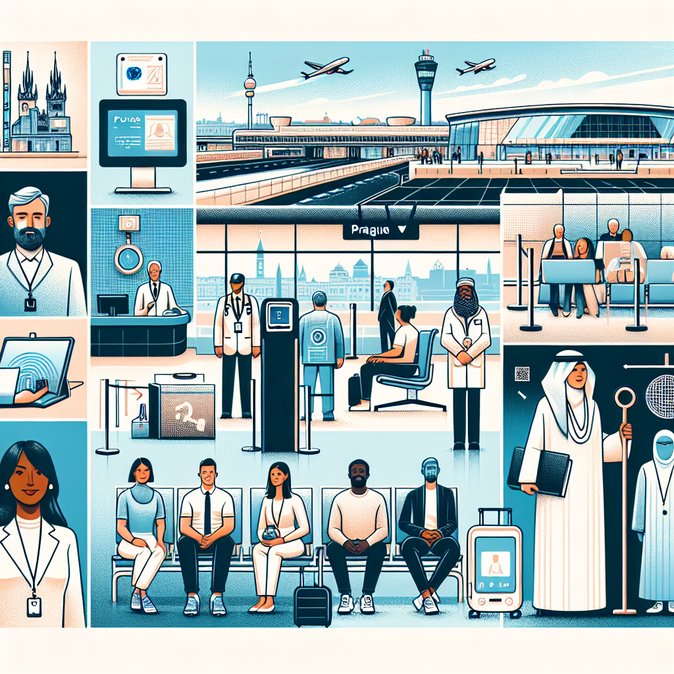
Czechia has seized the opportunity to position itself at the forefront of the pilot phase. The country’s Border Police confirmed on Monday that Václav Havel Airport Prague (PRG) will participate in a limited trial as early as the first quarter of 2026. PRG processed a record 6.8 million non-EU arrivals between January and October 2025, and long queues regularly form at Terminal 1, where EES biometric kiosks were installed in October. According to airport officials, a typical non-EU passenger now spends 6-8 minutes clearing the manual EES booth; the Digital Travel App is expected to cut that to under 90 seconds.
![EU Launches “Digital Travel App”; Czech Border Police Volunteer as First Schengen Test Site]()
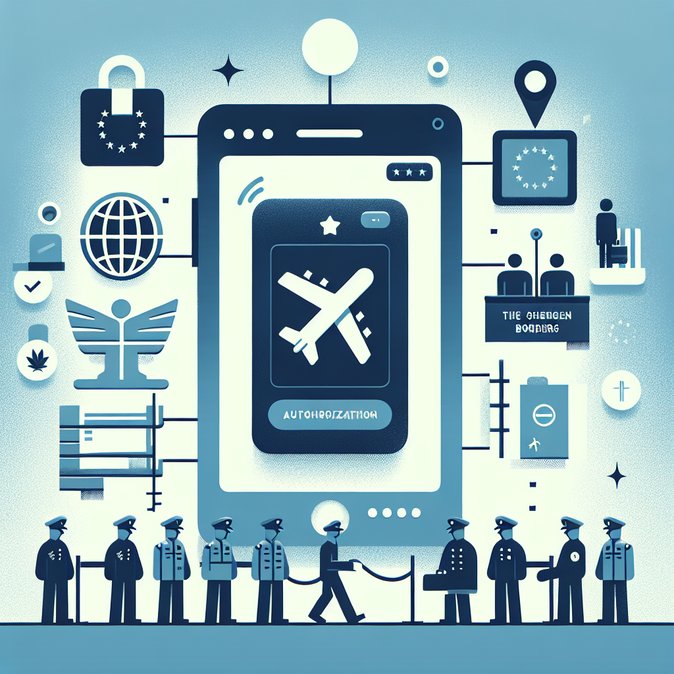
From a policy standpoint, Brussels views the app as the missing user-interface that will connect EES (live since October 2025) and ETIAS, the €7 pre-travel authorisation that starts in mid-2026. Travellers who complete all three steps—ETIAS approval, Digital Travel App upload and EES registration—will enjoy an almost friction-free border crossing. Participation will be voluntary at first, but the Commission has hinted that widespread adoption could eventually enable member states to redeploy staff from manual booths to risk-based enforcement.
For businesses, the pilot offers an early glimpse of how short-haul corporate travel will change in the Schengen Area. Multinational companies with regional headquarters in Prague, such as Honeywell and DHL, have welcomed the move, saying it will help them move key talent across borders on tight schedules. Travel-management company CWT estimates that a medium-sized Czech firm sends employees on 4,200 intra-EU trips a year; shaving even three minutes off each border crossing could save the equivalent of 210 work-hours annually.
Companies should, however, start preparing internal guidance. HR and mobility teams will need to educate employees on the difference between the Digital Travel App, ETIAS and traditional visas, and ensure that data uploaded via the app complies with EU and Czech privacy law. Early adopters may also wish to update their travel-risk assessments, because the app creates a digital record of movements that could be subpoenaed in tax-residency or social-security audits. Firms that regularly transfer staff from outside the EU should monitor the pilot closely and budget for potential IT-integration work once the app becomes mandatory for high-volume travellers.
Czechia has seized the opportunity to position itself at the forefront of the pilot phase. The country’s Border Police confirmed on Monday that Václav Havel Airport Prague (PRG) will participate in a limited trial as early as the first quarter of 2026. PRG processed a record 6.8 million non-EU arrivals between January and October 2025, and long queues regularly form at Terminal 1, where EES biometric kiosks were installed in October. According to airport officials, a typical non-EU passenger now spends 6-8 minutes clearing the manual EES booth; the Digital Travel App is expected to cut that to under 90 seconds.

From a policy standpoint, Brussels views the app as the missing user-interface that will connect EES (live since October 2025) and ETIAS, the €7 pre-travel authorisation that starts in mid-2026. Travellers who complete all three steps—ETIAS approval, Digital Travel App upload and EES registration—will enjoy an almost friction-free border crossing. Participation will be voluntary at first, but the Commission has hinted that widespread adoption could eventually enable member states to redeploy staff from manual booths to risk-based enforcement.
For businesses, the pilot offers an early glimpse of how short-haul corporate travel will change in the Schengen Area. Multinational companies with regional headquarters in Prague, such as Honeywell and DHL, have welcomed the move, saying it will help them move key talent across borders on tight schedules. Travel-management company CWT estimates that a medium-sized Czech firm sends employees on 4,200 intra-EU trips a year; shaving even three minutes off each border crossing could save the equivalent of 210 work-hours annually.
Companies should, however, start preparing internal guidance. HR and mobility teams will need to educate employees on the difference between the Digital Travel App, ETIAS and traditional visas, and ensure that data uploaded via the app complies with EU and Czech privacy law. Early adopters may also wish to update their travel-risk assessments, because the app creates a digital record of movements that could be subpoenaed in tax-residency or social-security audits. Firms that regularly transfer staff from outside the EU should monitor the pilot closely and budget for potential IT-integration work once the app becomes mandatory for high-volume travellers.