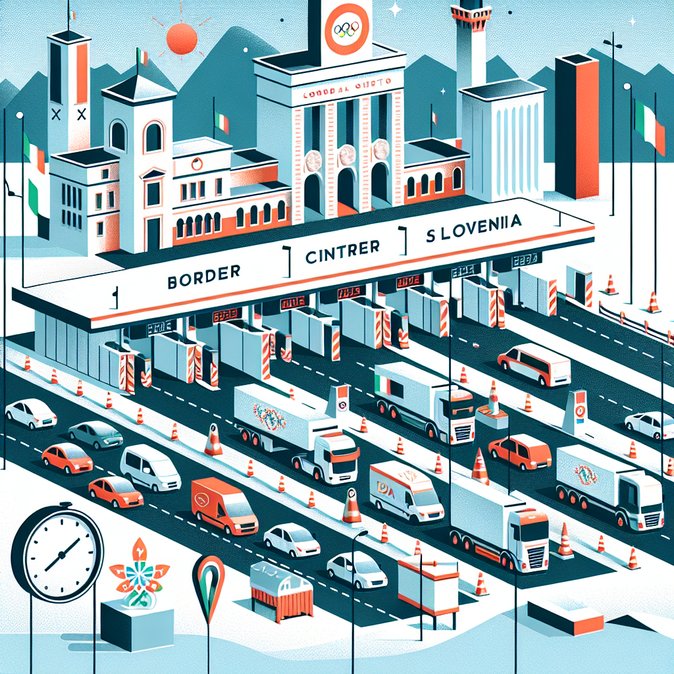
A special “Crocevie” (Crossroads) walking tour on 30 November is inviting residents and visitors to explore the disused border huts of Rafut, a hillside crossing that once divided the Italian city of Gorizia from Nova Gorica in Slovenia. Organised by local tourism boards ahead of next year’s joint European Capital of Culture celebrations, the two-hour excursion begins on the Italian side and ends in Slovenia, with bilingual guides explaining how the line drawn in 1947 shaped families, commerce and – more recently – the freedom of movement that Schengen has made possible.
Though primarily cultural, the event has practical resonance: Rafut’s minor roads are slated for refurbishment to handle expected visitor surges during the 2026 Universal Jubilee in Rome and the Milan-Cortina Winter Olympics. Municipal planners are testing signage, e-ticketing and small-bus shuttles that could later serve cross-border commuters, many of whom live in Slovenia but work in Italy’s Friuli wine region or its emerging green-tech clusters.
![Cross-border heritage walk re-opens former Rafut frontier huts on Italy–Slovenia border]()
For mobility managers the pilot tour offers a glimpse of soft-infrastructure upgrades that may ease employee transfers once Italy’s temporary border controls on the Slovenian land frontier – reintroduced last year for security reasons – are lifted in mid-2026. The walk also doubles as a stress-test for mobile connectivity and roaming charges ahead of broader 5G deployment along the border belt, a detail important for firms that track cross-border vehicle fleets.
Local hoteliers report that all 120 spots on the free tours, departing at 11:00 and 12:00, were booked within 48 hours, signalling strong tourism appetite for “border stories” experiences. Organisers plan to replicate the model monthly in 2026, potentially creating a sustainable tourism corridor that could diversify the region’s economy away from weekend shopping trips to Nova Gorica’s casinos.
Travellers should note that although Italy has re-instated ID checks on its border with Slovenia until 18 June 2026, pedestrian participants simply need to carry a passport or national ID card and expect random spot-checks. No visas are required for EU citizens, and non-EU nationals holding a valid Schengen stay permit may participate without additional paperwork.
Though primarily cultural, the event has practical resonance: Rafut’s minor roads are slated for refurbishment to handle expected visitor surges during the 2026 Universal Jubilee in Rome and the Milan-Cortina Winter Olympics. Municipal planners are testing signage, e-ticketing and small-bus shuttles that could later serve cross-border commuters, many of whom live in Slovenia but work in Italy’s Friuli wine region or its emerging green-tech clusters.

For mobility managers the pilot tour offers a glimpse of soft-infrastructure upgrades that may ease employee transfers once Italy’s temporary border controls on the Slovenian land frontier – reintroduced last year for security reasons – are lifted in mid-2026. The walk also doubles as a stress-test for mobile connectivity and roaming charges ahead of broader 5G deployment along the border belt, a detail important for firms that track cross-border vehicle fleets.
Local hoteliers report that all 120 spots on the free tours, departing at 11:00 and 12:00, were booked within 48 hours, signalling strong tourism appetite for “border stories” experiences. Organisers plan to replicate the model monthly in 2026, potentially creating a sustainable tourism corridor that could diversify the region’s economy away from weekend shopping trips to Nova Gorica’s casinos.
Travellers should note that although Italy has re-instated ID checks on its border with Slovenia until 18 June 2026, pedestrian participants simply need to carry a passport or national ID card and expect random spot-checks. No visas are required for EU citizens, and non-EU nationals holding a valid Schengen stay permit may participate without additional paperwork.