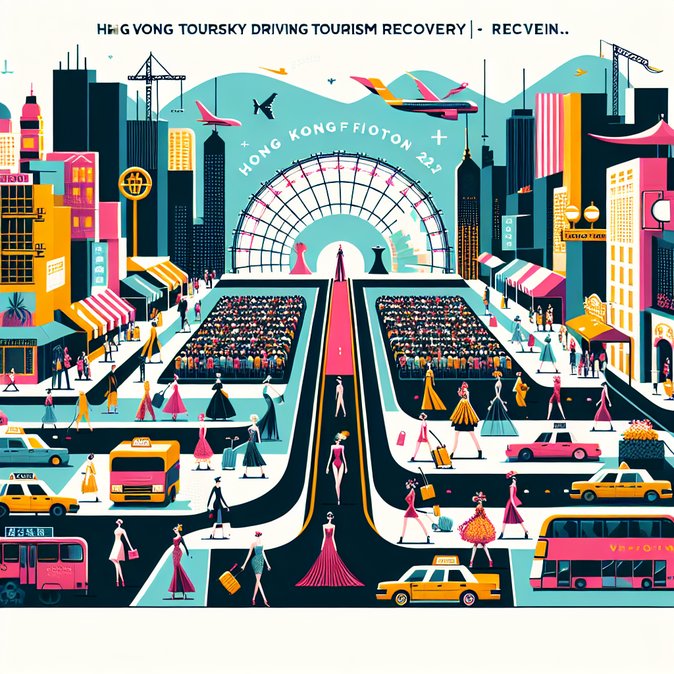
Hong Kong’s Fashion Fest 2025—running 22 November to 7 December—has hit its stride, with organisers reporting a 26 % year-on-year jump in overseas ticket holders since the opening weekend. The city-wide celebration transforms Tsim Sha Tsui’s harbourfront piers, Central’s art spaces and Kowloon’s heritage warehouses into runway venues, attracting designers, buyers and influencers from Europe, North America and the Middle East.
Preliminary immigration data show an uptick of nearly 18,000 additional visitor arrivals on 29 November alone, driven largely by Seoul, Milan and Dubai departures. Hoteliers in West Kowloon and the emerging “East CBD” around Kai Tak report occupancy levels above 90 %, with average daily rates up 11 % compared with the same period in 2024.
![Hong Kong Fashion Fest 2025 Turns City Streets Into a Global Catwalk]()
For corporates, the two-week festival has become a platform for team incentive trips and client-hosting: several luxury-goods multinationals are combining fashion-show access with product-launch events at M+, Hong Kong’s new museum of visual culture. The festival also dovetails with the government’s push to diversify Hong Kong’s visitor mix beyond mainland China and to cement its role as an events-led mobility hub.
Travel-risk advisers note that extra crowd-control measures—including temporary pedestrian zones and extended MTR operating hours—are in place, but no border‐control changes are expected. Visitors should, however, reserve airport transfers early, as limousine demand around high-profile runway nights is peaking.
With digital-nomad attendance on the rise—thanks to Hong Kong’s streamlined remote-worker visa introduced earlier this year—Fashion Fest cements the SAR’s ambition to blend creative industries with global mobility, offering fresh talking points for relocation marketers courting talent in design and luxury retail.
Preliminary immigration data show an uptick of nearly 18,000 additional visitor arrivals on 29 November alone, driven largely by Seoul, Milan and Dubai departures. Hoteliers in West Kowloon and the emerging “East CBD” around Kai Tak report occupancy levels above 90 %, with average daily rates up 11 % compared with the same period in 2024.

For corporates, the two-week festival has become a platform for team incentive trips and client-hosting: several luxury-goods multinationals are combining fashion-show access with product-launch events at M+, Hong Kong’s new museum of visual culture. The festival also dovetails with the government’s push to diversify Hong Kong’s visitor mix beyond mainland China and to cement its role as an events-led mobility hub.
Travel-risk advisers note that extra crowd-control measures—including temporary pedestrian zones and extended MTR operating hours—are in place, but no border‐control changes are expected. Visitors should, however, reserve airport transfers early, as limousine demand around high-profile runway nights is peaking.
With digital-nomad attendance on the rise—thanks to Hong Kong’s streamlined remote-worker visa introduced earlier this year—Fashion Fest cements the SAR’s ambition to blend creative industries with global mobility, offering fresh talking points for relocation marketers courting talent in design and luxury retail.