Germany today joined a coalition of European partners that promises to consign the liquids-in-a-plastic-bag rule to history. In a joint statement announced on 30 November, Berlin confirmed that all major German airports—including Frankfurt, Munich and Berlin Brandenburg—are on track to complete the installation of next-generation computed-tomography (CT) scanners by the end of 2026. The move is part of a wider EU aviation-security drive in which the United Kingdom, Ireland and Italy are also participants.
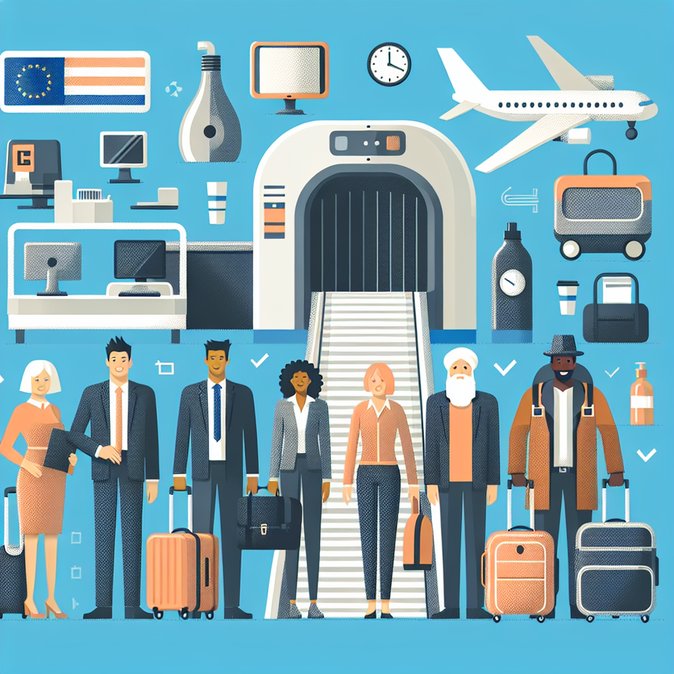
The adoption of CT scanners represents a step-change for travellers. Unlike conventional X-ray equipment, CT technology generates three-dimensional images that allow security officers to detect explosives without requiring passengers to remove laptops or limit liquids to 100 ml. Frankfurt Airport will debut the new lanes in the first piers of its €4 billion Terminal 3, while Munich has already completed a €45 million upgrade of its central checkpoint. At Berlin Brandenburg (BER), 24 lanes are now CT-equipped and average waiting times have dropped below ten minutes.
![Europe Launches Airport Security Overhaul: Germany Confirms Nationwide Roll-out of CT Scanners]()
The announcement also dovetails with the EU’s forthcoming Entry/Exit System (EES), due in 2025, which will replace passport stamps with biometrics at the Schengen border. German officials say the combination of CT scanners and EES should shave at least 20 minutes off the end-to-end airport journey for most short-haul passengers and reduce staffing requirements at peak times by up to 15 %.
For corporate travel managers the practical implications are clear: pack more freely and build tighter connections. Lufthansa Group has already signalled that it will re-optimise its Frankfurt and Munich hub banks once the new lanes are fully operational. Companies with high volumes of intra-EU traffic should review travel policies and traveller-education material so that employees are aware that the 100 ml liquid rule will soon disappear at most German gateways, but may still apply on selected routes (for example, flights to the United States or Israel that depart from older terminals).
Experts also warn of short-term teething problems. The Federal Police must train nearly 8 000 screeners on the new software, and the transitional period will see a patchwork of old and new lanes. Travellers should therefore continue to follow airport signage rather than assume the new rules apply universally until 2026.
The adoption of CT scanners represents a step-change for travellers. Unlike conventional X-ray equipment, CT technology generates three-dimensional images that allow security officers to detect explosives without requiring passengers to remove laptops or limit liquids to 100 ml. Frankfurt Airport will debut the new lanes in the first piers of its €4 billion Terminal 3, while Munich has already completed a €45 million upgrade of its central checkpoint. At Berlin Brandenburg (BER), 24 lanes are now CT-equipped and average waiting times have dropped below ten minutes.

The announcement also dovetails with the EU’s forthcoming Entry/Exit System (EES), due in 2025, which will replace passport stamps with biometrics at the Schengen border. German officials say the combination of CT scanners and EES should shave at least 20 minutes off the end-to-end airport journey for most short-haul passengers and reduce staffing requirements at peak times by up to 15 %.
For corporate travel managers the practical implications are clear: pack more freely and build tighter connections. Lufthansa Group has already signalled that it will re-optimise its Frankfurt and Munich hub banks once the new lanes are fully operational. Companies with high volumes of intra-EU traffic should review travel policies and traveller-education material so that employees are aware that the 100 ml liquid rule will soon disappear at most German gateways, but may still apply on selected routes (for example, flights to the United States or Israel that depart from older terminals).
Experts also warn of short-term teething problems. The Federal Police must train nearly 8 000 screeners on the new software, and the transitional period will see a patchwork of old and new lanes. Travellers should therefore continue to follow airport signage rather than assume the new rules apply universally until 2026.