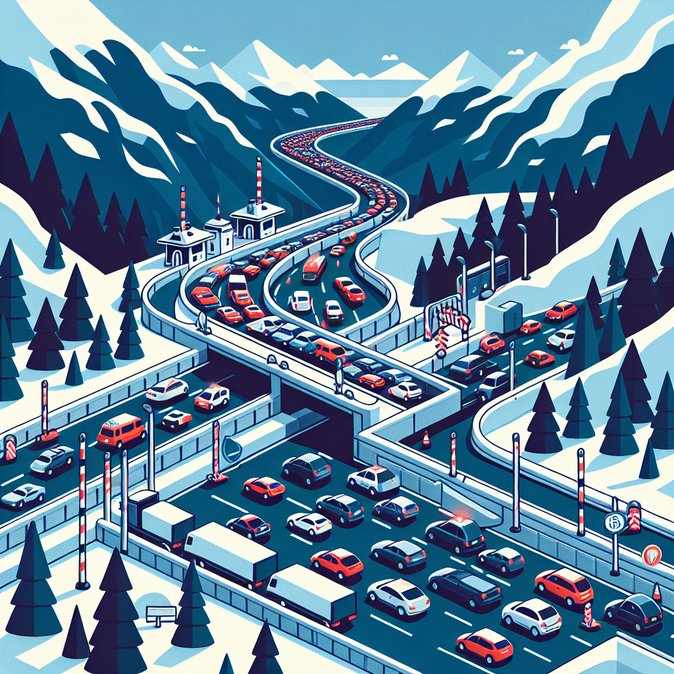
Early-winter getaway plans ran into fresh obstacles on 30 November as the Fernpass-route (B179/E532)—the main alpine corridor linking Bavaria with Tyrol and onward to South Tyrol—experienced kilometre-long queues. Live trackers showed delays of up to 90 minutes between Nassereith and Lermoos, triggered by a combination of heavy holiday traffic, narrow two-lane geometry and spot checks by the German Federal Police at the Füssen/Reutte border crossing.
Officials say the checks are part of an expanded “Schleierfahndung” strategy introduced last year to deter irregular migration and cross-border crime. Unlike fixed controls, officers stop vehicles randomly, often funnelling traffic into a single lane. The procedure, together with block release of HGVs before the Grenztunnel Füssen, quickly leads to tailbacks on the steep alpine gradients.
![Border Checks at Fernpass Cause Delays for German Holiday Traffic to Austria and Italy]()
The timing could hardly be worse for the ski industry: many Bavarian schools break for St. Nicholas Week, traditionally the first big test of winter travel infrastructure. Hoteliers in Garmisch and the Ötztal reported guest arrivals being pushed into the small hours, while logistics firms rerouted time-critical loads via the Brenner and Gotthard corridors—adding up to 120 km and €80 in tolls and fuel.
Long-term relief will depend on a 4.8-km Fernpass tunnel, scheduled to break ground in 2027 and open in 2029. Until then, companies organising shuttle services or group travel should build generous buffers into itineraries and advise drivers to carry passports, vehicle papers and proof of accommodation to minimise inspection times.
For mobility teams the key takeaway is that “soft” border controls can be re-activated with little notice, especially around public holidays. Real-time traffic tools and flexible re-delivery windows are essential when planning cross-alpine supply chains.
Officials say the checks are part of an expanded “Schleierfahndung” strategy introduced last year to deter irregular migration and cross-border crime. Unlike fixed controls, officers stop vehicles randomly, often funnelling traffic into a single lane. The procedure, together with block release of HGVs before the Grenztunnel Füssen, quickly leads to tailbacks on the steep alpine gradients.
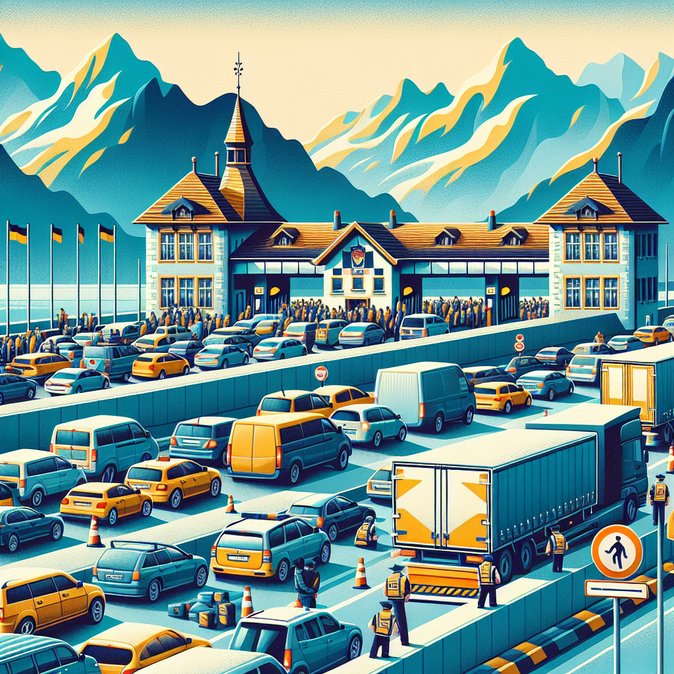
The timing could hardly be worse for the ski industry: many Bavarian schools break for St. Nicholas Week, traditionally the first big test of winter travel infrastructure. Hoteliers in Garmisch and the Ötztal reported guest arrivals being pushed into the small hours, while logistics firms rerouted time-critical loads via the Brenner and Gotthard corridors—adding up to 120 km and €80 in tolls and fuel.
Long-term relief will depend on a 4.8-km Fernpass tunnel, scheduled to break ground in 2027 and open in 2029. Until then, companies organising shuttle services or group travel should build generous buffers into itineraries and advise drivers to carry passports, vehicle papers and proof of accommodation to minimise inspection times.
For mobility teams the key takeaway is that “soft” border controls can be re-activated with little notice, especially around public holidays. Real-time traffic tools and flexible re-delivery windows are essential when planning cross-alpine supply chains.