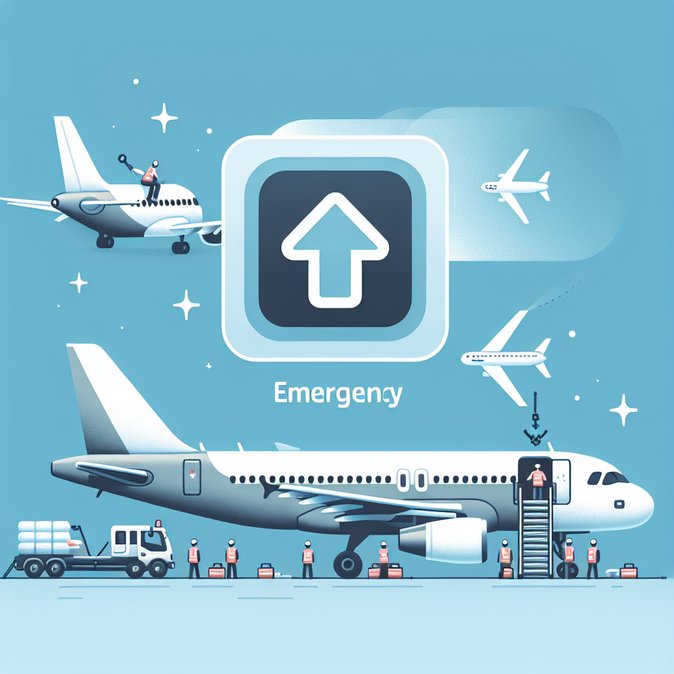
Late on 28 November Airbus issued an unprecedented safety bulletin instructing airlines to ground and patch more than 6 000 A320-family aircraft after a software fault was linked to a sudden loss of altitude on a JetBlue flight in October. The European Union Aviation Safety Agency (EASA) made the directive mandatory, giving carriers just 48 hours to install a software rollback.
For Germany’s Lufthansa Group—the world’s third-largest A320 operator—the crisis could have spelled Christmas-season chaos. Instead the carrier told reporters on 29 November that its maintenance teams had already completed updates on most aircraft and that passengers should expect “isolated delays but no flight cancellations.” The fix requires a two-hour upload and, in fewer than 1 000 cases worldwide, a hardware swap of the angle-of-attack module.
![Airbus A320 Recall Triggers Global Checks—Lufthansa Expects Only Minor Delays]()
The episode highlights the vulnerability of global mobility networks to seemingly small technical failures. Airlines have learned hard lessons from earlier grounding events, such as the Rolls-Royce Trent 1000 and Pratt & Whitney GTF crises; most now maintain contingency fleets and rapid-response engineering teams. Lufthansa said it diverted three spare aircraft from low-demand routes and extended night-shift capacity at its Frankfurt and Munich hangars to meet the 48-hour deadline.
Corporate travel managers should still monitor bookings involving the A320 family over the coming week. Re-timings could ripple through hub banks, particularly in Frankfurt where 60 % of short-haul movements rely on the type. Passengers on code-share itineraries operated by partner airlines may face greater disruption. Mobility teams are advised to activate traveller-tracking tools and encourage employees to use carry-on baggage where possible to speed rebooking.
From a regulatory standpoint, the incident may accelerate EASA’s plans to mandate real-time health monitoring of critical flight-control software—an area where Lufthansa Technik is already investing in predictive-maintenance solutions. Longer term, employers should expect higher maintenance surcharges in 2026 as carriers seek to recoup the cost of unscheduled downtime.
For Germany’s Lufthansa Group—the world’s third-largest A320 operator—the crisis could have spelled Christmas-season chaos. Instead the carrier told reporters on 29 November that its maintenance teams had already completed updates on most aircraft and that passengers should expect “isolated delays but no flight cancellations.” The fix requires a two-hour upload and, in fewer than 1 000 cases worldwide, a hardware swap of the angle-of-attack module.

The episode highlights the vulnerability of global mobility networks to seemingly small technical failures. Airlines have learned hard lessons from earlier grounding events, such as the Rolls-Royce Trent 1000 and Pratt & Whitney GTF crises; most now maintain contingency fleets and rapid-response engineering teams. Lufthansa said it diverted three spare aircraft from low-demand routes and extended night-shift capacity at its Frankfurt and Munich hangars to meet the 48-hour deadline.
Corporate travel managers should still monitor bookings involving the A320 family over the coming week. Re-timings could ripple through hub banks, particularly in Frankfurt where 60 % of short-haul movements rely on the type. Passengers on code-share itineraries operated by partner airlines may face greater disruption. Mobility teams are advised to activate traveller-tracking tools and encourage employees to use carry-on baggage where possible to speed rebooking.
From a regulatory standpoint, the incident may accelerate EASA’s plans to mandate real-time health monitoring of critical flight-control software—an area where Lufthansa Technik is already investing in predictive-maintenance solutions. Longer term, employers should expect higher maintenance surcharges in 2026 as carriers seek to recoup the cost of unscheduled downtime.