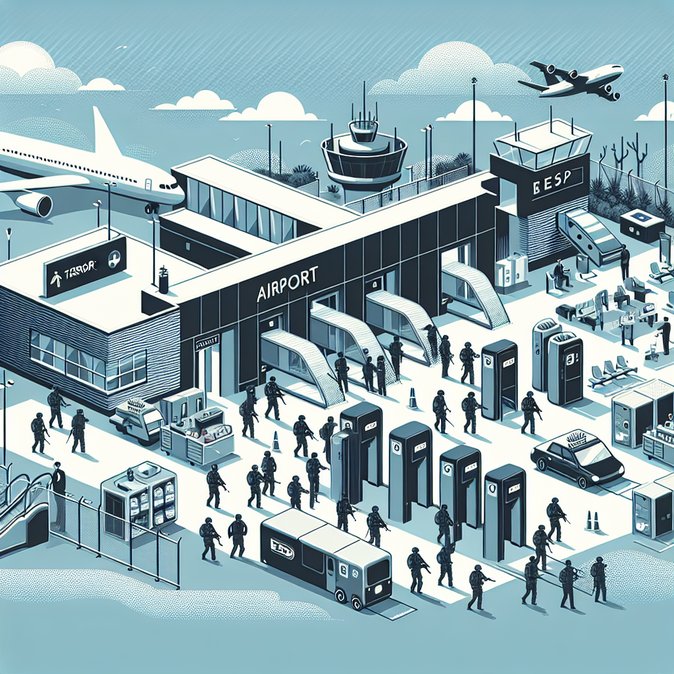
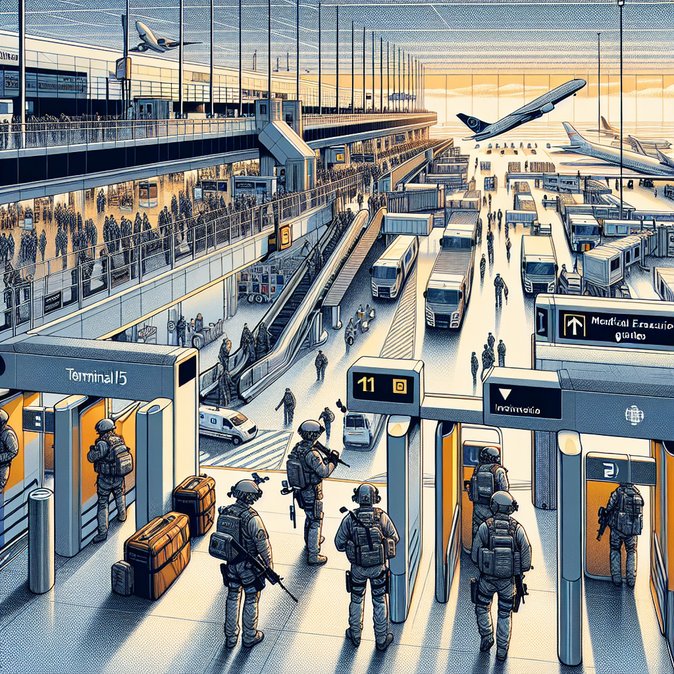
Rome’s Leonardo da Vinci Airport (Fiumicino) staged its largest anti-terrorism simulation in five years at Terminal 5 on 29 November, mobilising more than 600 participants from the police anti-terror unit NOCS, airport fire-fighters, the army, the Red Cross and ENAC civil-aviation officials. The exercise—complete with mock explosions, smoke canisters and volunteer ‘casualties’—tested the airport community’s ability to neutralise an armed commando attack, evacuate passengers and restore terminal operations within 90 minutes.
Authorities deliberately chose Terminal 5—normally reserved for high-security charter and pilgrim flights—so that regular commercial traffic in Terminals 1 & 3 could operate uninterrupted. According to ENAC president Pierluigi Di Palma, contingency routing kept passenger flows stable; real-time flight data showed on-time performance above 92 % during the drill window.
![Fiumicino Airport Runs Full-Scale Anti-Terror Drill Without Disrupting Flights]()
For global mobility managers the take-away is two-fold. First, travellers should expect an intensified security posture at Fiumicino in coming weeks as lessons learned are implemented—potentially longer queues at secondary screening and random passport checks even for intra-Schengen departures. Second, the drill underscores Italy’s commitment to safeguarding next year’s Jubilee and Winter Games traffic, signalling that additional stress-tests may follow in Milan-Malpensa and Turin-Caselle.
The exercise also served as a live proving ground for new biometric Entry/Exit System (EES) kiosks installed in October, allowing police to rehearse rapid identity verification under crisis conditions. ENAC plans to publish a public-facing debrief in early December outlining recommended traveller-awareness measures, such as keeping boarding passes and photo ID readily accessible at all times. Until then, travel risk advisers recommend arriving at the airport at least 30 minutes earlier than usual.
Authorities deliberately chose Terminal 5—normally reserved for high-security charter and pilgrim flights—so that regular commercial traffic in Terminals 1 & 3 could operate uninterrupted. According to ENAC president Pierluigi Di Palma, contingency routing kept passenger flows stable; real-time flight data showed on-time performance above 92 % during the drill window.
For global mobility managers the take-away is two-fold. First, travellers should expect an intensified security posture at Fiumicino in coming weeks as lessons learned are implemented—potentially longer queues at secondary screening and random passport checks even for intra-Schengen departures. Second, the drill underscores Italy’s commitment to safeguarding next year’s Jubilee and Winter Games traffic, signalling that additional stress-tests may follow in Milan-Malpensa and Turin-Caselle.
The exercise also served as a live proving ground for new biometric Entry/Exit System (EES) kiosks installed in October, allowing police to rehearse rapid identity verification under crisis conditions. ENAC plans to publish a public-facing debrief in early December outlining recommended traveller-awareness measures, such as keeping boarding passes and photo ID readily accessible at all times. Until then, travel risk advisers recommend arriving at the airport at least 30 minutes earlier than usual.