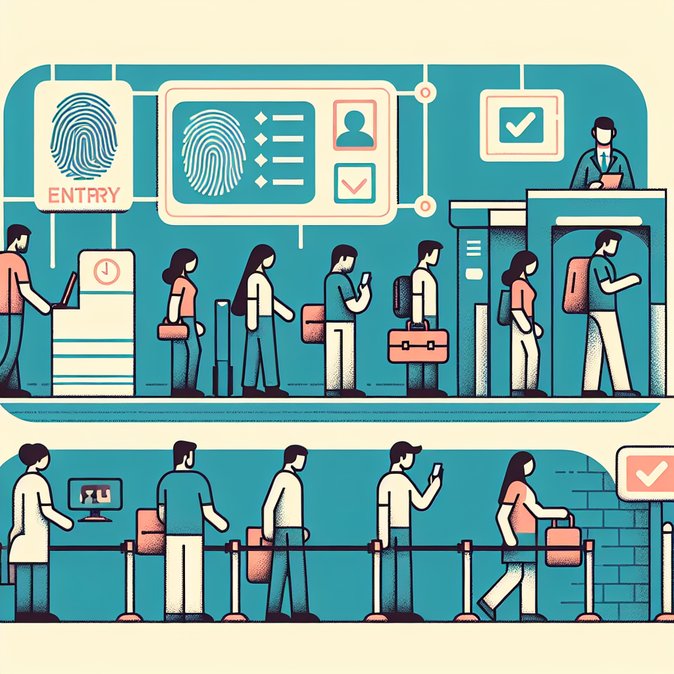
The Council of the European Union on 29 November approved a mandate to negotiate a regulation creating a voluntary digital travel app that will let passengers pre-submit passport data before arriving at Schengen external borders. The mobile tool, to be built by EU IT agency eu-LISA, complements the Entry/Exit System (EES) that went live in October and is expected to integrate later with ETIAS.
For Czechia, the app promises to ease pressure at Prague Airport’s Terminal 1 and land crossings with Austria and Poland, where officers are still mastering new biometric equipment. Travellers—especially repeat business visitors—will be able to scan their e-passport chip at home, upload the data to border authorities and receive a QR code that expedites inspection on arrival. Border guards can then focus on higher-risk cases flagged during advance screening.
![EU Green-lights Digital Travel App—Czech Border Police Prepare for Next Wave of Smart Screening]()
Although participation will be voluntary at first, the Interior Ministry in Prague has signalled interest in an early pilot, citing chronic staffing gaps and rising traffic: PRG handled a record 6.8 million non-EU arrivals in the year to October. Airlines serving long-haul markets such as Abu Dhabi and Chicago say the app could shave several minutes off each passenger’s processing time, translating into faster aircraft turn-arounds and lower delay costs.
Implementation is still at least 18 months away; the European Parliament must craft its own text before final adoption, and technical work will run in parallel. In the meantime, Czech employers with mobile workforces are advised to brief staff on the existing EES requirements—first-time biometric enrolment and automated 90/180-day calculations—to avoid fines or entry bans that could derail projects.
For Czechia, the app promises to ease pressure at Prague Airport’s Terminal 1 and land crossings with Austria and Poland, where officers are still mastering new biometric equipment. Travellers—especially repeat business visitors—will be able to scan their e-passport chip at home, upload the data to border authorities and receive a QR code that expedites inspection on arrival. Border guards can then focus on higher-risk cases flagged during advance screening.

Although participation will be voluntary at first, the Interior Ministry in Prague has signalled interest in an early pilot, citing chronic staffing gaps and rising traffic: PRG handled a record 6.8 million non-EU arrivals in the year to October. Airlines serving long-haul markets such as Abu Dhabi and Chicago say the app could shave several minutes off each passenger’s processing time, translating into faster aircraft turn-arounds and lower delay costs.
Implementation is still at least 18 months away; the European Parliament must craft its own text before final adoption, and technical work will run in parallel. In the meantime, Czech employers with mobile workforces are advised to brief staff on the existing EES requirements—first-time biometric enrolment and automated 90/180-day calculations—to avoid fines or entry bans that could derail projects.