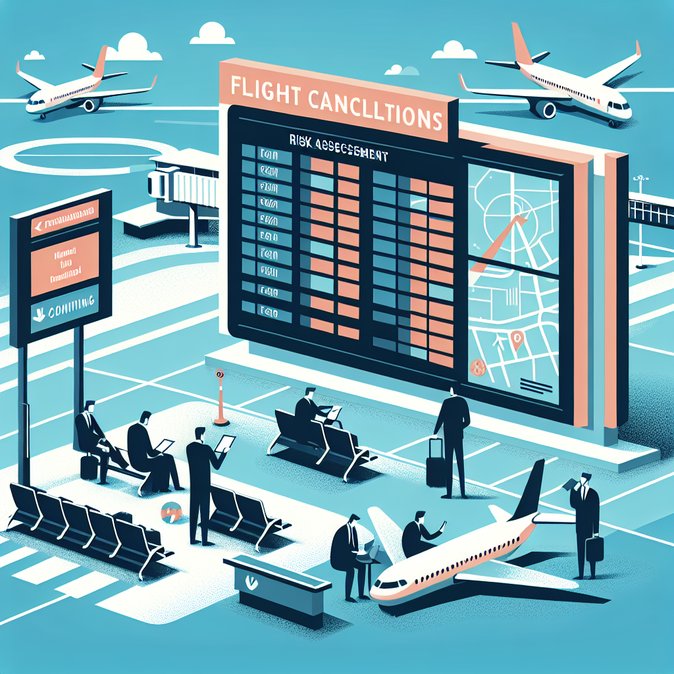
Cyprus’ secondary gateway, Paphos International Airport, logged nine inbound and nine outbound cancellations on 4 March – its highest daily tally since hostilities between the United States, Israel and Iran erupted last Saturday. Scrubbed flights included services by Air Haifa, four British TUI charters and four easyJet rotations from multiple UK cities.(cyprus-mail.com)
Until now, most disruption had been concentrated at Larnaca. The sudden spike in Paphos shows that risk calculations by airlines are evolving in real time. Jet2 and British Airways continued to operate, but carriers with smaller route networks opted to ground aircraft rather than face complex re-routing around restricted eastern-Mediterranean air corridors.
Hermes Airports, the private operator of both Cypriot hubs, warned that the “open” status of national airspace does not guarantee operations. Airlines may cancel at short notice if regional missile-defence activity increases or if insurance underwriters raise premiums. Business travellers should therefore monitor departure boards and maintain flexible hotel bookings in Limassol and Paphos.
![Paphos Airport Suffers Worst Day of Cancellations Since Iran Conflict Spilled Over]()
Travel disruptions often go hand-in-hand with changing entry requirements. If you or your employees need to confirm visa rules quickly, VisaHQ’s Cyprus portal (https://www.visahq.com/cyprus/) provides up-to-date information and fast application support, ensuring paperwork doesn’t become another obstacle when rerouting through different airports.
For corporate mobility teams, the incident underscores that Paphos – often used for seasonal charter traffic and low-cost point-to-point links – can quickly become a pressure point for evacuations and cargo charters. Companies routing staff via PFO should establish contingency transport to Larnaca (a 90-minute road transfer) and pre-clear ground-handling slots for possible private charter lift.
Tourism executives remain optimistic that Easter-season demand will rebound once the security situation stabilises, but acknowledge that another wave of cancellations would hit expatriate-heavy resorts and property-management firms reliant on UK arrivals.
Until now, most disruption had been concentrated at Larnaca. The sudden spike in Paphos shows that risk calculations by airlines are evolving in real time. Jet2 and British Airways continued to operate, but carriers with smaller route networks opted to ground aircraft rather than face complex re-routing around restricted eastern-Mediterranean air corridors.
Hermes Airports, the private operator of both Cypriot hubs, warned that the “open” status of national airspace does not guarantee operations. Airlines may cancel at short notice if regional missile-defence activity increases or if insurance underwriters raise premiums. Business travellers should therefore monitor departure boards and maintain flexible hotel bookings in Limassol and Paphos.

Travel disruptions often go hand-in-hand with changing entry requirements. If you or your employees need to confirm visa rules quickly, VisaHQ’s Cyprus portal (https://www.visahq.com/cyprus/) provides up-to-date information and fast application support, ensuring paperwork doesn’t become another obstacle when rerouting through different airports.
For corporate mobility teams, the incident underscores that Paphos – often used for seasonal charter traffic and low-cost point-to-point links – can quickly become a pressure point for evacuations and cargo charters. Companies routing staff via PFO should establish contingency transport to Larnaca (a 90-minute road transfer) and pre-clear ground-handling slots for possible private charter lift.
Tourism executives remain optimistic that Easter-season demand will rebound once the security situation stabilises, but acknowledge that another wave of cancellations would hit expatriate-heavy resorts and property-management firms reliant on UK arrivals.