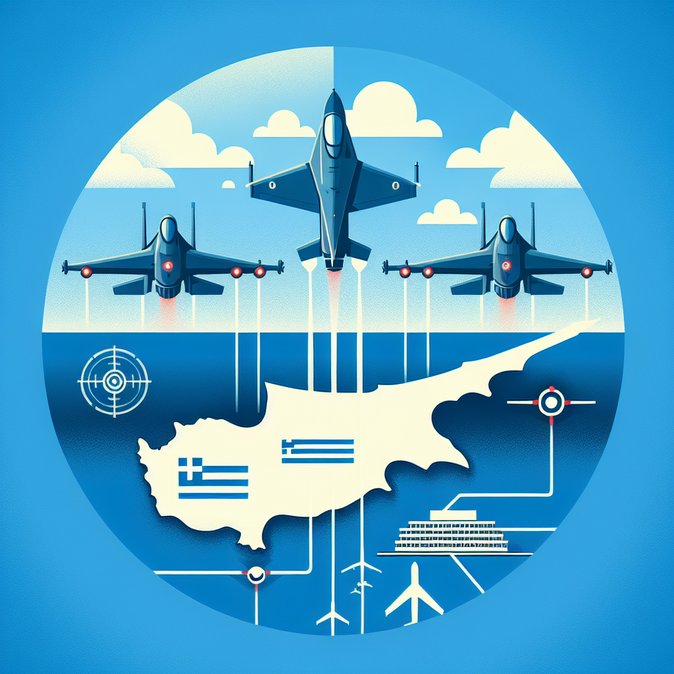
Earlier the same morning, an air-security alert prompted the scrambling of two Hellenic Air Force F-16s stationed at Andreas Papandreou base in Paphos. According to state broadcaster CyBC, the fighters intercepted two unmanned drones before they could enter Cypriot airspace; the alert was lifted within 30 minutes.(cyprus-mail.com)
Embassy staff in Nicosia were temporarily moved to secure areas, and residents reported low-flying jets over the capital. Government spokesman Letymbiotis said precautionary measures were taken in coordination with allies. The incident did not affect scheduled commercial flights beyond brief holding patterns.
Amid such rapid developments, travellers still need the right paperwork: VisaHQ’s Cyprus portal (https://www.visahq.com/cyprus/) enables individuals and global mobility teams to obtain visas online and track any sudden entry-requirement changes, freeing them to focus on real-time security updates rather than bureaucracy.
![Greek Jets Scramble Over Cyprus After Suspicious Drones Detected]()
The scramble demonstrates the rapid-reaction envelope created since Greece moved four F-16s to Cyprus on 2 March and deployed the frigates Kimon and Psara to Limassol. For global-mobility teams, the key implication is that airspace alerts can now escalate – and resolve – very quickly, meaning that decision-making protocols must be equally agile.
Companies should revisit travel-risk thresholds: a ‘drone interception’ event that lasts under an hour may not justify evacuation, but does warrant real-time communication with travellers and local staff. Security vendors able to deliver minute-by-minute SMS updates can prevent misinformation-driven disruptions.
In the medium term, the joint Cypriot-Greek posture may reassure airlines and insurers, potentially curbing future cancellations if the defence umbrella proves effective at neutralising threats before they reach civil corridors.
Embassy staff in Nicosia were temporarily moved to secure areas, and residents reported low-flying jets over the capital. Government spokesman Letymbiotis said precautionary measures were taken in coordination with allies. The incident did not affect scheduled commercial flights beyond brief holding patterns.
Amid such rapid developments, travellers still need the right paperwork: VisaHQ’s Cyprus portal (https://www.visahq.com/cyprus/) enables individuals and global mobility teams to obtain visas online and track any sudden entry-requirement changes, freeing them to focus on real-time security updates rather than bureaucracy.
The scramble demonstrates the rapid-reaction envelope created since Greece moved four F-16s to Cyprus on 2 March and deployed the frigates Kimon and Psara to Limassol. For global-mobility teams, the key implication is that airspace alerts can now escalate – and resolve – very quickly, meaning that decision-making protocols must be equally agile.
Companies should revisit travel-risk thresholds: a ‘drone interception’ event that lasts under an hour may not justify evacuation, but does warrant real-time communication with travellers and local staff. Security vendors able to deliver minute-by-minute SMS updates can prevent misinformation-driven disruptions.
In the medium term, the joint Cypriot-Greek posture may reassure airlines and insurers, potentially curbing future cancellations if the defence umbrella proves effective at neutralising threats before they reach civil corridors.