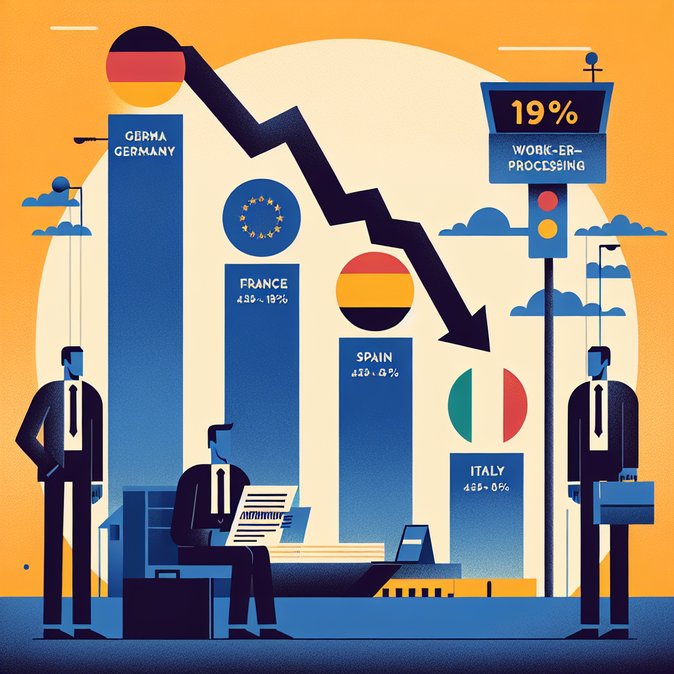
Fresh data released in Brussels on 3 March show that asylum requests across the EU-plus bloc (the 27 Member States plus Norway, Iceland, Liechtenstein and Switzerland) dropped to roughly 822,000 in 2025—a 19 percent decrease on 2024 and the second annual fall in a row. The plunge is largely attributed to a 72 percent collapse in Syrian filings following tentative political stabilisation in Damascus.
Germany remained the leading recipient with about 220,000 claims, followed by France, Spain and Italy. Although Italy’s share fell in absolute terms, Interior-Ministry officials in Rome say the country continues to shoulder significant reception-facility costs because 67 percent of applicants lodged in Italy are single adults without immediate family ties elsewhere in Europe, lengthening case-processing times.
For global-mobility teams the trend offers a double-edged signal. A lower asylum caseload eases administrative backlogs at police headquarters (Questure) that also issue work permits and residence cards to corporate expatriates. Yet it could intensify political pressure for tighter border policing, especially along the Central Mediterranean route, which remains Italy’s principal irregular-entry corridor.
![EU asylum applications fell 19 % in 2025, but Italy still among top destinations]()
Companies and individuals looking to navigate Italy’s evolving immigration landscape can simplify the paperwork by using VisaHQ, whose Italy portal (https://www.visahq.com/italy/) consolidates the latest visa requirements, application forms and courier options. The service helps corporate mobility managers and private travelers alike keep processes compliant and efficient—even as regulations shift.
Relocation providers anticipate that the lull will allow prefectural offices in Lombardy, Lazio and Emilia-Romagna to reassign clerks from asylum to business-immigration desks in the second quarter, potentially cutting turnaround for intra-company transfer permits by several days. Companies planning summer start dates for non-EU managers may therefore find application windows more predictable—provided the security climate in North Africa does not suddenly deteriorate.
Human-rights NGOs caution that the headline decline masks persistent strain on frontline municipalities in Sicily and Apulia, where EU funding cycles are misaligned with fluctuating arrivals. They urge Rome to use the breathing space to invest in digitised case-management systems that would benefit both humanitarian and economic-migration channels.
Germany remained the leading recipient with about 220,000 claims, followed by France, Spain and Italy. Although Italy’s share fell in absolute terms, Interior-Ministry officials in Rome say the country continues to shoulder significant reception-facility costs because 67 percent of applicants lodged in Italy are single adults without immediate family ties elsewhere in Europe, lengthening case-processing times.
For global-mobility teams the trend offers a double-edged signal. A lower asylum caseload eases administrative backlogs at police headquarters (Questure) that also issue work permits and residence cards to corporate expatriates. Yet it could intensify political pressure for tighter border policing, especially along the Central Mediterranean route, which remains Italy’s principal irregular-entry corridor.

Companies and individuals looking to navigate Italy’s evolving immigration landscape can simplify the paperwork by using VisaHQ, whose Italy portal (https://www.visahq.com/italy/) consolidates the latest visa requirements, application forms and courier options. The service helps corporate mobility managers and private travelers alike keep processes compliant and efficient—even as regulations shift.
Relocation providers anticipate that the lull will allow prefectural offices in Lombardy, Lazio and Emilia-Romagna to reassign clerks from asylum to business-immigration desks in the second quarter, potentially cutting turnaround for intra-company transfer permits by several days. Companies planning summer start dates for non-EU managers may therefore find application windows more predictable—provided the security climate in North Africa does not suddenly deteriorate.
Human-rights NGOs caution that the headline decline masks persistent strain on frontline municipalities in Sicily and Apulia, where EU funding cycles are misaligned with fluctuating arrivals. They urge Rome to use the breathing space to invest in digitised case-management systems that would benefit both humanitarian and economic-migration channels.