A notice published on the European Commission’s Schengen portal on 2 March shows that Germany has formally prolonged its temporary internal border controls from 16 March through 15 September 2026. The measure affects all land crossings with France, Luxembourg, Belgium, the Netherlands, Denmark, Switzerland, Austria, the Czech Republic and Poland.
Berlin cites continuing irregular-migration pressures, smuggling networks and wider security risks linked to the wars in Ukraine and the Middle East. Under Article 25 of the Schengen Borders Code, a member state may reintroduce internal checks for renewable six-month periods in cases of “serious threat.” This is Germany’s sixth consecutive extension since October 2023, a fact that has already drawn legal challenges at the European Court of Justice.
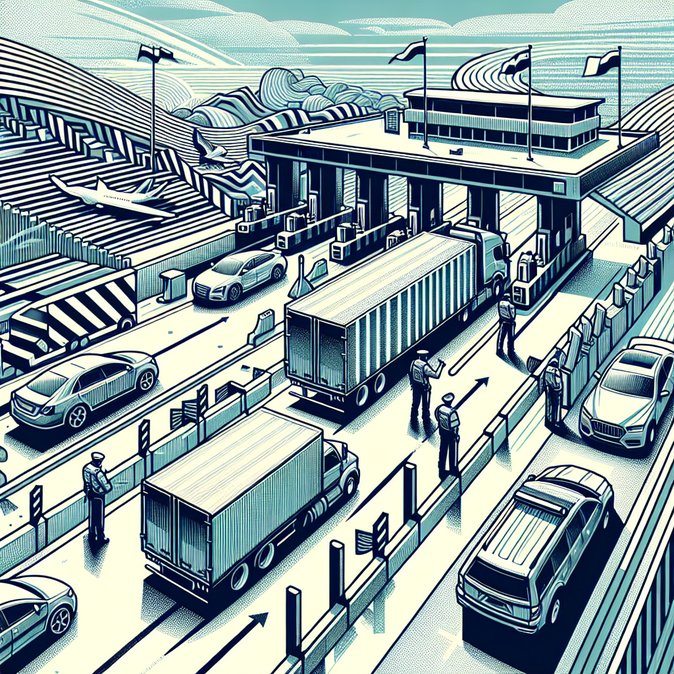
For cross-border commuters and supply-chain operators the practical impact is the continuation of random police stops, vehicle inspections and occasional queues—particularly at peak times on the A4 (Poland), A3 (Austria) and A6 (France). The Federal Police confirmed that electronic license-plate readers and mobile biometric devices deployed last autumn will remain in use.
![Germany Notifies EU of Six-Month Extension of Internal Border Controls on All Nine Land Frontiers]()
If your organization needs clarity on what documents to carry or how potential delays could affect onward travel in the Schengen area, VisaHQ provides real-time guidance and streamlined visa services for Germany and its neighbors. Their platform (https://www.visahq.com/germany/) lets travelers verify entry requirements, complete applications and arrange courier pickup from a single dashboard—useful peace of mind when border checks become less predictable.
Business-travel managers should advise employees to carry passports or national ID cards even on routine Schengen day trips and to budget 30–45 minutes of buffer time when scheduling meetings near the border. Companies running shuttle buses between German plants and neighbouring-country offices must ensure driver tachograph data still reflect mandatory rest periods if delays extend journey times.
Immigration counsel stress that the controls do not affect visa-waiver rights or residence titles, but overstayers discovered during spot checks face accelerated removal under the Federal Repatriation Acceleration Act adopted last December.
Berlin cites continuing irregular-migration pressures, smuggling networks and wider security risks linked to the wars in Ukraine and the Middle East. Under Article 25 of the Schengen Borders Code, a member state may reintroduce internal checks for renewable six-month periods in cases of “serious threat.” This is Germany’s sixth consecutive extension since October 2023, a fact that has already drawn legal challenges at the European Court of Justice.
For cross-border commuters and supply-chain operators the practical impact is the continuation of random police stops, vehicle inspections and occasional queues—particularly at peak times on the A4 (Poland), A3 (Austria) and A6 (France). The Federal Police confirmed that electronic license-plate readers and mobile biometric devices deployed last autumn will remain in use.
If your organization needs clarity on what documents to carry or how potential delays could affect onward travel in the Schengen area, VisaHQ provides real-time guidance and streamlined visa services for Germany and its neighbors. Their platform (https://www.visahq.com/germany/) lets travelers verify entry requirements, complete applications and arrange courier pickup from a single dashboard—useful peace of mind when border checks become less predictable.
Business-travel managers should advise employees to carry passports or national ID cards even on routine Schengen day trips and to budget 30–45 minutes of buffer time when scheduling meetings near the border. Companies running shuttle buses between German plants and neighbouring-country offices must ensure driver tachograph data still reflect mandatory rest periods if delays extend journey times.
Immigration counsel stress that the controls do not affect visa-waiver rights or residence titles, but overstayers discovered during spot checks face accelerated removal under the Federal Repatriation Acceleration Act adopted last December.