Belgium’s busiest airport will gain a direct high-speed rail connection to Germany from September 2026, after Deutsche Bahn (DB) and Belgian infrastructure manager Infrabel finalised an agreement announced on 1 March.
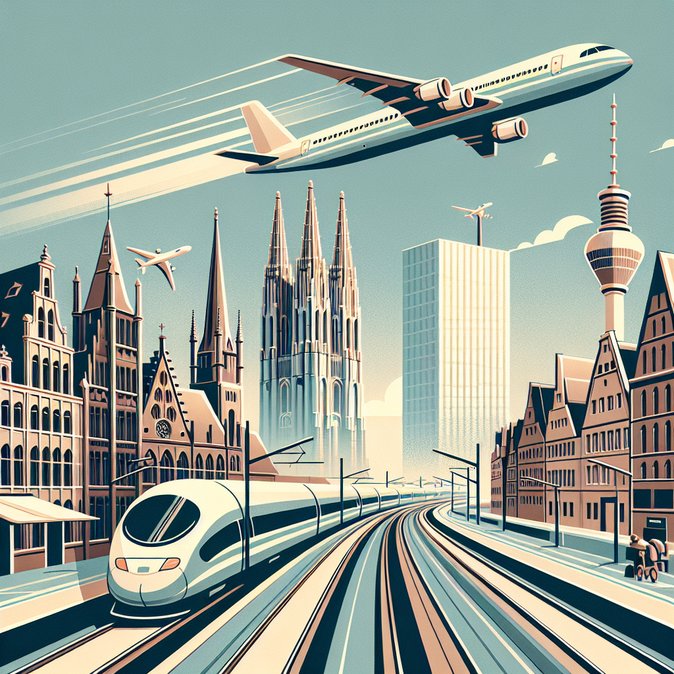
The new ICE service will run Brussels Airport–Leuven–Liège–Aachen–Cologne in just two hours, continuing onward to Cologne Messe/Deutz and offering same-platform transfers to DB’s ICE Sprinter network for Frankfurt, Stuttgart and Munich. For German corporates with Benelux regional offices, the route will provide a carbon-efficient alternative to short-haul flights and cut door-to-door times versus current train-plane combinations via Brussels Midi.
![Deutsche Bahn to launch Brussels-Airport – Cologne high-speed link, boosting cross-border mobility]()
Brussels Airport chief executive Arnaud Feist hailed the link as “a milestone in Europe’s single-market connectivity,” noting that 15 per cent of the airport’s passenger volume originates in Germany. DB will allocate new ICE L rolling-stock with low-floor boarding, Wi-Fi and built-in ETCS signalling. The trains will carry both DB and SNCB ticket stock, enabling seamless sales through German corporate booking tools.
For business travellers mapping out these new rail-air itineraries, VisaHQ can streamline visa and travel document requirements. The company’s portal (https://www.visahq.com/germany/) offers fast German and Schengen visa processing, real-time tracking and dedicated support for both individuals and corporate travel departments—helping ensure smooth, compliant journeys across borders.
For mobility managers the connection opens up bundled air-rail itineraries: return fares from German cities are expected to start at €89 in 2nd class, with through-checked baggage to Star Alliance long-haul flights under discussion. The service also supports Germany’s sustainability goals by encouraging modal shift and may qualify for CO₂ reporting credits under many firms’ ESG frameworks.
The new ICE service will run Brussels Airport–Leuven–Liège–Aachen–Cologne in just two hours, continuing onward to Cologne Messe/Deutz and offering same-platform transfers to DB’s ICE Sprinter network for Frankfurt, Stuttgart and Munich. For German corporates with Benelux regional offices, the route will provide a carbon-efficient alternative to short-haul flights and cut door-to-door times versus current train-plane combinations via Brussels Midi.
Brussels Airport chief executive Arnaud Feist hailed the link as “a milestone in Europe’s single-market connectivity,” noting that 15 per cent of the airport’s passenger volume originates in Germany. DB will allocate new ICE L rolling-stock with low-floor boarding, Wi-Fi and built-in ETCS signalling. The trains will carry both DB and SNCB ticket stock, enabling seamless sales through German corporate booking tools.
For business travellers mapping out these new rail-air itineraries, VisaHQ can streamline visa and travel document requirements. The company’s portal (https://www.visahq.com/germany/) offers fast German and Schengen visa processing, real-time tracking and dedicated support for both individuals and corporate travel departments—helping ensure smooth, compliant journeys across borders.
For mobility managers the connection opens up bundled air-rail itineraries: return fares from German cities are expected to start at €89 in 2nd class, with through-checked baggage to Star Alliance long-haul flights under discussion. The service also supports Germany’s sustainability goals by encouraging modal shift and may qualify for CO₂ reporting credits under many firms’ ESG frameworks.