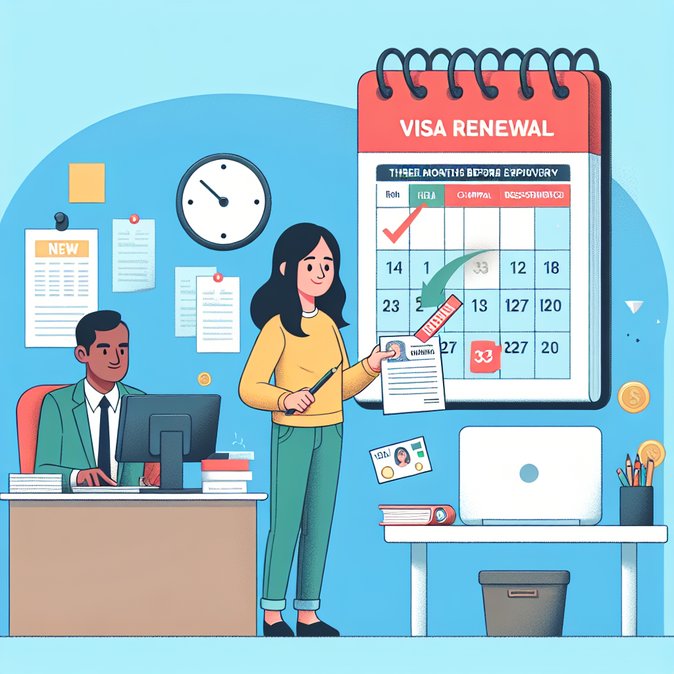
Human-resources teams received welcome news on 28 February when Santa Fe Relocation confirmed that the Hong Kong Immigration Department will, from 1 March, accept extension-of-stay applications up to 90 days before a work visa expires. The earlier filing window covers all major schemes used by multinational staff—the General Employment Policy, Admission Scheme for Mainland Talents & Professionals, QMAS, STEM Talent, Non-local Graduates and the Second-Generation programme—bringing them into line with the Top Talent Pass launched in 2024.
Under the old rules, renewals could be lodged only four weeks before expiry, forcing many assignees to scramble for employment contracts, tax receipts and MPF statements at the last minute. The longer runway is expected to reduce unplanned travel disruption and overtime costs for mobility teams, while giving dependants more flexibility to synchronise school calendars and holiday travel.
![Hong Kong lets employment-visa holders renew up to three months early]()
For mobility coordinators who prefer an extra layer of support, VisaHQ’s Hong Kong portal (https://www.visahq.com/hong-kong/) offers an end-to-end renewal service featuring customised document checklists, automated deadline reminders and real-time status tracking. Leveraging these tools can help HR managers lodge applications comfortably within the new 90-day window and free up in-house resources for other strategic projects.
Documentation requirements and the typical two-year renewal validity remain unchanged, but practitioners advise employers to start assembling paperwork 12 weeks out so that any red flags—such as incomplete tax filings—can be resolved well before the submission date. Renewals can still be filed online; originals must be presented only if requested by case officers.
Immigration advisers also urge companies to audit internal trackers. Employees whose visas expire after 1 June 2026 are now eligible to submit as early as March, smoothing head-count planning for the busy summer-relocation season. While standalone dependent renewals and training visas are excluded, the change materially improves continuity of status for the bulk of Hong Kong’s expatriate workforce.
Under the old rules, renewals could be lodged only four weeks before expiry, forcing many assignees to scramble for employment contracts, tax receipts and MPF statements at the last minute. The longer runway is expected to reduce unplanned travel disruption and overtime costs for mobility teams, while giving dependants more flexibility to synchronise school calendars and holiday travel.

For mobility coordinators who prefer an extra layer of support, VisaHQ’s Hong Kong portal (https://www.visahq.com/hong-kong/) offers an end-to-end renewal service featuring customised document checklists, automated deadline reminders and real-time status tracking. Leveraging these tools can help HR managers lodge applications comfortably within the new 90-day window and free up in-house resources for other strategic projects.
Documentation requirements and the typical two-year renewal validity remain unchanged, but practitioners advise employers to start assembling paperwork 12 weeks out so that any red flags—such as incomplete tax filings—can be resolved well before the submission date. Renewals can still be filed online; originals must be presented only if requested by case officers.
Immigration advisers also urge companies to audit internal trackers. Employees whose visas expire after 1 June 2026 are now eligible to submit as early as March, smoothing head-count planning for the busy summer-relocation season. While standalone dependent renewals and training visas are excluded, the change materially improves continuity of status for the bulk of Hong Kong’s expatriate workforce.