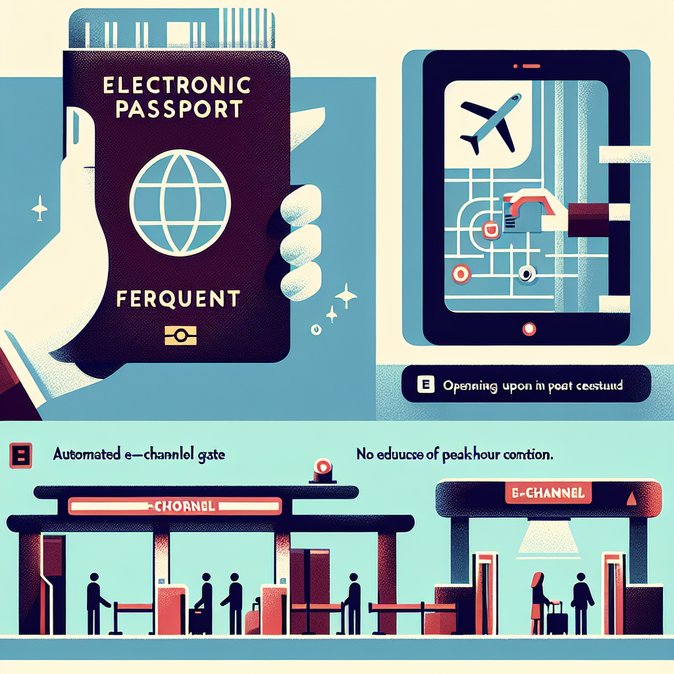
Corporate travellers arriving at Hong Kong International Airport will soon move through immigration in a fraction of the time. The Immigration Department confirmed on 27 February that anyone who has entered Hong Kong via the airport at least twice in the past 24 months can immediately register for the territory’s automated e-Channel gates. The previous requirement—three arrivals within one year or possession of a Frequent-Visitor Card—often excluded occasional executives and conference delegates.
Registration has also been simplified. Holders of electronic passports now present the passport, pose for a photo and sign a consent form; fingerprint capture has been scrapped for this group. Travellers using non-electronic documents still provide a fingerprint, but the overall process now takes under three minutes at dedicated counters in Arrivals Hall North and South, or at Immigration Tower downtown. Once approved, passengers can use facial-recognition lanes at all sea, land and air checkpoints—including the Hong Kong-Zhuhai-Macao Bridge—without additional paperwork.
![Hong Kong cuts e-Channel enrolment threshold to just two prior trips, drops fingerprints for e-passports]()
Airport Authority modelling suggests the relaxed rules could divert up to 20 percent of foreign arrivals away from staffed counters during morning peaks, saving an estimated 15 minutes per traveller. Airlines such as Cathay Pacific plan to push e-Channel reminders through their apps, while the Hong Kong Tourism Board will install enrolment kiosks at major MICE venues so delegates can register on-site before flying home.
If your trip to Hong Kong forms part of a wider Asian itinerary that still requires visas—such as onward travel to mainland China—VisaHQ can take the administrative burden off your hands. Its online platform and local experts manage everything from application forms to courier delivery, so corporate travellers spend less time at consulates and more time on business. Learn more at https://www.visahq.com/hong-kong/
For business-travel managers the change is a low-cost productivity win. Companies should update pre-trip briefings so staff know they are eligible after just two visits, and remind travellers to carry proof of previous landings (the airport still issues electronic landing slips). Consultants expect the measure to be followed by wider “contactless corridor” trials on the border with mainland China later this year, part of the government’s Smart Immigration Roadmap.
Registration has also been simplified. Holders of electronic passports now present the passport, pose for a photo and sign a consent form; fingerprint capture has been scrapped for this group. Travellers using non-electronic documents still provide a fingerprint, but the overall process now takes under three minutes at dedicated counters in Arrivals Hall North and South, or at Immigration Tower downtown. Once approved, passengers can use facial-recognition lanes at all sea, land and air checkpoints—including the Hong Kong-Zhuhai-Macao Bridge—without additional paperwork.

Airport Authority modelling suggests the relaxed rules could divert up to 20 percent of foreign arrivals away from staffed counters during morning peaks, saving an estimated 15 minutes per traveller. Airlines such as Cathay Pacific plan to push e-Channel reminders through their apps, while the Hong Kong Tourism Board will install enrolment kiosks at major MICE venues so delegates can register on-site before flying home.
If your trip to Hong Kong forms part of a wider Asian itinerary that still requires visas—such as onward travel to mainland China—VisaHQ can take the administrative burden off your hands. Its online platform and local experts manage everything from application forms to courier delivery, so corporate travellers spend less time at consulates and more time on business. Learn more at https://www.visahq.com/hong-kong/
For business-travel managers the change is a low-cost productivity win. Companies should update pre-trip briefings so staff know they are eligible after just two visits, and remind travellers to carry proof of previous landings (the airport still issues electronic landing slips). Consultants expect the measure to be followed by wider “contactless corridor” trials on the border with mainland China later this year, part of the government’s Smart Immigration Roadmap.