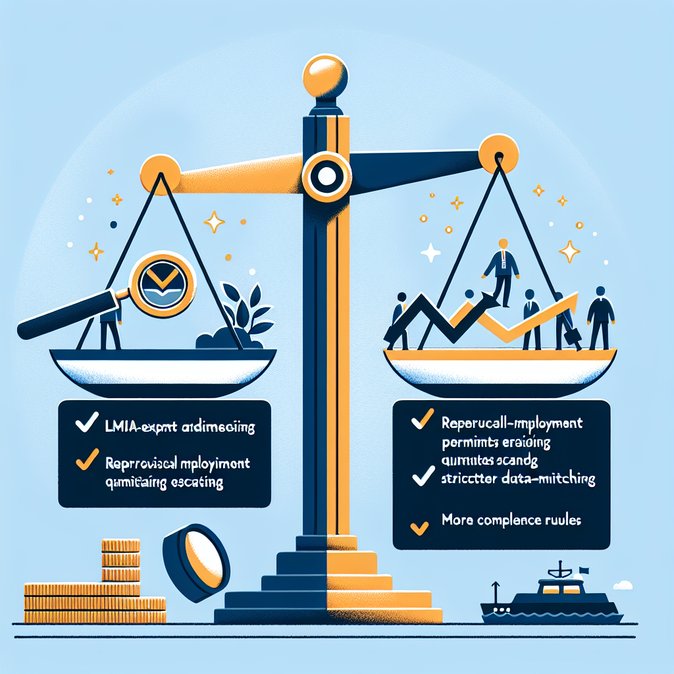
On 27 February Immigration News Canada published a deep dive into IRCC’s quietly released February officer guidelines that reshape the landscape for Labour Market Impact Assessment (LMIA)-exempt work permits in 2026. The International Mobility Program (IMP) quota has been boosted to 170,000 admissions—32 percent higher than originally planned—while the Temporary Foreign Worker Program cap drops to 60,000.
The headline shift is good news for multinationals that rely on intra-company transfers, CUSMA professionals and other IMP categories, allowing faster deployment without the cost and delay of an LMIA. Yet the fine print introduces stricter scrutiny. New guidance for code C20 reciprocal-employment cases now obliges officers to verify that Canadians enjoy mirrored opportunities specifically in the foreign worker’s home country. Employers with global exchange programmes will need granular evidence—HR policies, historic secondment data and five-year reciprocity records—to secure approvals.
Organizations that are unsure about the correct permit stream or the evolving documentary requirements can lean on VisaHQ’s Canada desk for support. Through the self-service portal and dedicated case managers, VisaHQ (https://www.visahq.com/canada/) helps employers and assignees determine eligibility, assemble province-specific documents and flag GCMS data discrepancies before submission, reducing the risk of refusals under the new guidelines.
![Canada Expands LMIA-Exempt Work-Permit Quota and Tightens Reciprocal-Employment Rules]()
Additionally, IRCC has updated GCMS data-entry requirements: destination province, NOC code and city must exactly match the job offer, or applications risk refusal. Public-policy exemptions benefiting Iranian and Ukrainian nationals are set to expire on 28 February and 31 March respectively, adding urgency for affected workers.
For mobility managers the message is mixed: more seats under the IMP umbrella but higher documentary thresholds and looming sunset clauses. Companies should conduct a gap analysis of current global-assignment policies, ensure job offers align perfectly with GCMS fields and gather country-specific reciprocity proof well before filing.
Failure to adapt could see assignments stall just as Canada increases audits aimed at temporary foreign worker compliance.
The headline shift is good news for multinationals that rely on intra-company transfers, CUSMA professionals and other IMP categories, allowing faster deployment without the cost and delay of an LMIA. Yet the fine print introduces stricter scrutiny. New guidance for code C20 reciprocal-employment cases now obliges officers to verify that Canadians enjoy mirrored opportunities specifically in the foreign worker’s home country. Employers with global exchange programmes will need granular evidence—HR policies, historic secondment data and five-year reciprocity records—to secure approvals.
Organizations that are unsure about the correct permit stream or the evolving documentary requirements can lean on VisaHQ’s Canada desk for support. Through the self-service portal and dedicated case managers, VisaHQ (https://www.visahq.com/canada/) helps employers and assignees determine eligibility, assemble province-specific documents and flag GCMS data discrepancies before submission, reducing the risk of refusals under the new guidelines.

Additionally, IRCC has updated GCMS data-entry requirements: destination province, NOC code and city must exactly match the job offer, or applications risk refusal. Public-policy exemptions benefiting Iranian and Ukrainian nationals are set to expire on 28 February and 31 March respectively, adding urgency for affected workers.
For mobility managers the message is mixed: more seats under the IMP umbrella but higher documentary thresholds and looming sunset clauses. Companies should conduct a gap analysis of current global-assignment policies, ensure job offers align perfectly with GCMS fields and gather country-specific reciprocity proof well before filing.
Failure to adapt could see assignments stall just as Canada increases audits aimed at temporary foreign worker compliance.