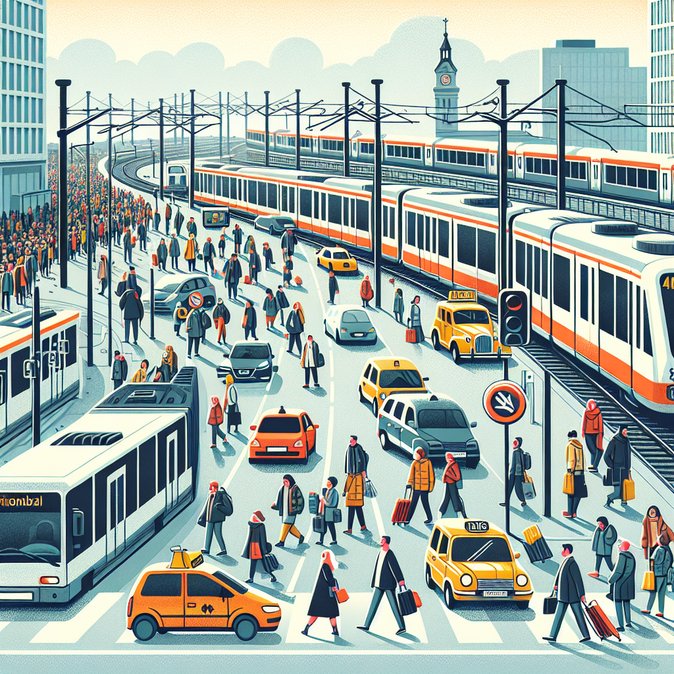
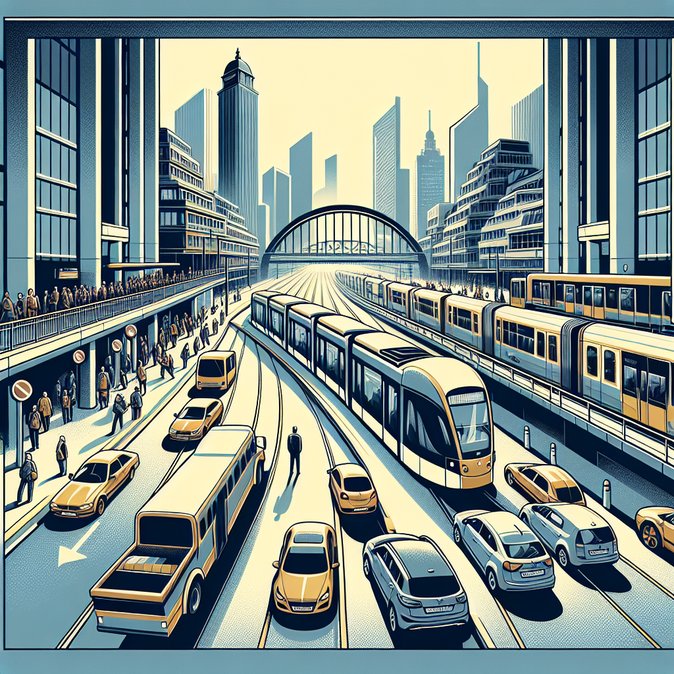
From 03:00 on Friday 27 February until the early hours of Sunday, buses, trams and most underground lines in all 16 German federal states are off the streets. The walk-out, called by the public-service union Ver.di, affects around 100 000 employees at 150 municipal transport operators. While S-Bahn and long-distance Deutsche Bahn services continue to run, major hubs such as Berlin, Hamburg, Cologne, Frankfurt and Munich reported rush-hour gridlock as commuters switched to cars and regional trains.
Ver.di is seeking shorter weekly hours, longer rest periods between shifts and higher premiums for night and weekend work. Employers argue that many city networks are already financially strained after two years of inflation and energy-price shocks. Talks are scheduled to resume on 4 March; the union has threatened further escalation, potentially coinciding with spring school holidays.
![48-Hour Nationwide Public-Transport Strike Brings German Cities to a Standstill]()
For business travellers the impact is immediate: airport feeder buses, urban tram links to conference centres and inter-city replacement coaches are cancelled or severely reduced. Travel-managers have advised staff to budget at least 45 minutes extra for taxi queues at Berlin-Brandenburg and Cologne/Bonn airports, and some firms have shifted client meetings online. Hotel groups report occupancy spikes in secondary cities where rail links remain intact, a sign that travellers are re-routing to avoid urban congestion.
If rerouting forces travellers to hop across borders—say, via Zurich or Amsterdam to bypass German hubs—having the right paperwork becomes critical. VisaHQ’s Germany page (https://www.visahq.com/germany/) lets users check entry requirements in minutes and submit visa applications online, smoothing the administrative side of an already stressful journey.
The strike also underscores a broader labour-relations trend in German mobility. Aviation security staff staged four one-day strikes in January, and Lufthansa ground workers have warned they may coordinate action with Ver.di’s local-transport campaign. Companies with high intra-Germany travel volumes should therefore review contingency policies, including ride-hailing allowances and remote-work protocols, ahead of a potentially strike-heavy spring.
Ver.di is seeking shorter weekly hours, longer rest periods between shifts and higher premiums for night and weekend work. Employers argue that many city networks are already financially strained after two years of inflation and energy-price shocks. Talks are scheduled to resume on 4 March; the union has threatened further escalation, potentially coinciding with spring school holidays.
For business travellers the impact is immediate: airport feeder buses, urban tram links to conference centres and inter-city replacement coaches are cancelled or severely reduced. Travel-managers have advised staff to budget at least 45 minutes extra for taxi queues at Berlin-Brandenburg and Cologne/Bonn airports, and some firms have shifted client meetings online. Hotel groups report occupancy spikes in secondary cities where rail links remain intact, a sign that travellers are re-routing to avoid urban congestion.
If rerouting forces travellers to hop across borders—say, via Zurich or Amsterdam to bypass German hubs—having the right paperwork becomes critical. VisaHQ’s Germany page (https://www.visahq.com/germany/) lets users check entry requirements in minutes and submit visa applications online, smoothing the administrative side of an already stressful journey.
The strike also underscores a broader labour-relations trend in German mobility. Aviation security staff staged four one-day strikes in January, and Lufthansa ground workers have warned they may coordinate action with Ver.di’s local-transport campaign. Companies with high intra-Germany travel volumes should therefore review contingency policies, including ride-hailing allowances and remote-work protocols, ahead of a potentially strike-heavy spring.