Airports Council International (ACI) Europe, Airlines for Europe (A4E) and the International Air Transport Association (IATA) issued an unusually blunt joint statement on 27 February warning that the European Union’s new Entry/Exit System (EES) could bring ‘four-hour queues or worse’ at external-Schengen borders this summer if it is rolled out as currently scheduled. (itij.com)
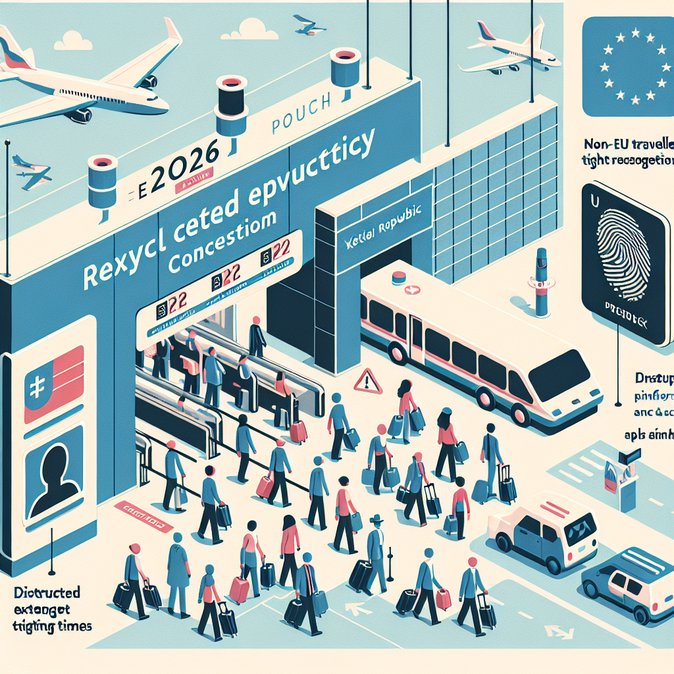
EES replaces manual passport stamps with a kiosk-based process that captures fingerprints and a facial image for every non-EU traveller. Although the technology has been piloted since October 2025, industry data show passport-control wait-times already doubling at some hubs. Prague Václav Havel Airport, which handled 15 million passengers last year, is one of the facilities that must move from a 35 % sampling regime to 100 % biometric registration by 10 April 2026. Czech border police have warned that they would need at least 80 additional officers and 50 more kiosks to keep peak-hour processing below 45 minutes. (itij.com)
![EU Airlines Push to Delay New Biometric Border Checks; Prague Airport Prepares Contingency Plans]()
For travellers who want an extra layer of preparation before facing the Czech Republic’s new border procedures, VisaHQ offers step-by-step visa and travel-document support for Czechia and other Schengen destinations. Through its dedicated portal (https://www.visahq.com/czech-republic/), passengers can verify entry rules, obtain personalised checklists and arrange secure document delivery—helping to minimise surprises and speed up arrivals even when queues are long.
If the European Commission agrees, member states will be allowed to suspend full EES checks between 15 June and 15 September. The Czech Transport Ministry says it will invoke the opt-out unless extra staffing funds are released by May. Airlines serving Prague, Brno and Ostrava are already adjusting minimum connection times and advising travellers to arrive three hours before departure. Travel-insurance providers say missed-flight claims could rise sharply if the rollout is not slowed. (itij.com)
In practical terms, business travellers to Czechia should leave additional buffer time when entering or exiting the Schengen Area after April and should download the EU’s “Travel to Europe” pre-registration app as soon as the Czech Interior Ministry activates it. Companies running rotational assignments may also want to stagger arrival dates to avoid morning peaks when several long-haul flights land simultaneously. (itij.com)
EES replaces manual passport stamps with a kiosk-based process that captures fingerprints and a facial image for every non-EU traveller. Although the technology has been piloted since October 2025, industry data show passport-control wait-times already doubling at some hubs. Prague Václav Havel Airport, which handled 15 million passengers last year, is one of the facilities that must move from a 35 % sampling regime to 100 % biometric registration by 10 April 2026. Czech border police have warned that they would need at least 80 additional officers and 50 more kiosks to keep peak-hour processing below 45 minutes. (itij.com)

For travellers who want an extra layer of preparation before facing the Czech Republic’s new border procedures, VisaHQ offers step-by-step visa and travel-document support for Czechia and other Schengen destinations. Through its dedicated portal (https://www.visahq.com/czech-republic/), passengers can verify entry rules, obtain personalised checklists and arrange secure document delivery—helping to minimise surprises and speed up arrivals even when queues are long.
If the European Commission agrees, member states will be allowed to suspend full EES checks between 15 June and 15 September. The Czech Transport Ministry says it will invoke the opt-out unless extra staffing funds are released by May. Airlines serving Prague, Brno and Ostrava are already adjusting minimum connection times and advising travellers to arrive three hours before departure. Travel-insurance providers say missed-flight claims could rise sharply if the rollout is not slowed. (itij.com)
In practical terms, business travellers to Czechia should leave additional buffer time when entering or exiting the Schengen Area after April and should download the EU’s “Travel to Europe” pre-registration app as soon as the Czech Interior Ministry activates it. Companies running rotational assignments may also want to stagger arrival dates to avoid morning peaks when several long-haul flights land simultaneously. (itij.com)