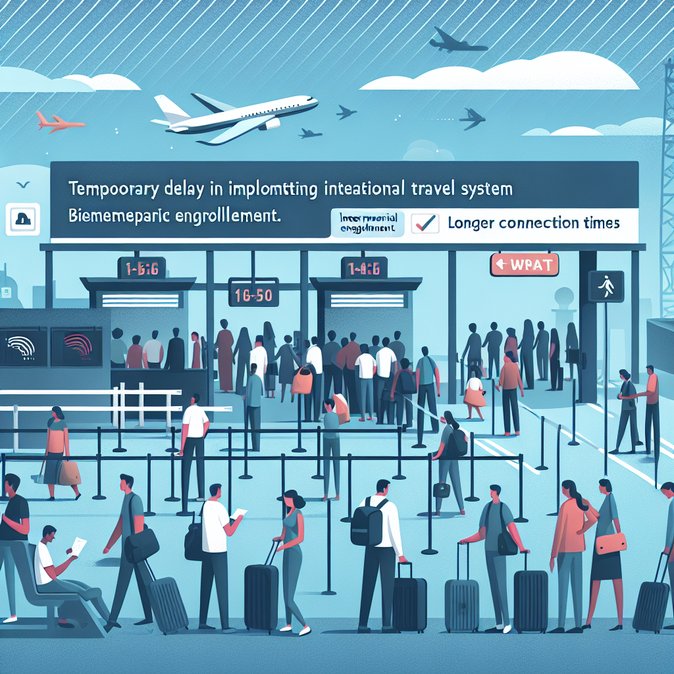
Travellers across Europe will have to wait a little longer for the full switch-over to the European Union’s Entry/Exit System (EES). The digital border-management platform—designed to replace manual passport stamping with biometric kiosks—has experienced software glitches and trial bottlenecks of up to four hours in major airports. Transport ministers therefore agreed on 27 February 2026 to allow member-states to suspend the system during the coming peak-season, pushing the mandatory ‘big-bang’ implementation from April to September.
For Cyprus-based multinationals and expatriate staff, the immediate impact is limited: Cyprus is not yet in Schengen, so travellers entering or leaving the island will still have their passports stamped in the normal way. The bigger change will be felt on onward trips to the 25 Schengen states, Iceland, Norway, Liechtenstein and Switzerland, where first-time EES enrolment (face image and four fingerprints) will become obligatory once the system does go live.
Airports serving the Cypriot market—Athens, Frankfurt, Dubai and London Heathrow foremost among them—are racing to install extra kiosks and signage in anticipation of autumn queues. Airlines operating from Larnaca and Paphos are drawing up new connection-time guidelines for corporate travel managers; several report that tight 45-minute EU connections will no longer be bookable in their reservation systems from Q4.
![EU’s New Entry/Exit System Faces Summer Delay—but Cyprus Still Outside the Scheme]()
Travellers looking for extra help navigating changing requirements can lean on VisaHQ’s Cyprus team, which provides end-to-end visa processing, document checks and real-time updates on EES developments. Visit https://www.visahq.com/cyprus/ for streamlined assistance before your next Schengen trip.
Longer term, Cyprus intends to join Schengen, and officials at the Deputy Ministry of Migration have quietly begun procuring EES-compatible hardware so that the island can ‘switch on’ when accession occurs. In the interim, Cypriot residence-permit holders will remain exempt from EES registration when they fly home, but must still comply when they visit Schengen for business meetings or leisure.
Practical tip: advise travellers departing Cyprus for Schengen hubs after September to add at least 30–45 minutes to their usual buffer and to carry proof of accommodation, financial means and insurance, which border officers have begun requesting more frequently during live tests.
For Cyprus-based multinationals and expatriate staff, the immediate impact is limited: Cyprus is not yet in Schengen, so travellers entering or leaving the island will still have their passports stamped in the normal way. The bigger change will be felt on onward trips to the 25 Schengen states, Iceland, Norway, Liechtenstein and Switzerland, where first-time EES enrolment (face image and four fingerprints) will become obligatory once the system does go live.
Airports serving the Cypriot market—Athens, Frankfurt, Dubai and London Heathrow foremost among them—are racing to install extra kiosks and signage in anticipation of autumn queues. Airlines operating from Larnaca and Paphos are drawing up new connection-time guidelines for corporate travel managers; several report that tight 45-minute EU connections will no longer be bookable in their reservation systems from Q4.

Travellers looking for extra help navigating changing requirements can lean on VisaHQ’s Cyprus team, which provides end-to-end visa processing, document checks and real-time updates on EES developments. Visit https://www.visahq.com/cyprus/ for streamlined assistance before your next Schengen trip.
Longer term, Cyprus intends to join Schengen, and officials at the Deputy Ministry of Migration have quietly begun procuring EES-compatible hardware so that the island can ‘switch on’ when accession occurs. In the interim, Cypriot residence-permit holders will remain exempt from EES registration when they fly home, but must still comply when they visit Schengen for business meetings or leisure.
Practical tip: advise travellers departing Cyprus for Schengen hubs after September to add at least 30–45 minutes to their usual buffer and to carry proof of accommodation, financial means and insurance, which border officers have begun requesting more frequently during live tests.