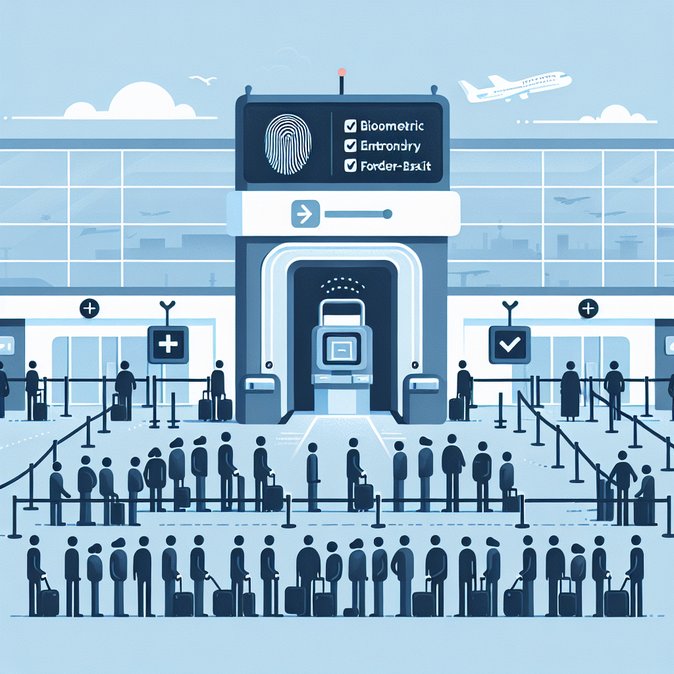
With Easter and summer peak traffic looming, Brussels Airport is backing a joint plea by ACI Europe, Airlines for Europe and IATA to suspend or radically slow the roll-out of the EU’s new biometric Entry/Exit System (EES). In an open letter released on 27 February, the three bodies warned that the current phased deployment—requiring 35 % of third-country arrivals to register fingerprints and facial scans—has already extended border-control times by up to 120 minutes at some hubs.
Officials cite chronic understaffing of police booths, software glitches in the self-service kiosks and low take-up of a planned Frontex pre-registration app. Without “operational flexibility”, they project queues of four hours or more during July and August. Under EU rules, member states—including Belgium—may temporarily switch off EES for up to 150 days in total if less than 80 % of records contain biometrics, a loophole the industry now urges the Commission to formalise ahead of 10 April, when full technical readiness is supposed to be achieved.
![Brussels Joins Industry Call to Pause EU Entry/Exit System as Summer Queue Fears Grow]()
Travellers looking to minimise surprises at the border can also turn to VisaHQ, which offers up-to-date guidance on Belgian visa and entry requirements—including the latest developments around EES—and can assist with electronic pre-registration where available: https://www.visahq.com/belgium/
Brussels Airport handled 22.2 million passengers in 2025; management says even a one-minute increase in processing time adds 37,000 staff hours over the year. Long queues could also trigger EU261 compensation liability for missed connections, inflating airline costs. Corporates with tight connection windows at BRU, or Eurostar users transiting through Midi/Zuid station, risk travel disruption if the system is not paused.
Action points: (1) brief travellers that first-time registration may take up to ten minutes; (2) build larger connection buffers at Schengen entry points; (3) collect boarding-pass and delay evidence to support any EU261 claims. Mobility managers should monitor Commission guidance expected in March.
Officials cite chronic understaffing of police booths, software glitches in the self-service kiosks and low take-up of a planned Frontex pre-registration app. Without “operational flexibility”, they project queues of four hours or more during July and August. Under EU rules, member states—including Belgium—may temporarily switch off EES for up to 150 days in total if less than 80 % of records contain biometrics, a loophole the industry now urges the Commission to formalise ahead of 10 April, when full technical readiness is supposed to be achieved.
Travellers looking to minimise surprises at the border can also turn to VisaHQ, which offers up-to-date guidance on Belgian visa and entry requirements—including the latest developments around EES—and can assist with electronic pre-registration where available: https://www.visahq.com/belgium/
Brussels Airport handled 22.2 million passengers in 2025; management says even a one-minute increase in processing time adds 37,000 staff hours over the year. Long queues could also trigger EU261 compensation liability for missed connections, inflating airline costs. Corporates with tight connection windows at BRU, or Eurostar users transiting through Midi/Zuid station, risk travel disruption if the system is not paused.
Action points: (1) brief travellers that first-time registration may take up to ten minutes; (2) build larger connection buffers at Schengen entry points; (3) collect boarding-pass and delay evidence to support any EU261 claims. Mobility managers should monitor Commission guidance expected in March.