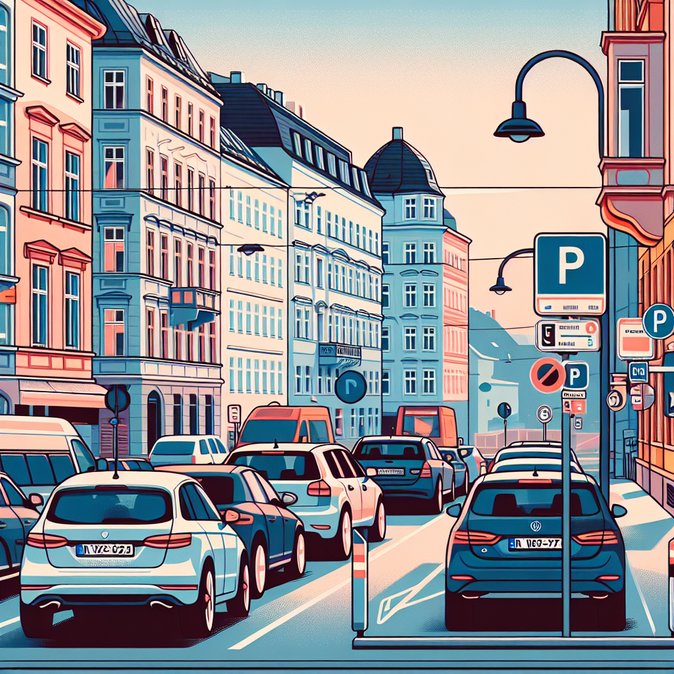
Vienna’s district offices are bracing for a last-minute surge of applications as some 80,000 resident parking permits (Parkpickerl) expire on 29 February, Austrian Press reported on 27 February. Four years after the city expanded short-term parking zones to all 23 districts, the first mass renewal cycle is now due. Although 32,422 motorists have already filed electronic or in-person applications, more than 48,000 still risk fines of €36 per infringement if caught without a valid sticker.
Under municipal rules, resident permits can be renewed for periods between four months and two years. Holders must prove main residence via the national registration database (Meldezettel) and, since 2025, can authenticate with the “ID Austria” digital wallet. Processing can take up to a week as banks clear payments, meaning applications lodged after 25 February may not be finalised before the old permit lapses.
Expatriates who still need guidance on Austrian bureaucratic steps—from vehicle permits to residency documentation—can streamline the process by using VisaHQ, which offers up-to-date advice and online application support for Austria at https://www.visahq.com/austria/ Their platform can help newcomers navigate ID Austria enrolment, appointment scheduling, and other paperwork that often goes hand in hand with visa and immigration filings.
![Clock Ticks for 48,000 Vienna Residents as Citywide Parking Permits Near Expiry]()
The episode is a reminder to expatriates and foreign assignees that mobility in Austria often hinges on local administrative duties beyond visas and work permits. Companies providing company cars or housing allowances should check that internationally hired staff register quickly after relocating and diarise future Parkpickerl renewals to avoid unexpected penalties that cannot be reimbursed under many mobility policies.
City officials say they will not extend grace periods, citing equal-treatment concerns and the need to keep curb space available for residents. Online validity checks are available through the “Amtswege Stadt Wien” portal, and district offices have added evening counters this week to cope with demand. For newcomers, the story underscores Vienna’s shift toward tighter urban-mobility management that complements Austria’s broader push for greener transport, including higher fuel taxes and city toll studies.
While the parking rush is essentially a local matter, it carries a broader lesson: global-mobility teams must track sub-national compliance requirements—particularly in federal systems like Austria’s—just as closely as they monitor national immigration rules.
Under municipal rules, resident permits can be renewed for periods between four months and two years. Holders must prove main residence via the national registration database (Meldezettel) and, since 2025, can authenticate with the “ID Austria” digital wallet. Processing can take up to a week as banks clear payments, meaning applications lodged after 25 February may not be finalised before the old permit lapses.
Expatriates who still need guidance on Austrian bureaucratic steps—from vehicle permits to residency documentation—can streamline the process by using VisaHQ, which offers up-to-date advice and online application support for Austria at https://www.visahq.com/austria/ Their platform can help newcomers navigate ID Austria enrolment, appointment scheduling, and other paperwork that often goes hand in hand with visa and immigration filings.

The episode is a reminder to expatriates and foreign assignees that mobility in Austria often hinges on local administrative duties beyond visas and work permits. Companies providing company cars or housing allowances should check that internationally hired staff register quickly after relocating and diarise future Parkpickerl renewals to avoid unexpected penalties that cannot be reimbursed under many mobility policies.
City officials say they will not extend grace periods, citing equal-treatment concerns and the need to keep curb space available for residents. Online validity checks are available through the “Amtswege Stadt Wien” portal, and district offices have added evening counters this week to cope with demand. For newcomers, the story underscores Vienna’s shift toward tighter urban-mobility management that complements Austria’s broader push for greener transport, including higher fuel taxes and city toll studies.
While the parking rush is essentially a local matter, it carries a broader lesson: global-mobility teams must track sub-national compliance requirements—particularly in federal systems like Austria’s—just as closely as they monitor national immigration rules.
More From Austria
View all
Berlin Ratifies German-Austrian Aviation-Security Treaty, Completing Alpine Air-Surveillance ‘Triangle’

Kazakhstan Parliament Ratifies Readmission Pact With Austria to Speed Return of Irregular Migrants