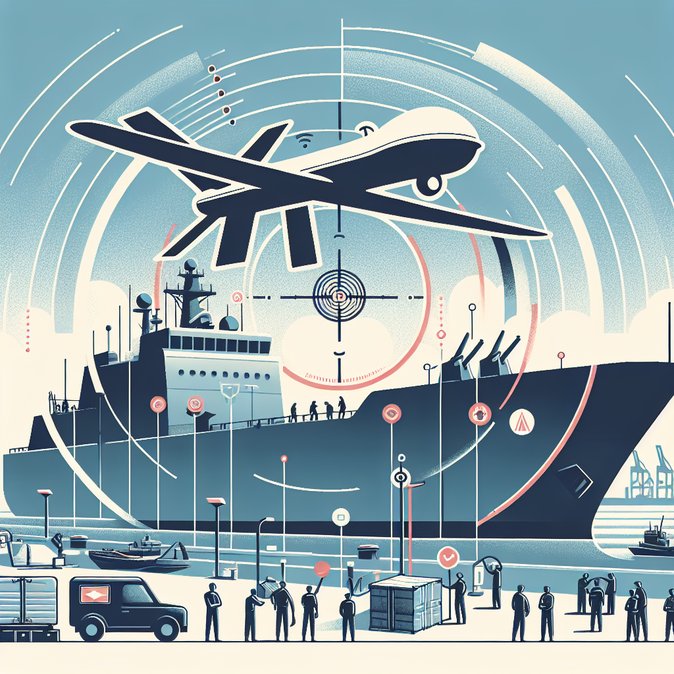
The French Navy confirmed on 26 February that Swedish forces had jammed and neutralised a small unmanned aerial vehicle operating just 10 km from the carrier Charles de Gaulle, currently docked in Malmö ahead of NATO exercise Baltic Sentry. According to Swedish broadcaster SVT, the drone is believed to have launched from a nearby Russian-flagged vessel. While the aircraft posed no immediate threat, French defence officials labelled the episode a timely reminder of the vulnerability of busy civilian harbours that double as temporary berths for allied warships.
Maritime-security analysts note that Baltic cruise terminals increasingly host naval calls during joint manoeuvres, mixing military zones with passenger check-in areas. In the wake of the incident, the Préfecture Maritime Atlantique is reportedly reviewing drone-exclusion perimeters and shore-pass regulations for crew rest & recreation (R&R) visits by French ships. Any tightening of port-access rules could affect shipping agents arranging ship-to-shore rotations, visa-free shore leave and logistical deliveries.
![Security incident near aircraft-carrier ‘Charles de Gaulle’ prompts review of naval port access]()
For global-mobility teams supporting expatriate technicians and defence-industry contractors, the immediate implication is the possibility of stricter background-check lead times and limited access windows when servicing vessels in foreign ports. Insurance brokers are also watching for revised war-risk premiums on supply launches operating within new exclusion zones.
In light of these potential changes, companies can turn to VisaHQ (https://www.visahq.com/france/) for fast, professional assistance in securing visas, shore passes and other travel documents for crew and contractors—minimising downtime and ensuring compliance with evolving harbour regulations.
Although the French government downplayed the risk, calling the protective measures ‘routine’, the episode underscores the blurring line between civilian and military mobility infrastructure. Stakeholders should monitor Notices to Mariners and local harbour-master circulars in advance of upcoming port calls by the Carrier Strike Group during its Lafayette 26 deployment.
Maritime-security analysts note that Baltic cruise terminals increasingly host naval calls during joint manoeuvres, mixing military zones with passenger check-in areas. In the wake of the incident, the Préfecture Maritime Atlantique is reportedly reviewing drone-exclusion perimeters and shore-pass regulations for crew rest & recreation (R&R) visits by French ships. Any tightening of port-access rules could affect shipping agents arranging ship-to-shore rotations, visa-free shore leave and logistical deliveries.

For global-mobility teams supporting expatriate technicians and defence-industry contractors, the immediate implication is the possibility of stricter background-check lead times and limited access windows when servicing vessels in foreign ports. Insurance brokers are also watching for revised war-risk premiums on supply launches operating within new exclusion zones.
In light of these potential changes, companies can turn to VisaHQ (https://www.visahq.com/france/) for fast, professional assistance in securing visas, shore passes and other travel documents for crew and contractors—minimising downtime and ensuring compliance with evolving harbour regulations.
Although the French government downplayed the risk, calling the protective measures ‘routine’, the episode underscores the blurring line between civilian and military mobility infrastructure. Stakeholders should monitor Notices to Mariners and local harbour-master circulars in advance of upcoming port calls by the Carrier Strike Group during its Lafayette 26 deployment.