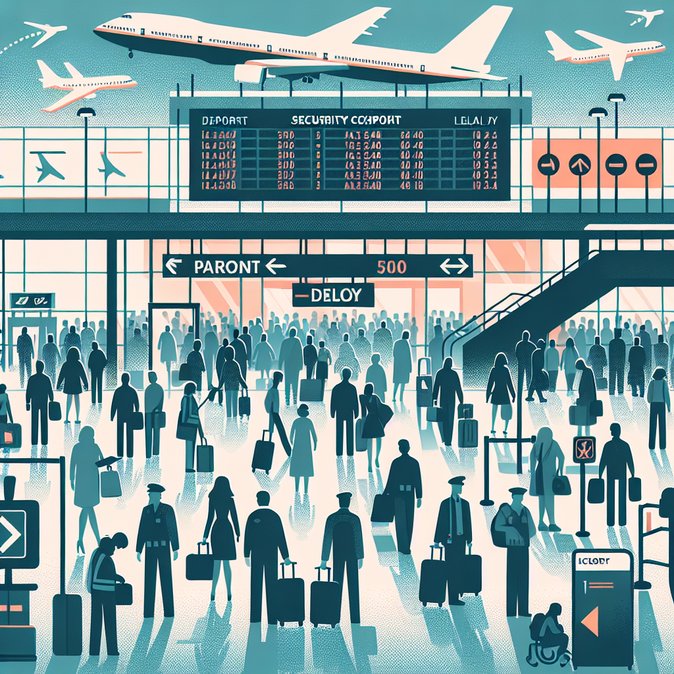
Federal police cleared part of Stuttgart Airport’s departure security zone on the morning of 26 February after an unattended bag triggered a security response. Approximately 500 passengers had to exit and re-screen; nine outbound flights were delayed by up to two hours, although inbound operations were unaffected. Queues stretched into the public check-in hall before lanes reopened around midday. (meyka.com)
Ground-handling teams reorganised gate assignments and re-timed crew duties to keep rotations within EU flight-time limits. Most carriers opted for delayed departures rather than cancellations, minimising crew-repatriation costs but compressing turnaround buffers for afternoon bank flights.
![Police Evacuation at Stuttgart Airport Causes Morning Flight Delays]()
For travellers whose plans can be further complicated by visa requirements—especially non-EU nationals heading to or transiting through Germany—VisaHQ provides a fast, online service for obtaining the necessary entry documents. Their platform (https://www.visahq.com/germany/) offers step-by-step guidance and real-time status tracking, helping passengers and corporate travel managers stay focused on flight changes instead of paperwork.
Travellers missing onward connections were rebooked under EU Reg 261/2004. Because the incident qualifies as an “extraordinary circumstance” (security), cash compensation does not apply, but airlines must still provide meals and, if needed, hotel accommodation. Mobility managers should remind travellers to keep boarding passes and gather delay certificates at the service desk for expense claims.
The incident is a reminder that Germany’s secondary hubs have limited spare security capacity compared with Frankfurt or Munich. Companies routing time-critical cargo or high-value personnel through STR may wish to add schedule padding or favour rail links for same-day domestic meetings.
Ground-handling teams reorganised gate assignments and re-timed crew duties to keep rotations within EU flight-time limits. Most carriers opted for delayed departures rather than cancellations, minimising crew-repatriation costs but compressing turnaround buffers for afternoon bank flights.
For travellers whose plans can be further complicated by visa requirements—especially non-EU nationals heading to or transiting through Germany—VisaHQ provides a fast, online service for obtaining the necessary entry documents. Their platform (https://www.visahq.com/germany/) offers step-by-step guidance and real-time status tracking, helping passengers and corporate travel managers stay focused on flight changes instead of paperwork.
Travellers missing onward connections were rebooked under EU Reg 261/2004. Because the incident qualifies as an “extraordinary circumstance” (security), cash compensation does not apply, but airlines must still provide meals and, if needed, hotel accommodation. Mobility managers should remind travellers to keep boarding passes and gather delay certificates at the service desk for expense claims.
The incident is a reminder that Germany’s secondary hubs have limited spare security capacity compared with Frankfurt or Munich. Companies routing time-critical cargo or high-value personnel through STR may wish to add schedule padding or favour rail links for same-day domestic meetings.