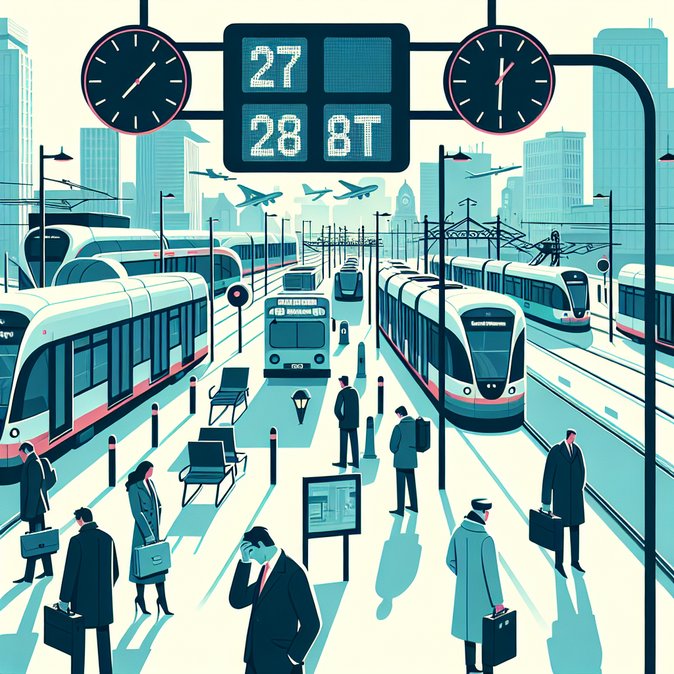
Germany’s Verdi union has called a 48-hour walkout of local-transport staff from the early hours of Friday, 27 February, to the end of service on Saturday, 28 February. Around 100,000 drivers, dispatchers and maintenance workers at more than 150 municipal operators are expected to join, paralysing trams, U-Bahn and most city-bus networks in Berlin, Hamburg, Munich and dozens of regional hubs. Long-distance Deutsche Bahn services and flights are scheduled to run, but ripple effects are likely as travellers crowd onto inter-city trains and roads. (the-independent.com)
The strike comes in the middle of wage talks that have dragged on since November. Verdi is demanding shorter weekly hours, longer rest periods and night-work bonuses to stem high turnover. Municipal employers say the package would add several hundred million euros to budgets already strained by higher energy costs.
![48-Hour Nationwide Transport Strike Set to Disrupt Business Travel Across Germany]()
Travel managers seeking assistance with last-minute visa or transit documentation for rerouted staff can simplify the admin by using VisaHQ’s online platform. The Germany country page (https://www.visahq.com/germany/) offers quick checks on entry requirements, expedited processing options and live support—useful when sudden strikes force changes in itinerary or mode of arrival.
For mobility managers the timing is awkward: the walkout coincides with month-end project travel and the start of school winter holidays in three Länder. Companies with posted workers or project teams on tight timelines should trigger contingency plans—re-booking on long-distance ICE trains, authorising rental cars and allowing remote work. Experience from a similar strike in early February suggests that urban congestion will spike and journey times could double during the morning peak.
If no deal is reached, Verdi warns of escalating “rolling strikes” through March. HR teams should brief travellers on their EU passenger-rights: although local transport is exempt from EU Reg 1371/2007, employers remain liable for duty-of-care and may need to reimburse taxis or hotel overnights.
The strike comes in the middle of wage talks that have dragged on since November. Verdi is demanding shorter weekly hours, longer rest periods and night-work bonuses to stem high turnover. Municipal employers say the package would add several hundred million euros to budgets already strained by higher energy costs.
Travel managers seeking assistance with last-minute visa or transit documentation for rerouted staff can simplify the admin by using VisaHQ’s online platform. The Germany country page (https://www.visahq.com/germany/) offers quick checks on entry requirements, expedited processing options and live support—useful when sudden strikes force changes in itinerary or mode of arrival.
For mobility managers the timing is awkward: the walkout coincides with month-end project travel and the start of school winter holidays in three Länder. Companies with posted workers or project teams on tight timelines should trigger contingency plans—re-booking on long-distance ICE trains, authorising rental cars and allowing remote work. Experience from a similar strike in early February suggests that urban congestion will spike and journey times could double during the morning peak.
If no deal is reached, Verdi warns of escalating “rolling strikes” through March. HR teams should brief travellers on their EU passenger-rights: although local transport is exempt from EU Reg 1371/2007, employers remain liable for duty-of-care and may need to reimburse taxis or hotel overnights.