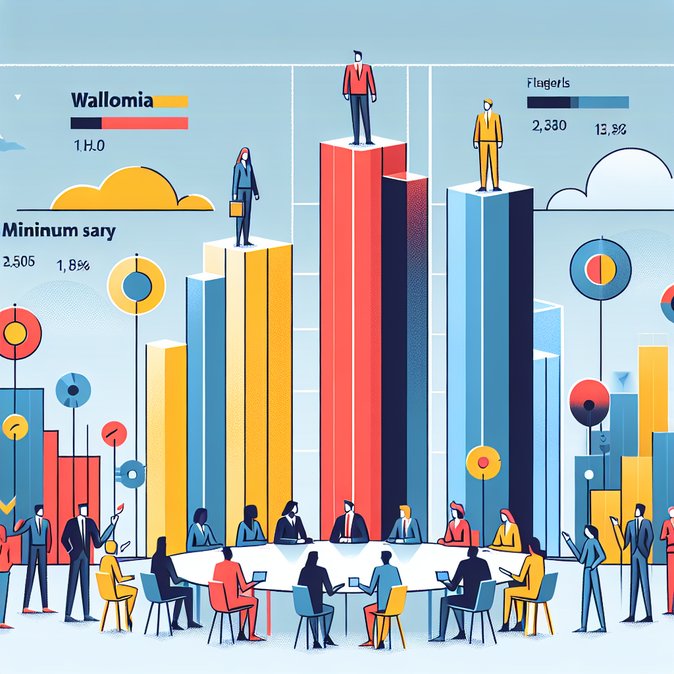
Foreign talent eyeing Belgium will need deeper pockets in 2026 after all three regional governments published new minimum-salary tables that determine eligibility for Work Permit B, Single Permit and EU Blue Card applications. Wallonia led the way, indexing its ‘highly qualified’ threshold to €53,220 and hiking the Blue Card to €68,815—both around 3 % above 2025 levels. Brussels opted to keep monthly floors at €3,703.44 for skilled staff and €6,647.20 for executives, while Flanders will continue using 2025 rates until fresh Statbel data triggers an automatic update later this spring. (brusselstimes.com)
Need help navigating these shifting thresholds? VisaHQ’s Belgium portal (https://www.visahq.com/belgium/) offers up-to-date salary charts, document checklists and an online pre-screening tool so HR teams and foreign applicants can test eligibility for Work Permits, Single Permits or EU Blue Cards before filing—right down to arranging courier pickup when it’s time to lodge the application.
![Belgium Raises 2026 Minimum Salary Thresholds for Foreign Workers & Single Permits]()
The adjustments, published on 26 February by The Brussels Times citing a KPMG briefing, reflect Belgium’s tradition of region-specific migration policy: each region sets its own wage criteria but all must exceed national averages. Companies that fail to meet the new figures risk permit refusals, retroactive salary corrections, and even criminal fines. (brusselstimes.com)
Higher inflation and labour-market tightness lie behind the increases. Wallonia indexed annual amounts, while Brussels calculates percentages of its average gross wage. Flanders, which links thresholds to a national wage norm, is expected to publish a catch-up decree within a month of Statbel’s next release. HR managers with multi-site Belgian operations therefore face an unusual quarter in which three different salary grids co-exist. (brusselstimes.com)
Practical tips for employers: (1) audit ongoing and pending applications to ensure new salaries are written into contracts; (2) communicate with payroll providers so that pay slips mirror permit commitments; (3) flag overseas hires who will start after 1 April, when regional labour ministries usually step up enforcement spot-checks; and (4) remember that EU Blue Card holders must also satisfy separate academic criteria despite the pay rise. (brusselstimes.com)
Need help navigating these shifting thresholds? VisaHQ’s Belgium portal (https://www.visahq.com/belgium/) offers up-to-date salary charts, document checklists and an online pre-screening tool so HR teams and foreign applicants can test eligibility for Work Permits, Single Permits or EU Blue Cards before filing—right down to arranging courier pickup when it’s time to lodge the application.

The adjustments, published on 26 February by The Brussels Times citing a KPMG briefing, reflect Belgium’s tradition of region-specific migration policy: each region sets its own wage criteria but all must exceed national averages. Companies that fail to meet the new figures risk permit refusals, retroactive salary corrections, and even criminal fines. (brusselstimes.com)
Higher inflation and labour-market tightness lie behind the increases. Wallonia indexed annual amounts, while Brussels calculates percentages of its average gross wage. Flanders, which links thresholds to a national wage norm, is expected to publish a catch-up decree within a month of Statbel’s next release. HR managers with multi-site Belgian operations therefore face an unusual quarter in which three different salary grids co-exist. (brusselstimes.com)
Practical tips for employers: (1) audit ongoing and pending applications to ensure new salaries are written into contracts; (2) communicate with payroll providers so that pay slips mirror permit commitments; (3) flag overseas hires who will start after 1 April, when regional labour ministries usually step up enforcement spot-checks; and (4) remember that EU Blue Card holders must also satisfy separate academic criteria despite the pay rise. (brusselstimes.com)