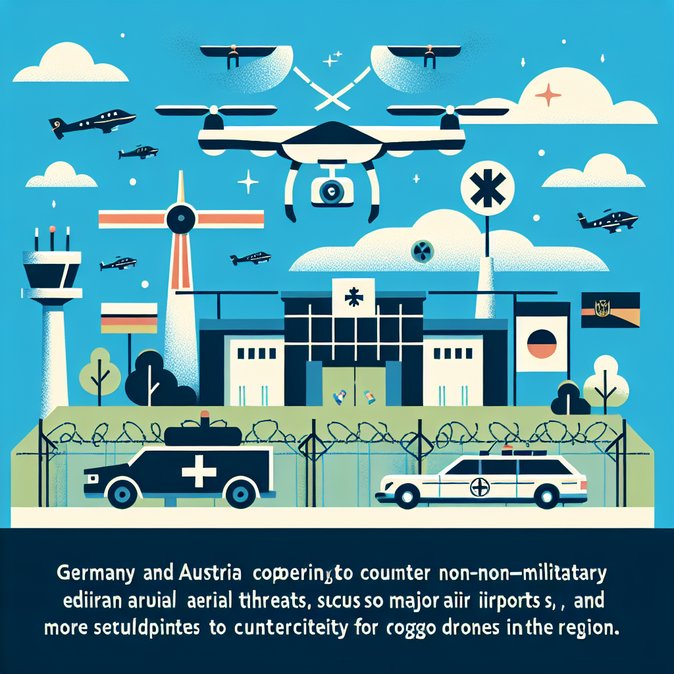
In a late-evening vote on 26 February 2026, the German Bundestag ratified a bilateral accord with Austria on cooperation against non-military threats from the air. The treaty, signed in December 2022 but stalled in committees until now, enables the two neighbours to exchange real-time radar data, coordinate ground-based jamming and deploy mobile counter-drone units within 30 kilometres of the border.
While primarily a security instrument, the agreement carries important mobility implications. Vienna’s Schwechat and Munich airports—both within 200 kilometres of the frontier—face growing risks from hobby drones and activist fly-ins. Under the new framework, cross-border hot pursuit and asset deployment become legally possible, reducing the likelihood of prolonged runway closures that can cascade through airline schedules.
![German Bundestag Approves Air-Security Treaty with Austria, Paving Way for Joint Counter-Drone Operations]()
For travellers, flight crews and logistics managers who will benefit from more reliable air corridors, keeping documentation in order remains essential. VisaHQ can help by providing up-to-date information on Schengen entry requirements and processing visa applications for Austria or Germany through an easy online interface—visit https://www.visahq.com/austria/ to streamline the paperwork before your next cross-border journey.
Business-aviation groups welcomed the news; the Austrian Business Aviation Association said its members lost an estimated €4 million during three drone-related shutdowns in 2025. Freight forwarders also stand to benefit, as the alpine Brenner and Tauern corridors are increasingly used for urgent e-commerce deliveries by UAV.
Implementation will involve joint exercises starting this summer and the creation of a bi-national ‘Air Security Liaison Cell’ staffed by police, civil-aviation regulators and telecoms authorities. Companies operating private-drone programmes along the border should monitor forthcoming technical guidelines to ensure spectrum compliance and avoid interference with the new counter-UAS systems.
While primarily a security instrument, the agreement carries important mobility implications. Vienna’s Schwechat and Munich airports—both within 200 kilometres of the frontier—face growing risks from hobby drones and activist fly-ins. Under the new framework, cross-border hot pursuit and asset deployment become legally possible, reducing the likelihood of prolonged runway closures that can cascade through airline schedules.
For travellers, flight crews and logistics managers who will benefit from more reliable air corridors, keeping documentation in order remains essential. VisaHQ can help by providing up-to-date information on Schengen entry requirements and processing visa applications for Austria or Germany through an easy online interface—visit https://www.visahq.com/austria/ to streamline the paperwork before your next cross-border journey.
Business-aviation groups welcomed the news; the Austrian Business Aviation Association said its members lost an estimated €4 million during three drone-related shutdowns in 2025. Freight forwarders also stand to benefit, as the alpine Brenner and Tauern corridors are increasingly used for urgent e-commerce deliveries by UAV.
Implementation will involve joint exercises starting this summer and the creation of a bi-national ‘Air Security Liaison Cell’ staffed by police, civil-aviation regulators and telecoms authorities. Companies operating private-drone programmes along the border should monitor forthcoming technical guidelines to ensure spectrum compliance and avoid interference with the new counter-UAS systems.
More From Austria
View all
Italian National Aviation Strike Cancels 300 Flights—Knock-On Disruption Hits Austrian Route Network

Kazakhstan Ratifies Readmission Treaty with Austria, Streamlining the Return of Irregular Migrants