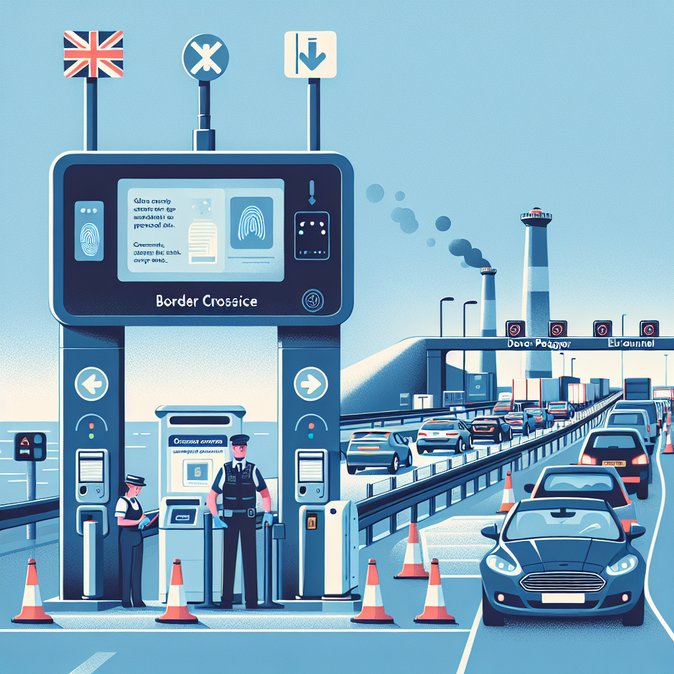
Aéroports de Paris (ADP), operator of Paris-Charles-de-Gaulle and Orly, has formally requested that the European Commission allow France to suspend full deployment of the EU Entry/Exit System (EES) during the busy June-August travel window. The plea comes after limited trials showed processing times rising by up to 70 % and industry bodies warned of four-hour queues once the biometric border regime becomes compulsory on 10 April 2026.
Deputy CEO Justine Coutard told reporters that while 300 self-service kiosks have already been installed—and another 120 are on order—the airports have not stress-tested the system with summer-level passenger volumes. "As soon as we see excessive wait times we revert to manual stamping; making EES mandatory in July would be extremely risky," she said.
Under current EU rules, member states may pause EES for up to six hours if congestion becomes critical, but ADP argues that a blanket summer exemption would give operators more breathing room to fix software bugs, train staff and complete terminal-flow redesigns. The request echoes a joint letter from ACI Europe, IATA and Airlines for Europe earlier this month.
![Paris-Area Airports Ask EU to Postpone Full EES Roll-Out Until After Summer Peak]()
Travellers looking to navigate France’s evolving border formalities—whether for a holiday or a trade-fair business trip—can tap VisaHQ’s online platform for real-time guidance on visas, entry rules and biometric enrolment. The dedicated France page (https://www.visahq.com/france/) consolidates official requirements and offers application support, equipping individuals and corporate travel managers to stay ahead of any EES-related changes.
For corporates, the debate is more than academic. Paris handles a third of France’s long-haul business traffic, and summer overlaps with major trade fairs such as VivaTech. HR and travel managers should prepare traveller communications that emphasise potential border bottlenecks, encourage advance enrolment where available, and build extra connection time into itineraries—especially for non-EU assignees who must provide fingerprints and facial images at first entry.
Whether Brussels will grant additional flexibility remains unclear, but a decision is expected before Easter. If denied, ADP says it will rely heavily on the six-hour suspension clause; mobility teams should monitor announcements and be ready for short-notice changes in border procedure.
Deputy CEO Justine Coutard told reporters that while 300 self-service kiosks have already been installed—and another 120 are on order—the airports have not stress-tested the system with summer-level passenger volumes. "As soon as we see excessive wait times we revert to manual stamping; making EES mandatory in July would be extremely risky," she said.
Under current EU rules, member states may pause EES for up to six hours if congestion becomes critical, but ADP argues that a blanket summer exemption would give operators more breathing room to fix software bugs, train staff and complete terminal-flow redesigns. The request echoes a joint letter from ACI Europe, IATA and Airlines for Europe earlier this month.

Travellers looking to navigate France’s evolving border formalities—whether for a holiday or a trade-fair business trip—can tap VisaHQ’s online platform for real-time guidance on visas, entry rules and biometric enrolment. The dedicated France page (https://www.visahq.com/france/) consolidates official requirements and offers application support, equipping individuals and corporate travel managers to stay ahead of any EES-related changes.
For corporates, the debate is more than academic. Paris handles a third of France’s long-haul business traffic, and summer overlaps with major trade fairs such as VivaTech. HR and travel managers should prepare traveller communications that emphasise potential border bottlenecks, encourage advance enrolment where available, and build extra connection time into itineraries—especially for non-EU assignees who must provide fingerprints and facial images at first entry.
Whether Brussels will grant additional flexibility remains unclear, but a decision is expected before Easter. If denied, ADP says it will rely heavily on the six-hour suspension clause; mobility teams should monitor announcements and be ready for short-notice changes in border procedure.